
Unexpected Turbulence: Why it Can Strike Without Warning
Why Turbulence Can Strike Without Warning—and What Passengers Should Know
One Second, the Flight Is Perfectly Calm. Then Everything Changes.
The aircraft is cruising smoothly at 37,000 feet.
Outside your window, the sky is blue.
There are no dark clouds.
No thunderstorm appears to be nearby.
The seat belt sign is off. Flight attendants are moving through the aisle. Some passengers are sleeping while others are eating, reading or watching films.
Get the SkypropreAir Free Travel Pack
Plan smarter, choose a better seat and enjoy a more comfortable long-haul journey. Enter your details below to receive the Travel Pack.
Then it happens.
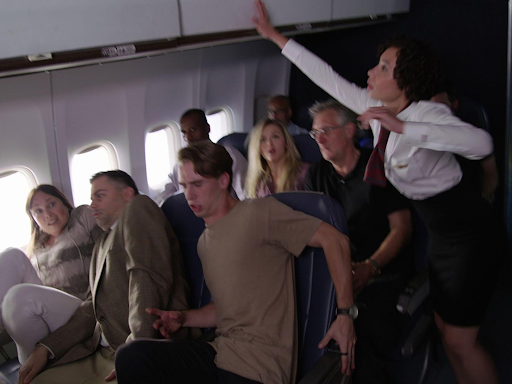
Without warning, the aircraft jolts.
A drink lifts from a tray table.
Someone gasps.
The cabin shakes again, harder this time.
Passengers instinctively grab their armrests as the seat belt sign suddenly illuminates.
For a few frightening seconds, it can feel as though something has gone terribly wrong.
But the aircraft may have simply entered an invisible region of turbulent air.
This is one of the most unsettling realities of commercial aviation:
Turbulence does not always announce its arrival.
Sometimes pilots can anticipate it.
Sometimes weather radar helps crews avoid the atmospheric conditions associated with severe turbulence.
And sometimes an aircraft flying through apparently clear skies encounters unexpected turbulence with little visible warning.
So how can completely invisible air suddenly shake an aircraft carrying hundreds of people?
The answer begins with understanding the atmosphere itself.
✈️ Planning your next trip? Compare airfares with our trusted travel partner Aviasales before you book.
The Sky May Look Empty—but the Air Is Constantly Moving
From an aircraft window, the atmosphere can appear peaceful.
It isn’t.
The air surrounding an aircraft is an enormous moving fluid.
Different air masses can travel at different speeds and directions. Temperatures change. Pressure varies. Powerful winds move around the planet, while mountains, weather fronts, thunderstorms and jet streams disturb the surrounding atmosphere.
The FAA explains that turbulence can be produced by atmospheric pressure, jet streams, air flowing around mountains, weather fronts and thunderstorms.
Most importantly, turbulence can occur even when the sky appears completely clear.
Think of an aircraft as a boat travelling through water.
A perfectly calm sea produces a smooth ride.
But when the water becomes irregular, the boat moves with it.
Aircraft experience something similar.
When the airflow surrounding the wings changes rapidly, the aircraft responds to those movements.
Passengers experience that response as turbulence.
Related Reading: What Does Turbulence Actually Do to an Aircraft?
The Most Mysterious Type Can Be Completely Invisible
One of the most important explanations for unexpected turbulence is clear-air turbulence, commonly known as CAT.
Unlike turbulence associated with thunderstorms, clear-air turbulence may occur without obvious clouds or visible weather.
It is particularly associated with strong changes in wind speed or direction at high altitude, including areas around jet streams.
That creates a major challenge.
There may be nothing dramatic for passengers to see outside the window.
The aircraft can be flying beneath a beautiful blue sky or through darkness on an apparently peaceful overnight flight and still encounter turbulent air.
This is why the absence of clouds does not guarantee a perfectly smooth flight.
The Jet Stream Can Create an Invisible Highway of Rough Air
High above the Earth are powerful corridors of fast-moving air called jet streams.
Commercial aircraft frequently operate at altitudes influenced by these winds.
Jet streams can be useful. Airlines may take advantage of favourable winds to reduce flight times and fuel consumption.
But the boundaries around strong jet-stream winds can also contain significant wind shear.
Imagine two neighbouring rivers of air moving at different speeds.
Where those air masses interact, the atmosphere can become unstable.
An aircraft crossing that boundary may suddenly encounter turbulence even though nothing unusual is visible ahead.
This helps explain why passengers can sometimes experience a sudden series of bumps during an otherwise completely smooth cruise.
Related Reading: Why You Should Keep Your Seat Belt Fastened
Mountains Can Disturb the Air Far Above Them
Mountains create another form of turbulence that passengers may never see coming.
When strong winds encounter a mountain range, the air can be forced upwards before descending and oscillating on the other side.
These atmospheric disturbances are known as mountain waves.
Under the right conditions, they can extend to high altitudes.
This means an aircraft does not necessarily have to be flying close to a mountain peak to experience the effects.
The atmosphere above mountainous regions can remain disturbed thousands of feet above the terrain.
Pilots and meteorologists understand these patterns, but their intensity and exact location can vary.
Thunderstorms Are Different And Pilots Take Them Extremely Seriously
Not all turbulence is invisible.
Thunderstorms can contain powerful rising and descending air currents capable of producing severe turbulence.
Modern aircraft weather radar helps pilots identify hazardous precipitation and convective weather so that crews can plan routes around dangerous storm cells.
But thunderstorms can influence the atmosphere beyond the most obvious visible cloud.
This is one reason pilots generally give powerful storm systems generous clearance rather than simply trying to fly around their visible edges.
The smoothest-looking route is not necessarily the safest route.
A diversion around weather may add several minutes to a journey, but avoiding dangerous atmospheric conditions takes priority.
Related Reading: Why airplanes shake during turbulence.
Why Can’t Pilots Detect Every Patch of Turbulence?
Passengers sometimes ask a reasonable question:
If modern aircraft have sophisticated radar and weather forecasting systems, why does unexpected turbulence still happen?
Because turbulence is not a single object sitting in the sky waiting to be detected.
It is a constantly changing atmospheric condition.
Weather radar is particularly valuable for detecting precipitation and helping crews identify dangerous convective weather.
But some clear-air turbulence contains no precipitation for conventional onboard weather radar to detect directly.
Pilots therefore use several layers of information.
These can include weather forecasts, dispatch information, air traffic control reports, information from aircraft ahead and pilot reports known as PIREPs.
The FAA has also been developing rapidly updated turbulence forecasting and information-sharing tools to help airlines make tactical decisions.
Even with those systems, however, the atmosphere remains dynamic.
A region that was smooth earlier can change.
Turbulence can develop, move, weaken or intensify.
That is why aviation manages turbulence through prediction, avoidance, communication and preparation rather than assuming every turbulent pocket can be identified perfectly in advance.
🌍 Don’t travel without protection. Compare comprehensive Safetywing travel insurance before your next flight.
Sometimes the Best Turbulence Detector Is Another Aircraft
There is another important source of information passengers rarely see.
Other pilots.
Imagine an aircraft flying 15 minutes ahead of yours encounters moderate turbulence at 35,000 feet.
Its crew can report the location, altitude and intensity.
Air traffic controllers and other pilots may then receive that information.
The aircraft following behind might climb, descend or alter course to avoid the affected region.
This information-sharing network helps make the airspace safer.
But conditions can change quickly and turbulence intensity can vary by altitude, aircraft type, location and time.
That means one aircraft’s experience does not guarantee another aircraft will experience exactly the same conditions.
What Does Turbulence Actually Do to an Aircraft?
Inside the cabin, turbulence can feel dramatic.
Your stomach may rise.
The overhead bins may shake.
Drinks may spill.
For passengers, those sensations can create the impression that the aircraft is plunging uncontrollably.
But the physical reality is often far less dramatic than the sensation suggests.
Modern commercial aircraft are designed and certified to withstand demanding aerodynamic and structural loads.
Pilots are also trained to manage turbulent conditions.
Depending on the situation, they may change altitude, alter the route or adjust speed.
The cabin crew may also be instructed to stop service and take their seats.
The priority is not keeping the flight perfectly comfortable.
It is keeping everyone safe.
The Greatest Immediate Danger May Be Inside the Cabin
Here is the part every passenger should understand.
During many turbulence encounters the aircraft itself is not the greatest concern.
Unrestrained people and unsecured objects are.
A sufficiently strong unexpected jolt can throw an unrestrained passenger from their seat.
Someone walking through the aisle may lose their balance.
A flight attendant serving drinks may be thrown against cabin furniture.
Loose objects can become hazards.
FAA data has consistently shown that turbulence can cause serious injuries, particularly when passengers or crew members are not properly restrained.
This helps explain why flight attendants sometimes abruptly stop cabin service and sit down.
They are not overreacting.
They are protecting themselves so they can continue protecting everyone else.
This is what makes unexpected turbulence particularly unsettling for passengers.”
That Small Seat Belt Is Your Best Defence
There is one remarkably simple thing passengers can do.
Keep the seat belt fastened whenever seated.
Even when the sign is switched off.
The FAA recommends keeping your seat belt buckled while seated because turbulence can occur unexpectedly. EASA similarly advises passengers to remain belted while seated during flight.
You do not need to tighten it uncomfortably.
Simply keep it secured low across your hips.
If unexpected turbulence suddenly throws the aircraft upward or downward the belt helps prevent your body from continuing moving independently inside the cabin.
It is a remarkably simple defence against an invisible atmospheric hazard.
The most effective protection against unexpected turbulence is surprisingly simple: remain buckled whenever you are seated.
Could Climate Change Make Clear-Air Turbulence More Common?
This question is becoming increasingly important.
Research reviewed by European aviation authorities indicates that climate change may increase aviation’s exposure to clear-air turbulence in some regions.
EASA has identified climate adaptation as an aviation safety priority and notes research projecting increases in hazardous clear-air turbulence at typical cruising altitudes over regions including Europe, the North Atlantic, North America the North Pacific and Asia.
That does not mean every future flight will become dramatically rougher.
It means airlines, researchers, meteorologists and aviation regulators are paying increasing attention to how changing atmospheric conditions could affect future operations.
Better forecasting, aircraft-generated turbulence reports and improved information sharing are therefore becoming increasingly valuable.
This is what makes unexpected turbulence particularly unsettling for passengers.”
Turbulence Feels Frightening Because You Cannot See What the Pilots See
Perhaps the most unsettling thing about turbulence is uncertainty.
Passengers cannot see the weather information on the flight deck.
They cannot hear communications between pilots and air traffic control.
They do not see the forecasts examined before departure.
They cannot see reports coming from aircraft flying hundreds of kilometres ahead.
They simply feel the aircraft move.
And when humans experience sudden movement without understanding its cause, fear is a natural reaction.
But turbulence is something aviation professionals plan for on every flight.
Pilots monitor conditions.
Dispatchers analyse weather.
Aircraft exchange information.
Air traffic controllers pass reports.
Cabin crews secure the cabin.
And aircraft are engineered with turbulent atmospheric conditions in mind.
The Next Time the Aircraft Suddenly Shakes, Remember This
The sky outside your window may look perfectly calm.
Your drink may be sitting quietly on the tray table.
The seat belt sign may even be switched off.
And somewhere ahead, invisible air currents may be moving at dramatically different speeds.
Your aircraft could cross that boundary moments later.
That is why turbulence can strike without warning.
It is also why one of aviation’s simplest safety instructions remains so important:
Pilots have several tools for reducing exposure to unexpected turbulence, but no system can predict every atmospheric disturbance.
When you are sitting down, keep your seat belt fastened.
You may never know when the smooth air around your aircraft is about to change.
And if it does, that small piece of webbing across your lap could make all the difference.
Understanding unexpected turbulence can make sudden aircraft movement feel less mysterious.
FAQs
1. Can turbulence make an aircraft crash?
Turbulence can be uncomfortable and, in severe cases, hazardous, but modern commercial aircraft are designed to withstand demanding flight loads. One of the most immediate risks during turbulence is injury to passengers or crew members who are not properly restrained.
2. Why can’t aircraft radar detect clear-air turbulence?
Conventional onboard weather radar is particularly useful for detecting precipitation and identifying dangerous convective weather. Clear-air turbulence may contain no precipitation, making it much harder for onboard radar to detect directly. Pilots therefore also rely on forecasts, reports from other aircraft and operational weather information.
3. Should I keep my seat belt on when the seat belt sign is off?
Yes. Aviation authorities including the FAA and EASA recommend keeping your seat belt fastened whenever you are seated because unexpected turbulence can occur with little or no warning.
What about you?
Have you ever experienced turbulence that arrived without warning and did understanding what causes it change how you feel about flying?