
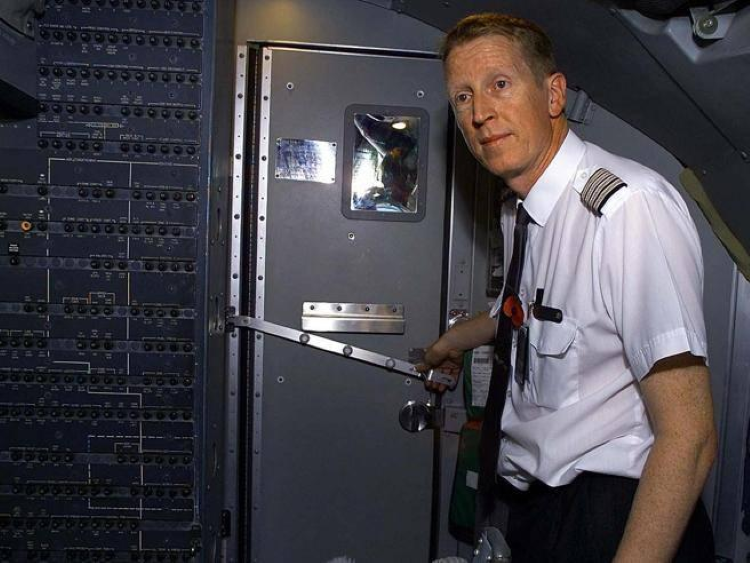
When Cockpit Security Is Tested: What Every Passenger Can Learn from British Airways Flight BA2069
One Passenger. One Violent Struggle. Nearly 400 Lives at Risk.
Most airline passengers never think about the cockpit once the aircraft door closes.
They trust that the pilots will safely carry them to their destination.
On 29 December 2000, that trust was put to one of its greatest tests.
British Airways Flight BA2069, a Boeing 747 travelling from London Gatwick to Nairobi, was cruising normally when a passenger suddenly forced his way into the cockpit and seized the flight controls.
Within seconds, the aircraft entered an extremely steep descent—the highest rate of descent from which a civilian airliner has successfully recovered.
Get the SkypropreAir Free Travel Pack
Plan smarter, choose a better seat and enjoy a more comfortable long-haul journey. Enter your details below to receive the Travel Pack.
On board were 398 passengers and crew, including Captain Bill Hagan’s own wife and children.
Panic could easily have turned a frightening situation into one of aviation’s worst disasters.
Instead, the professionalism, training and teamwork of the flight crew saved the day.
The aircraft recovered safely and continued its journey to Nairobi.
More than twenty-five years later, Flight BA2069 remains one of aviation’s most remarkable examples of why preparation—not luck—is the foundation of airline safety.
Why Flight BA2069 Still Matters Today
The BA2069 incident is no longer news.
It is history.
But it remains highly relevant because it demonstrates principles that protect millions of airline passengers every single day.
Commercial aviation has become extraordinarily safe because the industry studies every serious incident, learns from it and improves procedures.
Every major event leaves behind lessons that shape future pilot training, aircraft design and airline security.
BA2069 is one of those defining moments.
Modern Cockpit Security Is Built on Layers of Protection
Today’s cockpit is among the most secure areas of any commercial aircraft.
Access is carefully controlled through strict procedures designed to minimise risk while allowing pilots to perform their duties without distraction.
Modern security includes:
-
Reinforced cockpit doors
-
Strict access procedures
-
Continuous communication between pilots and cabin crew
-
Passenger behaviour monitoring
-
Security training for airline staff
These measures are designed to prevent unauthorised access and protect the safe operation of every flight.
The Training That Most Passengers Never See
People often assume airline pilots are trained simply to fly aircraft.
The reality is far more demanding.
Pilots spend hundreds of hours preparing for situations they hope they will never experience.
Training includes:
-
Aircraft system failures
-
Severe turbulence
-
Engine emergencies
-
Medical incidents
-
Security threats
-
High-pressure decision making
-
Crew coordination
Flight simulators recreate highly stressful scenarios so pilots can practise responding calmly and methodically.
When unexpected situations arise in the real world, those hours of preparation become invaluable.
Read next: The Most Dangerous Phase of Every Flight—And Why Pilots Train for It.
Crew Resource Management: The Hidden Hero of Aviation Safety
One of aviation’s greatest safety innovations isn’t an aircraft.
It’s teamwork.
Known as Crew Resource Management (CRM), this system teaches pilots and cabin crew how to communicate effectively, share information quickly and make sound decisions under pressure.
Rather than relying on a single individual, CRM encourages every member of the crew to contribute to solving problems.
During incidents like BA2069, effective teamwork can make the difference between disaster and survival.
It has become one of the cornerstones of modern airline safety.
Flight Attendants Do Far More Than Serve Passengers
Cabin crew are often viewed as customer service professionals.
In reality, they are highly trained safety specialists.
Their responsibilities include:
-
Identifying suspicious behaviour
-
Protecting access to the cockpit
-
Communicating with the flight deck
-
Managing disruptive passengers
-
Coordinating emergency procedures
-
Leading evacuations if required
Their calm appearance during a flight reflects extensive training designed to prepare them for rare but potentially life-threatening situations.
You may also enjoy: Why Flight Attendants Sit on Their Hands During Take-off and Landing.
The Cockpit Door Became One of Aviation’s Strongest Defences
The cockpit door may look ordinary.
It isn’t.
Modern cockpit doors are engineered to withstand forced entry and remain secure during flight.
Combined with strict operating procedures, they provide a vital layer of protection for pilots and passengers alike.
These improvements, together with enhanced crew training, have significantly strengthened aviation security over the past two decades.
Why Pilots Stay Calm When Everyone Else Is Panicking
Passengers naturally respond emotionally during emergencies.
Pilots are trained to do the opposite.
Their first priorities are always:
-
Fly the aircraft.
-
Maintain control.
-
Assess the situation.
-
Communicate clearly.
-
Follow established procedures.
This disciplined approach helps prevent panic from influencing critical decisions.
It is one of the reasons commercial aviation continues to maintain one of the strongest safety records of any mode of transportation.
Every Aviation Incident Makes Flying Safer
One of aviation’s greatest strengths is its commitment to learning.
When serious incidents occur, investigators examine every detail:
-
Human performance
-
Aircraft systems
-
Security procedures
-
Communication
-
Crew actions
-
Operational policies
The findings often lead to improvements that benefit every passenger who flies in the future.
This culture of continuous improvement is one of the main reasons air travel has become progressively safer over the decades.
What Every Passenger Can Learn from BA2069
The story of British Airways Flight BA2069 is ultimately not about fear.
It is about confidence.
Confidence in the people who operate commercial aircraft.
Confidence in decades of training.
Confidence in systems that are constantly reviewed and improved.
Most passengers will never experience anything remotely similar.
But every flight they take benefits from lessons learned during extraordinary events like BA2069.
Behind every successful journey are professionals who have spent years preparing for situations they hope never happen.
Final Thoughts
British Airways Flight BA2069 could have become one of the darkest chapters in aviation history.
Instead, it became one of the industry’s most valuable lessons.
The courage and professionalism shown by Captain Bill Hagan, his crew and the cabin team demonstrated that aviation safety is built on preparation, discipline and teamwork—not chance.
The next time you hear the cockpit door close before departure, remember that behind it sits a team trained not only to fly an aircraft, but to protect every life on board, whatever challenges may arise.
Planning your next trip? Compare fares with SkypropreAir’s trusted flight booking partner to find the best deals before you fly.
Travel with confidence. Protect your journey with comprehensive travel insurance for delays, cancellations and medical emergencies.
Frequently Asked Questions
What happened on British Airways Flight BA2069?
On 29 December 2000, a passenger forced his way into the cockpit of a British Airways Boeing 747 flying from London Gatwick to Nairobi and briefly seized the flight controls. The pilots regained control of the aircraft and landed safely in Nairobi.
How are modern aircraft protected against cockpit intrusions?
Modern airliners use reinforced cockpit doors, strict access procedures, enhanced crew training and coordinated security protocols to protect the flight deck.
Do airline pilots train for security emergencies?
Yes. Airline pilots regularly train in advanced simulators for a wide range of emergency scenarios, including security threats, system failures, severe weather and crew coordination under pressure.