
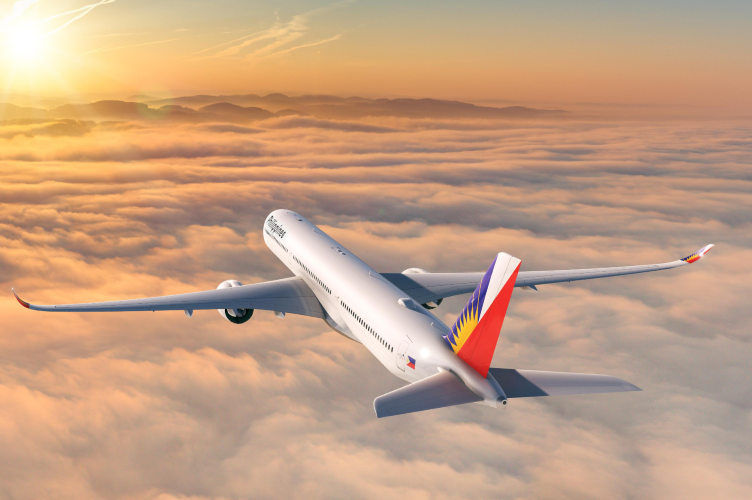
How Airbus Went from Underdog to Aviation Giant
Everyone Thought Airbus Would Fail… Until It Changed Aviation Forever
In the late 1960s, the idea sounded almost impossible.
How could a handful of European nations compete with America’s aviation giants?
The skies belonged to Boeing.
Douglas and Lockheed dominated long-haul travel.
Airlines trusted American aircraft. Passengers barely knew European manufacturers existed.
Get the SkypropreAir Free Travel Pack
Plan smarter, choose a better seat and enjoy a more comfortable long-haul journey. Enter your details below to receive the Travel Pack.
Many experts believed Airbus would become another ambitious government project destined to disappear into history.
Instead…
It became one of the greatest business turnarounds ever witnessed.
Today, Airbus builds some of the world’s most advanced commercial aircraft, delivers hundreds of jets every year, and regularly competes with—and often surpasses—Boeing in global orders.
But this transformation didn’t happen overnight.
It took decades of bold engineering, political cooperation, technological breakthroughs, and relentless determination.
This is the remarkable story of how Airbus went from aviation’s biggest outsider to one of its most powerful giants.
Related Reading: Why the Airbus A380 Is Still the World’s Favorite Airplane • How Concorde Flew Faster Than the Speed of Sound
Europe’s Aviation Industry Was Falling Behind
After World War II, the United States emerged as the undisputed leader in commercial aviation.
Companies like Boeing, Douglas, and Lockheed benefited from enormous military investment, advanced research, and a rapidly expanding airline industry.
Meanwhile, Europe’s aircraft manufacturers remained fragmented.
Britain, France, Germany, and Spain each built aircraft independently.
None possessed the production scale necessary to compete globally.
The result was predictable.
Airlines overwhelmingly purchased American aircraft.
Europe risked becoming permanently dependent on foreign manufacturers.
Something had to change.
The Birth of Airbus Was a Gamble Few Believed In
In 1970, France and West Germany officially launched Airbus Industrie.
Spain soon joined.
Britain later became an essential industrial partner through its wing manufacturing expertise.
The concept itself was revolutionary.
Instead of competing against one another, European countries would pool their engineering talent, manufacturing capabilities, and financial resources to build aircraft together.
Many critics laughed.
Some dismissed Airbus as nothing more than a political experiment.
Others predicted airlines would never trust aircraft produced by multiple countries.
Those predictions would prove spectacularly wrong.
The A300 Became Airbus’s First Big Test
Airbus’s first aircraft was the A300.
It wasn’t simply another airliner.
It was the world’s first twin-engine wide-body passenger jet.
At the time, airlines believed large aircraft required three or four engines.
Airbus challenged that assumption.
The A300 promised:
-
Lower fuel consumption
-
Reduced maintenance costs
-
Excellent passenger comfort
-
Greater operating efficiency
Unfortunately, airlines weren’t convinced.
Orders came slowly.
Some production lines nearly stopped.
For a moment, Airbus appeared dangerously close to failure.
Planning Your Next Flight?
Whether you’re flying on an Airbus A320, A350, or A380, compare fares across hundreds of airlines to find the best deal before you book.
Search the best flight prices with Aviasales.
One Bold Demonstration Changed Everything
Rather than giving up, Airbus took an extraordinary risk.
The company offered demonstration aircraft to airlines, allowing executives and pilots to experience the A300 firsthand.
One of the most significant opportunities came when Eastern Air Lines in the United States evaluated the aircraft.
The airline discovered something remarkable.
The A300 consumed less fuel while carrying impressive passenger loads.
Operating economics spoke louder than advertising.
Eastern ordered the aircraft.
Other airlines began paying attention.
Confidence spread across the industry.
The underdog had finally earned credibility.
Innovation Became Airbus’s Greatest Weapon
Instead of copying competitors, Airbus focused on changing how aircraft were designed.
The company pioneered technologies that later became industry standards.
Among its biggest innovations were:
-
Digital fly-by-wire flight controls
-
Side-stick controllers replacing traditional control columns
-
Advanced cockpit automation
-
Common cockpit philosophy allowing pilots to transition between Airbus models more easily
-
Extensive use of lightweight composite materials
Initially, many pilots viewed these changes with skepticism.
Today, they are among Airbus’s defining strengths.
Innovation became Airbus’s identity.
You May Also Enjoy: Future Airplanes Could End Turbulence as We Know It • The Hidden Science Behind Aircraft Oxygen Masks
The A320 Changed Everything
If one aircraft transformed Airbus forever, it was the A320.
Introduced in the late 1980s, the narrow-body jet offered unprecedented efficiency and advanced technology.
Its fly-by-wire system represented a major leap forward.
Its spacious cabin appealed to passengers.
Its operating costs attracted airlines worldwide.
Soon, airlines across Europe, Asia, the Middle East, and North America began ordering hundreds of A320-family aircraft.
The program evolved into one of aviation’s greatest commercial successes.
Today, thousands remain in active service around the world.
The Battle with Boeing Intensified
As Airbus expanded, its rivalry with Boeing became one of the most fascinating competitions in business history.
Every new aircraft launch triggered another response.
The Boeing 737 competed directly with the A320.
The Boeing 777 challenged Airbus wide-body ambitions.
The Airbus A350 later emerged as a formidable competitor to Boeing’s Dreamliner.
For airlines, this competition proved beneficial.
Manufacturers raced to improve:
-
Fuel efficiency
-
Passenger comfort
-
Cabin technology
-
Safety systems
-
Operating economics
Competition accelerated innovation across the aviation industry.
Then Came the Airbus A380
Few aircraft have inspired as much fascination as the Airbus A380.
The world’s largest passenger aircraft represented engineering on a breathtaking scale.
Double-deck cabins.
Quiet interiors.
Spacious seating.
Luxury unlike anything passengers had experienced before.
For travelers, the A380 became an icon.
Yet commercial success proved more difficult.
Changing airline strategies favored smaller, fuel-efficient twin-engine aircraft capable of serving more direct routes.
Although Airbus eventually ended A380 production, the aircraft remains one of aviation’s greatest engineering achievements and continues to delight millions of passengers worldwide.
Read Next: Why the Airbus A380 Is Still the World’s Favorite Airplane
Flying Overseas?
Unexpected delays, lost baggage, or medical emergencies can happen on any journey.
Protect your trip with SafetyWing Travel Insurance before you fly.
The A350 Showed Airbus Had Learned Every Lesson
The A350 represented Airbus at its most mature.
Designed to compete directly with Boeing’s newest generation of aircraft, it combined years of engineering experience with cutting-edge technology.
The aircraft features:
-
Carbon-fiber composite construction
-
Exceptional fuel efficiency
-
Lower cabin altitude
-
Higher humidity levels
-
Quieter cabins
-
Longer range
-
Reduced emissions
Passengers consistently praise its comfort.
Airlines appreciate its economics.
The A350 demonstrated that Airbus had evolved into one of aviation’s most sophisticated manufacturers.
Airbus Didn’t Just Build Aircraft—It Built Confidence
Modern airlines purchase more than airplanes.
They buy reliability.
Support networks.
Training.
Maintenance systems.
Spare parts.
Global service infrastructure.
Airbus invested heavily in every aspect of customer support.
That commitment strengthened long-term relationships with airlines around the world.
As confidence grew, so did orders.
Airbus transformed from a regional manufacturer into a truly global aerospace company.
Sustainability Is Airbus’s Next Great Challenge
Today’s aviation industry faces a different mission.
Reducing carbon emissions.
Improving fuel efficiency.
Developing sustainable aviation fuels.
Exploring hydrogen-powered aircraft.
Airbus is investing billions into technologies that could redefine commercial aviation once again.
Projects such as the ZEROe hydrogen aircraft concepts demonstrate the company’s ambition to lead aviation’s next revolution.
Whether these technologies achieve widespread adoption remains to be seen, but Airbus has clearly positioned itself at the forefront of aviation’s sustainability efforts.
Continue Reading: How Concorde Flew Faster Than the Speed of Sound • Future Airplanes Could End Turbulence as We Know It
Why Airbus’s Story Matters
The Airbus story is about far more than airplanes.
It proves that innovation can overcome overwhelming odds.
That international collaboration can outperform fierce competition.
That persistence often matters more than early success.
Few believed Airbus would survive.
Fewer still imagined it would become one of the two dominant commercial aircraft manufacturers on Earth.
Today, millions of passengers board Airbus aircraft every single day without realizing they are witnessing one of history’s greatest industrial success stories.
The company that was once dismissed as an impossible dream now helps connect the world.
And its next chapter may be even more remarkable than its first.
Final Thoughts
Airbus’s rise from a struggling European consortium to a global aviation powerhouse is one of the most inspiring stories in aerospace history.
Its journey demonstrates that innovation, persistence, and collaboration can reshape an entire industry.
Every Airbus aircraft flying today carries not only passengers but also the legacy of one of aviation’s greatest success stories.
Frequently Asked Questions
Why was Airbus created?
Airbus was founded in 1970 by several European nations to compete with dominant American aircraft manufacturers and strengthen Europe’s aerospace industry.
What made the Airbus A320 revolutionary?
The A320 introduced digital fly-by-wire technology, side-stick controls, and a common cockpit design that transformed commercial aviation.
Is Airbus larger than Boeing today?
Both remain the world’s leading commercial aircraft manufacturers. Depending on annual deliveries and new aircraft orders, Airbus has frequently led the global market in recent years.
Enjoyed This Story? Continue Exploring Aviation
If you enjoyed learning how Airbus changed aviation forever, you may also like:
Bookmark SkypropreAir for more fascinating aviation stories, travel insights, and behind-the-scenes engineering features.