
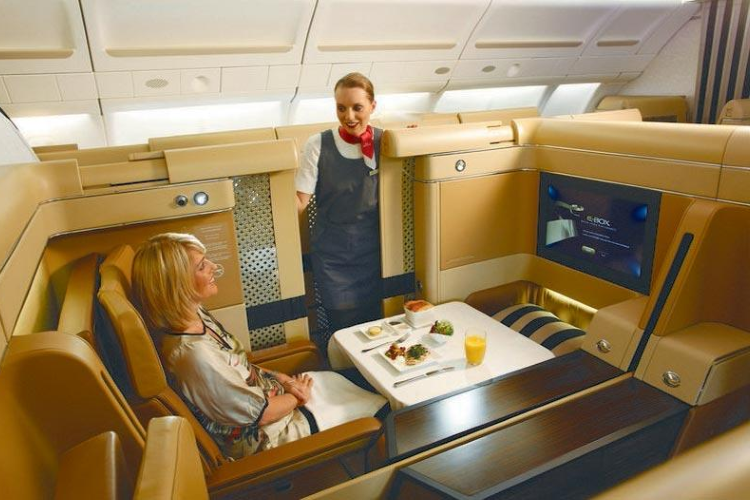
What First-Class Passengers Eat That Economy Travelers Never See
Behind the Curtain Lies a Dining Experience Most Travelers Never Witness
The cabin lights dim.
The boarding doors close.
Most passengers settle into cramped seats, wondering whether the chicken or pasta will be edible.
But just a few rows ahead, behind a discreet curtain, an entirely different journey is about to begin.
White tablecloths appear.
Get the SkypropreAir Free Travel Pack
Plan smarter, choose a better seat and enjoy a more comfortable long-haul journey. Enter your details below to receive the Travel Pack.
Champagne is poured.
Fresh bread arrives in woven baskets.
A flight attendant greets every passenger by name while presenting a beautifully designed menu.
This isn’t simply airline food.
It’s a luxury dining experience served at 40,000 feet.
Many travelers assume first class is all about bigger seats and private suites.
In reality, one of its biggest secrets is what appears on the dinner table.
Airlines invest millions every year creating gourmet meals that economy passengers never even know exist.
Related Reading: Why the Airbus A380 Remains a Passenger Favorite, The Airline Secret Most Passengers Discover Too Late, and The Part of the Aircraft That Feels Turbulence the Most.
Luxury Dining Begins Long Before Departure
Unlike economy catering, first-class menus are often planned months in advance.
Major airlines collaborate with celebrity chefs, nutritionists, wine experts and premium catering companies to create seasonal menus tailored to each destination.
Flights departing Paris often showcase refined French cuisine.
Tokyo departures may feature authentic Japanese specialties.
Singapore flights frequently highlight modern Asian fine dining.
The goal isn’t simply feeding passengers.
It’s delivering a restaurant experience in the sky.
Planning Your Own Luxury Trip?
Compare premium cabin fares with Aviasales before booking. Sometimes first-class and business-class sale fares cost far less than many travelers expect, especially during airline promotions.
Passengers Often Choose Their Meal Before Boarding
One little-known first-class benefit is pre-order dining.
Instead of choosing between chicken or pasta, passengers on many airlines browse menus online days before departure.
Depending on the airline, choices may include:
-
Lobster Thermidor
-
Beef Wellington
-
Wagyu beef
-
Rack of lamb
-
Premium seafood platters
-
Vegan tasting menus
-
Regional chef specialties
-
Fresh sushi
This allows airlines to reduce waste while giving travelers exactly what they want.
The Ingredients Are Simply on Another Level
Economy meals are designed for efficiency and affordability.
First-class meals are designed to impress.
Premium ingredients commonly include:
-
Caviar
-
Wagyu beef
-
Filet mignon
-
King crab
-
Black truffles
-
Lobster
-
Jumbo prawns
-
Artisan cheeses
-
Premium smoked salmon
Many airlines also source seasonal ingredients from local producers depending on the departure city.
The difference isn’t only the price.
It’s the freshness and quality.
Celebrity Chefs Design Meals for High Altitude
Cooking delicious food on the ground is challenging enough.
Cooking food that still tastes exceptional after reheating at cruising altitude is another science entirely.
Low cabin pressure and dry air reduce our ability to taste sweetness and salt.
That’s why airline chefs increase natural umami, herbs and aromatic ingredients to restore flavor.
Many premium airlines collaborate with Michelin-starred chefs specifically trained to design recipes that perform well in flight.
Related Reading: Why Passenger Planes Fly at 35,000 Feet Instead of 10,000.
The Wine List Rivals Luxury Restaurants
Economy passengers may receive one red and one white wine.
First-class passengers often choose from carefully curated collections that include:
-
Vintage Champagne
-
Grand Cru Bordeaux
-
Burgundy
-
Napa Valley Cabernet Sauvignon
-
Premium whisky
-
Rare dessert wines
-
Craft cocktails
Several airlines employ Master Sommeliers whose sole responsibility is selecting wines that taste exceptional at altitude.
Warm Bread Makes a Bigger Difference Than You Think
Luxury dining isn’t always about expensive ingredients.
Sometimes it’s the little touches.
Freshly warmed sourdough.
Olive focaccia.
Garlic rolls.
Pretzel bread.
Served with premium butter and extra virgin olive oil, these details elevate the entire meal.
Meals Are Served Like a Michelin-Star Restaurant
Unlike economy, where everything arrives together on one tray, first-class dining unfolds course by course.
Typical service includes:
-
Amuse-bouche
-
Starter
-
Soup
-
Main course
-
Cheese selection
-
Dessert
-
Coffee and chocolates
Passengers decide when they wish to dine rather than eating according to a fixed cabin schedule.
Protect Every Journey
Luxury holidays deserve premium protection.
Before your next international trip, consider travel medical insurance through SafetyWing, especially if you’re travelling across multiple countries or working remotely abroad.
Presentation Is Part of the Experience
Food tastes better when it looks beautiful.
Airlines know this.
Meals are served using:
-
Fine china
-
Crystal glassware
-
Linen napkins
-
Real cutlery
-
Elegant serving dishes
Some airlines even use exclusive tableware designed by internationally renowned designers.
Breakfast Feels Like a Five-Star Hotel
Instead of plastic trays, first-class travelers may wake up to:
-
Eggs Benedict
-
Fresh avocado toast
-
Smoked salmon
-
Artisan pastries
-
Fresh berries
-
Greek yogurt
-
Freshly squeezed juice
-
Premium coffee
On certain airlines, eggs can even be prepared to order.
Desserts Receive the Same Attention
Premium desserts often include:
-
Handmade macarons
-
Chocolate fondant
-
Cheesecake
-
Fruit tarts
-
Artisan ice cream
-
Gourmet chocolates
Some airlines even present dessert trolleys, allowing passengers to choose several treats.
The Greatest Luxury Is Personal Service
Perhaps the most remarkable difference isn’t the food.
It’s how it’s served.
Cabin crew remember:
-
Your preferred drink
-
Your coffee order
-
Your dietary preferences
-
When you’d like to eat
-
Which wine you enjoyed
Instead of fitting into the airline’s schedule, the schedule adapts to you.
That personal attention transforms a meal into an experience.
Can Economy Travelers Eat Better?
While economy passengers won’t receive caviar or vintage Champagne, they can still improve their onboard dining experience.
Many airlines now offer:
-
Premium pre-order meals
-
Regional specialties
-
Buy-on-board gourmet dishes
-
Vegetarian and vegan upgrades
-
Special dietary menus
Choosing airlines known for quality catering and bringing healthy snacks can also make a noticeable difference.
Related Reading: 20 Free Airport Services Most Passengers Never Use and 12 Travel Essentials That Reduce Flight Fatigue.
The Real Difference Isn’t the Price Tag
Luxury airline dining isn’t simply about expensive ingredients.
It’s about time.
Attention.
Presentation.
Choice.
Comfort.
Every course is designed to slow passengers down and turn a journey into an unforgettable experience.
For most travelers, that remarkable world exists just a few rows ahead—hidden behind a curtain that many never cross.
And perhaps that’s what makes it so fascinating.
Frequently Asked Questions
Why does airline food taste different in the air?
Low humidity and cabin pressure reduce your sense of taste and smell, so airlines adjust recipes with stronger flavours, herbs and umami-rich ingredients.
Do airlines really serve caviar in first class?
Yes. Many international airlines serve caviar on selected long-haul first-class routes, often accompanied by traditional garnishes.
Can economy passengers order first-class meals?
Generally no. However, some airlines offer premium pre-order meals or paid gourmet dining options that are significantly better than standard economy meals.
Join the Conversation
If money were no object, what would matter most to you in first class: the gourmet food, the private suite, the lie-flat bed, or the exceptional service? Tell us why in the comments below—we’d love to hear your choice and your dream airline experience.