
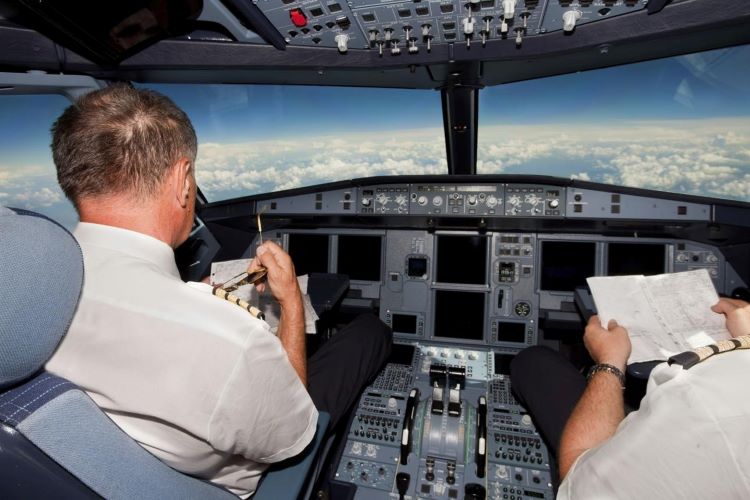
Why Pilots Rarely Worry About Turbulence
Imagine sitting on a flight at 38,000 feet when the aircraft suddenly drops.
Your coffee jumps.
A child starts crying.
Someone grips the armrest so tightly their knuckles turn white.
The cabin fills with nervous laughter, anxious glances, and silent prayers.
Get the SkypropreAir Free Travel Pack
Plan smarter, choose a better seat and enjoy a more comfortable long-haul journey. Enter your details below to receive the Travel Pack.
For many passengers, turbulence feels like the moment everything could go wrong.
Yet behind the cockpit door, something surprising is happening.
The pilots are probably discussing fuel consumption, arrival times, or weather routing. They are almost certainly not panicking.
That contrast raises an intriguing question: Why are the people with the most knowledge of the situation usually the least worried?
The answer reveals one of aviation’s biggest secrets.
If you’ve ever wondered why flying feels different from other forms of transport, read our related article: Why Airplane Air Feels Different Than Air on the Ground.
The Fear Comes From What We Can’t See
Turbulence feels frightening because it is invisible.
When a car hits a pothole, you can see the road.
When a boat rocks, you can see the waves.
But when an aircraft suddenly shakes in clear skies, passengers cannot see what caused it.
The mind naturally fills that information gap with fear.
To passengers, turbulence can feel like the aircraft is struggling.
To pilots, it is simply moving air.
Air behaves much like water. Invisible currents, waves, and pockets of air constantly move through the atmosphere.
Aircraft are designed to travel through these movements every single day.
Pilots understand this reality. Passengers usually do not.
That difference in understanding creates the difference in fear.
Pilots Experience Turbulence All The Time
For many travelers, turbulence might occur on just a few flights each year.
For pilots, it is part of the job.
Commercial airline pilots spend hundreds of hours in the air annually. Over a career, they may experience thousands of turbulence encounters.
What feels unusual to a passenger often feels routine to a pilot.
Experience changes perception.
The first time someone drives on an icy road, they may be nervous.
After years of driving, they learn what is normal and what is not.
Pilots develop the same confidence through experience.
For more cockpit insights, read: What Pilots Know About Flying That Most Passengers Don’t.
Modern Aircraft Are Stronger Than Most Passengers Realize
Many passengers assume turbulence is pushing an aircraft close to its breaking point.
The reality is very different.
Modern commercial aircraft are engineered with enormous safety margins.
Before entering service, aircraft undergo extreme testing. Wings are bent dramatically upward to levels far beyond what they would encounter during normal operations.
What surprises many passengers is that wings are designed to flex.
That movement visible from a window seat is usually a sign that the aircraft is functioning exactly as engineers intended.
The wing isn’t failing.
It’s working.
Pilots understand these engineering limits extremely well.
That knowledge provides confidence during even rough conditions.
Interested in aircraft comfort and performance? Read: Airbus A350 vs Boeing 787: Which Aircraft Is More Comfortable?
Travel Smart
Before booking your next flight, compare aircraft types and seat configurations. The aircraft you choose can significantly affect your comfort on long-haul journeys.
The Aircraft Is Usually Not Falling As Much As It Feels
One of the most common passenger descriptions of turbulence is:
“It felt like the plane dropped hundreds of feet.”
In reality, the movement is often much smaller.
The human body is highly sensitive to unexpected motion. Your inner ear detects movement instantly, making minor changes feel dramatic.
Pilots rely on instruments rather than sensation.
They can see exactly what is happening.
While passengers experience the emotion, pilots see the data.
And the data is usually reassuring.
What feels like a dangerous plunge is often a relatively small altitude variation.
Pilots Usually Know Turbulence Is Coming
Passengers often experience turbulence as a surprise.
Pilots rarely do.
Modern aviation technology provides weather radar, satellite information, turbulence forecasts, and real-time reports from other aircraft.
A plane flying ahead may report turbulence to air traffic control, allowing following aircraft to prepare.
Pilots can often adjust altitude or route to reduce its impact.
What feels sudden in the cabin often arrives with advance warning in the cockpit.
That predictability removes much of the uncertainty.
For another look at how aviation technology is changing travel, read: Your Face Is Becoming Your Boarding Pass — And That Changes Everything.
Most Turbulence Is Uncomfortable, Not Dangerous
This distinction is critical.
Passengers often judge danger by how something feels.
Turbulence feels dramatic.
Therefore, it must be dangerous.
Pilots look at risk differently.
Most turbulence events are primarily comfort issues.
The greatest concern is usually passenger injury caused by standing up without a seatbelt fastened.
That is why pilots switch on the seatbelt sign.
It is not because the aircraft is in danger.
It is because people can be injured by sudden movement inside the cabin.
The aircraft itself is usually performing exactly as designed.
This is similar to other airline safety procedures that passengers often overlook. Read: Why Most Passengers Ignore Emergency Exit Instructions.
Travel Protection Tip
Even when flights are completely safe, delays and disruptions can occur. Travel insurance can provide protection for cancellations, medical emergencies, and unexpected travel issues.
Training Removes Panic From The Cockpit
Pilots are trained extensively for abnormal situations.
They spend years learning aircraft systems, weather patterns, emergency procedures, and operational decision-making.
Simulator sessions repeatedly expose pilots to challenging scenarios long before they encounter them in real life.
By the time someone becomes an airline captain, they have accumulated thousands of hours of training and experience.
When turbulence occurs, they are not reacting emotionally.
They are relying on knowledge and procedures.
Training replaces uncertainty with confidence.
The Calm Voice You Hear Is Usually Genuine
Passengers often wonder whether pilots are hiding concern when making announcements.
In most cases, they are not.
When a pilot says turbulence is expected and nothing unusual, that statement is usually sincere.
Pilots understand the aircraft.
They understand the weather.
They understand the safety margins.
Their calmness comes from knowledge rather than optimism.
And that calmness often spreads throughout the cabin.
What Passengers Can Learn From Pilots
Pilots do not ignore turbulence.
They respect it.
But they also understand it.
That understanding allows them to separate discomfort from danger.
The next time your aircraft begins to shake, remember this:
The people with the greatest understanding of the situation are usually the least worried.
Pilots have likely experienced similar conditions hundreds of times before.
They know what the aircraft can handle.
They know what the instruments are showing.
And they know that turbulence is almost always a normal part of flying.
To better understand what happens to your body during flight, read How Cabin Pressure Really Affects Your Body During Flight and The Truth About Sitting in an Exit Row Seat.
Long-Haul Comfort Tip
Choosing the right seat can make a bigger difference to your flight experience than choosing the airline itself. Compare seat maps before you book.
Frequently Asked Questions
Can turbulence cause a plane to crash?
Modern commercial aircraft are designed to withstand turbulence far beyond what they normally encounter. Turbulence alone is extremely unlikely to cause an airliner to crash.
What type of turbulence worries pilots the most?
Severe turbulence receives the most attention because it can cause injuries to passengers and crew who are not seated and restrained.
Why do pilots sometimes leave the seatbelt sign on when the air feels smooth?
Pilots often receive weather data and reports from other aircraft that passengers cannot see, allowing them to anticipate turbulence before it arrives.
Join The Conversation
If pilots, flight attendants, and aircraft engineers trust modern aircraft during turbulence, why do you think passengers remain so fearful? Is it the shaking itself—or the uncomfortable reality that, for a few hours, we have no control over what happens next?
Share your thoughts in the comments below. This question might reveal more about human psychology than it does about flying.