
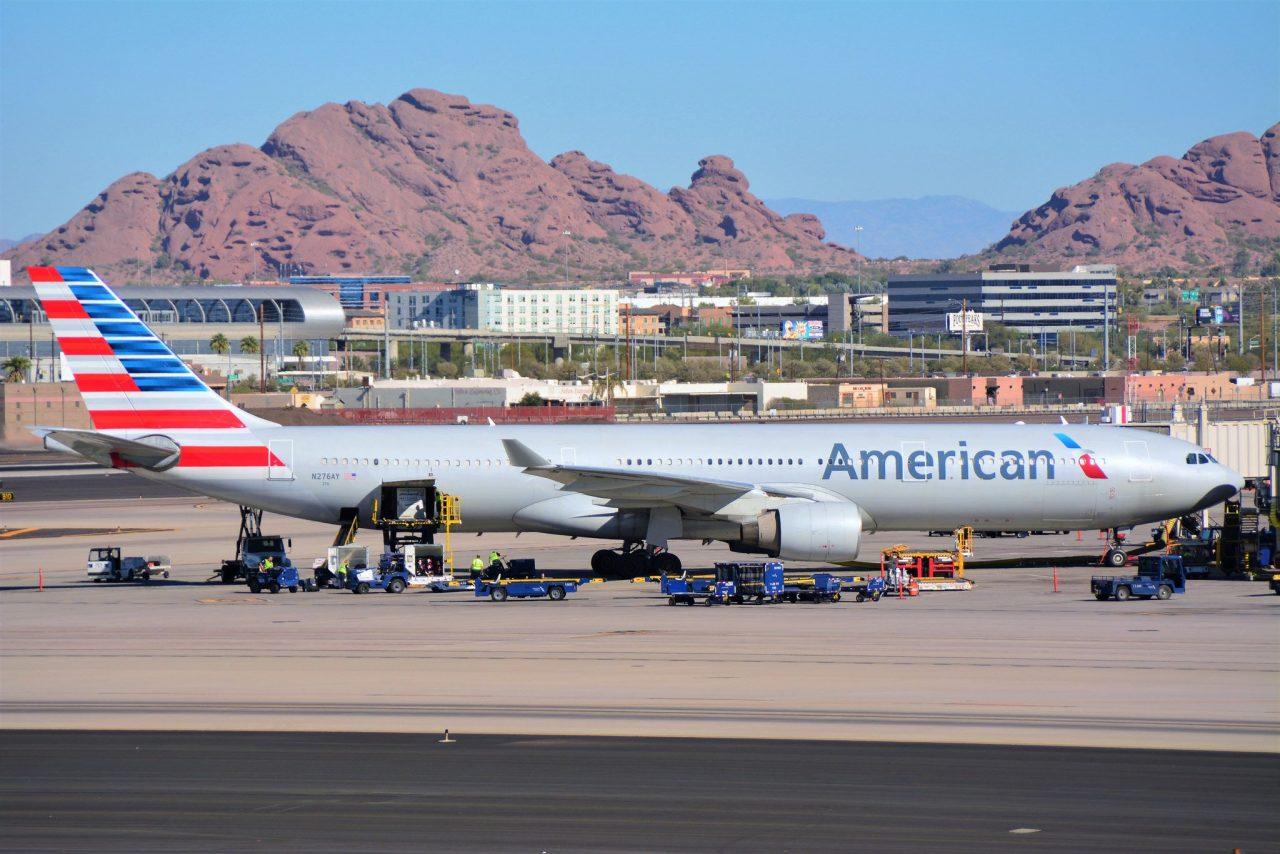
Two Planes had the Same Flight Number: How Did This Happen?
Two American Airlines Planes Had the Same Flight Number Over Phoenix — How Did This Happen?
One Flight Number. Two Aircraft. One Controller Who Spotted the Problem.
Imagine sitting aboard a passenger aircraft approaching Phoenix.
Your pilots are communicating with air traffic control as normal.
Then another aircraft appears on the same radio frequency.
Nothing particularly unusual about that.
Except this aircraft is responding to the same identity as yours.
Get the SkypropreAir Free Travel Pack
Plan smarter, choose a better seat and enjoy a more comfortable long-haul journey. Enter your details below to receive the Travel Pack.
On August 14, two American Airlines aircraft near Phoenix were simultaneously operating using the call sign American 2482. One was arriving from Chicago while another had departed Phoenix.
Suddenly, a routine identifier had become potentially confusing.
The air traffic controller recognised what was happening and began distinguishing between the aircraft as American 2482 on the arrival and American 2482 on the departure. The aircraft were kept safely separated and the situation ended without incident.
But the incident raises a fascinating question:
How can two passenger aircraft end up using the same flight number at the same time and what stops a misunderstanding from becoming something far more serious?
What Happened to American Airlines Flight 2482?
American Airlines Flight 2482 normally operates between Chicago and Phoenix.
The same flight number can be associated with successive sectors of a service. Ordinarily, the timing of those operations prevents the aircraft from creating this particular problem.
This time, however, the inbound Chicago-Phoenix service had been delayed by weather.
Meanwhile, the outbound operation departed Phoenix using another aircraft.
That resulted in something highly unusual:
two aircraft using American 2482 at the same time and ultimately communicating on the same ATC frequency.
The controller recognised the duplicate call sign and modified the way the aircraft were addressed to prevent ambiguity.
The FAA and American Airlines are now investigating how the situation occurred.
Flight Number vs Call Sign: What’s the Difference?
For passengers, a flight number is something familiar.
You might see:
AA2482
on your boarding pass, airport departure board or airline app.
But pilots and air traffic controllers also need an unambiguous way of identifying aircraft over the radio.
For an airline flight, the spoken ATC call sign generally combines the airline’s designated telephony identifier with the flight’s identifying number.
So American Airlines Flight 2482 may be heard over the radio as:
“American two four eight two.”
That works extremely well — provided only one relevant aircraft is answering to it.
When two aircraft on the same frequency share the same call sign, however, a controller’s instruction could potentially become ambiguous.
And ambiguity is something aviation systems work very hard to eliminate.
Why Can Duplicate Call Signs Be a Problem?
Imagine a controller transmitting an instruction to:
“American 2482.”
Which aircraft should respond?
Normally, there would be no question.
But if two aircraft using that identifier are listening to the same frequency, both crews need to understand precisely which aircraft the controller is addressing.
This becomes particularly important when instructions involve:
- altitude
- heading
- speed
- climbing or descending
- approach clearances
- traffic avoidance
A misunderstood instruction doesn’t automatically cause an accident.
Modern commercial aviation has multiple layers of protection.
But clear communication is one of those layers.
That’s why duplicate or confusing call signs deserve attention.
The Phoenix Controller Changed the Conversation
The most important part of the Phoenix incident isn’t simply that two aircraft had the same call sign.
It’s what happened after the problem was recognised.
Instead of continuing to address both aircraft simply as American 2482, the controller distinguished between them according to their respective operations.
One became effectively:
American 2482 on the arrival.
The other:
American 2482 on the departure.
It sounds remarkably simple.
But that small linguistic distinction helped restore something essential:
clarity.
The controller also maintained altitude separation between the aircraft.
This is an excellent example of something passengers rarely see:
Aviation safety doesn’t depend on every situation unfolding perfectly.
It also depends on trained professionals recognising when something isn’t normal and adapting before the situation escalates.
Related: What Really Happens During an Aircraft Stall?
Were the Two Aircraft About to Collide?
This is where SkypropreAir should be careful with the dramatic headlines appearing elsewhere.
Some reports have described the aircraft as being on a “collision course” or suggested a near collision.
But the more defensible description is that the duplicate call signs created a potentially dangerous and confusing situation requiring controller intervention and separation.
The incident ended safely.
There was no collision and no reported injury.
The FAA investigation should establish more precisely how the duplicate identification occurred and assess the operational circumstances.
Until that work is completed, we shouldn’t turn uncertainty into certainty simply because a more dramatic headline attracts clicks.
Related: Why Turbulence Can Strike Without Warning
Could This Happen Again?
Duplicate and similar call signs are a known communication risk in aviation, but what happened in Phoenix was unusual.
Airline schedules, dispatch systems and ATC procedures normally prevent two aircraft with identical operational identities from creating this kind of conflict.
But aviation is dynamic.
Weather causes delays.
Aircraft are substituted.
Schedules change.
Crews and aircraft can end up operating at times different from those originally planned.
The Phoenix event demonstrates why safety systems cannot depend entirely on the original schedule proceeding exactly as intended.
When one layer fails, another needs to catch it.
In this case, the controller did.
Related: If Both Engines Fail, Can a Passenger Aircraft Still Fly?
Why Didn’t Technology Automatically Solve the Problem?
This incident also illustrates an important misconception about modern aviation.
Passenger aircraft are packed with sophisticated technology.
Controllers have radar and surveillance systems.
Aircraft carry collision-avoidance equipment.
Pilots have advanced navigation and flight-management systems.
But technology doesn’t eliminate the need for clear human communication.
A call sign is ultimately an identification tool.
If that identification becomes ambiguous, pilots and controllers still need to recognise the problem and resolve it.
The Phoenix incident therefore wasn’t simply a story about two identical flight numbers.
It was a demonstration of something deeper:
aviation safety works through layers.
Technology.
Procedures.
Training.
Communication.
Human judgement.
None should be viewed in isolation.
What Would Happen If Pilots Followed the Wrong Instruction?
An incorrect response to an ATC instruction would not necessarily mean disaster.
Other protections remain.
Controllers monitor aircraft position and altitude and can intervene when something isn’t developing as expected.
Pilots also read back important clearances, giving controllers an opportunity to detect misunderstandings.
And commercial aircraft are generally equipped with airborne collision-avoidance systems capable of warning crews about conflicting traffic.
That redundancy is deliberate.
Aviation safety is designed around the principle that one mistake should not automatically become an accident.
The Phoenix incident is a useful real-world example of that philosophy.
The Bigger Lesson From American 2482
Passengers often judge aviation safety by dramatic events:
engine failures,
turbulence,
emergency landings,
or aircraft diversions.
But many important safety moments are much quieter.
Sometimes they happen through a headset in an air traffic control facility.
A controller hears something unusual.
A pilot questions an instruction.
Someone notices that two pieces of information don’t make sense.
And the system adjusts.
That’s what makes this incident worth examining.
Two aircraft ended up using the same identifier in circumstances where ambiguity mattered.
The controller recognised it.
Communication was adapted.
Separation was maintained.
And passengers continued their journeys.
SkypropreAir Verdict
The Phoenix American Airlines incident sounds alarming because two passenger aircraft were simultaneously using the same call sign while operating in the same area.
But the more important story is how the aviation safety system responded.
The incident exposed an operational problem worth investigating — and both the FAA and American Airlines are doing exactly that.
It also demonstrated why aviation relies on overlapping layers of protection rather than expecting humans or technology to be perfect.
The mistake created the risk.
Recognition prevented confusion from escalating.
And that may be the most reassuring lesson of all.
Frequently Asked Questions
Can two planes legally have the same flight number?
Airlines can use the same flight number in scheduling contexts, including services involving multiple sectors. The operational concern arises when two aircraft using identical or confusing call signs are simultaneously in circumstances where ATC communications could become ambiguous.
What is an aircraft call sign?
A call sign is the identification used by pilots and air traffic controllers during radio communications. Airline call signs commonly combine the airline’s designated spoken identifier with numbers associated with the flight.
What happened to American Airlines Flight 2482?
Two aircraft using American 2482 were simultaneously operating near Phoenix after disruption to the normal schedule. One was arriving while another was departing. An air traffic controller recognised the duplicate call sign, distinguished the aircraft during communications and maintained separation. The FAA and American Airlines are investigating.