
If Both Engines Fail, Can a Passenger Plane Still Fly
If Both Engines Fail, Can a Passenger Aircraft Still Fly?
The Engines Suddenly Go Silent at 35,000 Feet
Imagine looking out of the window during a routine flight.
The aircraft is cruising high above the clouds. The cabin lights are dim. Passengers are sleeping, watching films or quietly scrolling through their phones.
Then something changes.
The familiar engine sound begins to fade.
Get the SkypropreAir Free Travel Pack
Plan smarter, choose a better seat and enjoy a more comfortable long-haul journey. Enter your details below to receive the Travel Pack.
A warning appears in the cockpit.
One engine has lost thrust.
Seconds later the second engine does the same.
For passengers the thought would be terrifying:
If both engines fail, does the aircraft simply fall out of the sky?
The answer may surprise you.
No.
When both engines fail on a plane, pilots immediately focus on maintaining control and establishing the correct glide speed.
A passenger aircraft does not need engine thrust to remain airborne.
If both engines stop producing thrust, the aircraft effectively becomes an enormous glider. It will begin descending, but provided the aircraft remains controllable the pilots can still steer it and potentially reach an airport or another suitable landing area.
The FAA specifically notes that transport aircraft are capable of controlled flight during an all-engine-out event.
That doesn’t make losing both engines a minor emergency. It is an extremely serious situation.
But it does mean something reassuring:
Engines keep an aircraft moving forward. The wings are what keep it flying.
No Engines Does Not Mean No Lift
One of the biggest misconceptions about aviation is that an aircraft needs continuous engine power to stay in the sky.
It doesn’t.
An aircraft’s engines primarily provide thrust.
As the aircraft moves through the air, airflow around the wings generates lift. If engine thrust disappears the aircraft’s forward speed does not instantly disappear with it.
Instead the pilots lower or maintain the nose at the appropriate attitude and use some of the aircraft’s altitude to maintain forward airspeed.
In simple terms, the aircraft gradually trades altitude for distance.
The FAA explains that once all engine thrust is lost, an aircraft essentially becomes a glider. Pilots aim for an optimum speed that maximises the aircraft’s lift-to-drag performance and therefore the distance it can travel.
The aircraft is descending but it is still flying.
What happens when both engines fail on a plane depends heavily on altitude, weather, aircraft type and the cause of the failure.
Related Reading: What Really Happens During an Aircraft Stall?
How Far Could a Passenger Aircraft Glide?
There isn’t one universal answer.
Gliding distance depends on several factors, including the aircraft type, altitude, weight, wind, configuration and how efficiently the pilots maintain the appropriate glide speed.
But from cruising altitude, a modern airliner can potentially cover a surprisingly significant distance before reaching the ground.
The higher the aircraft is when power is lost, the more potential gliding distance the crew may have available.
This is why altitude can become valuable during such an emergency.
Instead of thinking:
The engines have stopped, so the aircraft is going down.
Think:
The engines have stopped, so the aircraft is now descending while the pilots search for somewhere safe to land.
Those are very different situations.
Although the possibility that both engines fail on a plane is extremely rare, pilots train for serious engine-out emergencies
Related Reading: Why Turbulence Can Strike Without Warning
Inside the Cockpit, Every Second Suddenly Matters
A double-engine failure would trigger an immediate and highly structured response.
The pilots’ first priority is fundamental:
Fly the aircraft.
They must maintain control and establish an appropriate airspeed.
At the same time, the crew would diagnose what caused the loss of thrust and work through the relevant emergency procedures.
Depending on the circumstances, pilots may attempt to restart one or both engines.
Aircraft operating information includes procedures dealing with engine failure, restarting turbine engines in flight and ditching.
Meanwhile, the crew would communicate with air traffic control and evaluate available airports and other possible landing areas.
Altitude, wind, terrain, runway length and distance all become crucial.
The objective is no longer continuing to the original destination.
It is finding the safest achievable place to put the aircraft down.
Related Reading: Before You Fly: The Extreme Tests Every Aircraft Must Survive
But What Happens to Electricity Without the Engines?
Another frightening thought is that if both engines stop, everything aboard the aircraft must immediately shut down.
Modern airliners are designed with layers of redundancy.
Aircraft typically have alternative sources of electrical or hydraulic power that can support essential systems following major failures.
Depending on aircraft type, these may include batteries, an auxiliary power unit and emergency systems such as a ram air turbine.
The precise architecture varies considerably between aircraft.
This redundancy matters because pilots still need essential instruments, communications and flight-control capabilities while managing the emergency.
Modern passenger aircraft are built around the principle that the failure of one system should not automatically make the aircraft uncontrollable.
Related Reading: Why You Should Keep Your Seat Belt Fastened—Even When the Seat Belt Sign Is Off
The Hudson River Proved What a Powerless Airliner Can Do
Perhaps the world’s most famous example occurred on January 15, 2009.
US Airways Flight 1549 had just departed New York’s LaGuardia Airport when the Airbus A320 encountered a flock of birds.
Both engines suffered an almost complete loss of thrust.
Captain Chesley Sullenberger and First Officer Jeffrey Skiles suddenly found themselves flying an airliner with little useful engine power over one of the world’s most densely populated cities.
There wasn’t enough altitude to simply glide indefinitely while considering options.
The crew ultimately ditched the aircraft in the Hudson River.
All 150 passengers and five crew members evacuated the aircraft, although several people suffered serious injuries. The NTSB determined that large birds entering both engines caused the almost total loss of thrust.
The event became known around the world as the “Miracle on the Hudson.”
But behind the dramatic headlines was an important demonstration of aerodynamics.
The Airbus did not simply drop when its engines lost thrust.
It remained controllable as the pilots managed its remaining energy and guided it towards the river.
✈️ Planning your next journey? Compare flight prices and routes with your preferred flight booking partner Aviasales before you travel.
Another Airliner Once Glided Across the Atlantic
Flight 1549 isn’t the only remarkable example.
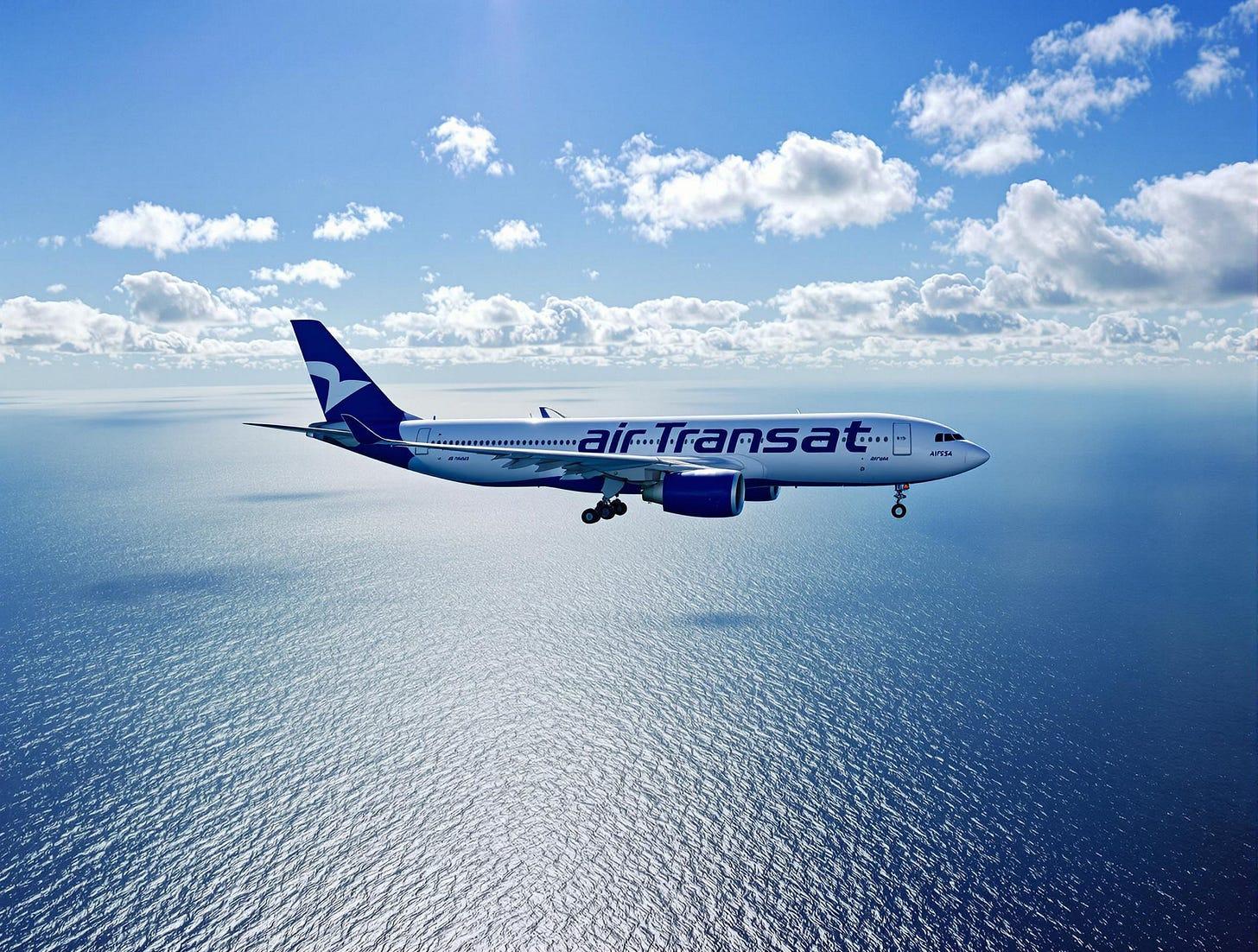
In August 2001, Air Transat Flight 236, an Airbus A330 flying across the Atlantic, suffered a serious fuel leak that eventually resulted in fuel exhaustion and loss of engine power.
The aircraft was over the Atlantic near the Azores.
With the engines no longer providing thrust, the A330 became a glider.
The pilots ultimately reached the Azores and landed at Lajes.
The event remains one of aviation’s most extraordinary demonstrations of what a large passenger aircraft can do without normal engine power. The FAA’s review of the accident highlights fuel loss as one of the important risks considered in long-range twin-engine operations.
Understanding what happens when both engines fail on a plane can make engine-failure incidents seem less mysterious to passengers.
🛡️ Travel with confidence. Comprehensive travel insurance with SafetyWings can provide peace of mind for delays, cancellations, and unexpected events during your trip.
Could the Pilots Restart the Engines?
Potentially.
An engine shutting down does not necessarily mean it has been physically destroyed.
Depending on the cause, pilots may be able to restart an engine while the aircraft is descending.
For example, some failures involving fuel supply, weather phenomena or temporary operating conditions may allow a restart once the underlying conditions are corrected.
But severe mechanical damage may make restarting impossible.
That is why crews must simultaneously manage two possibilities:
Try to restore power while preparing for the possibility that power will never return.
Pilots cannot afford to spend all their available altitude repeatedly attempting restarts while ignoring landing options.
Could the Aircraft Land Without Either Engine?
Yes—but this is where the situation becomes especially challenging.
A powerless aircraft cannot simply add thrust if it becomes too low or too slow.
Normally, pilots can adjust engine power during an approach to control the aircraft’s energy and descent.
Without engine thrust, energy management becomes far less forgiving.
Too high and the aircraft could overshoot the intended landing area.
Too low and it may not reach it.
Too slow and the aircraft could approach a stall.
Too fast and landing becomes more difficult.
This makes selecting and maintaining the correct flight path critical.
The crew essentially has one increasingly limited supply of energy: the aircraft’s altitude and speed.
Once that energy is gone, it cannot easily be recovered.
Why Losing Both Engines Is Extremely Rare
Commercial jet engines are built to extraordinary reliability standards.
Modern aircraft also undergo rigorous certification, inspection and maintenance programmes.
Long-range twin-engine operations are governed by requirements designed around propulsion-system reliability and the ability to divert following failures. The FAA notes how improvements in jet-engine reliability transformed long-distance twin-engine operations.
But aviation engineers also consider events that could affect multiple engines.
These can include fuel exhaustion, major fuel contamination, volcanic ash, severe bird strikes or certain common-cause failures.
The possibility may be remote.
The industry still plans for it.
The Most Important Thing Passengers Should Understand
If you ever hear that an aircraft has suffered an engine failure, don’t assume the aircraft is about to fall.
Even losing one engine does not normally mean an airliner can no longer fly; multi-engine passenger aircraft are designed and operated with engine-out scenarios in mind.
Losing both engines is far more serious.
But even then, the wings haven’t stopped working.
The pilots still have an aircraft that can potentially be controlled.
It can turn.
It can descend.
It can glide.
And under the right circumstances, it can land safely.
That leads to one of the most remarkable truths about commercial aviation:
A passenger aircraft weighing hundreds of tonnes can lose all engine thrust thousands of metres above the Earth and still remain an aircraft rather than becoming a falling object.
The engines may have gone silent.
But the aircraft has not necessarily stopped flying.
Suggested FAQs
1. How far can a passenger plane glide if both engines fail?
The distance depends on altitude, aircraft design, weight, wind and configuration. From cruising altitude, some airliners may have enough gliding capability to travel a substantial distance while pilots search for a suitable landing location.
2. Will a plane fall straight down if both engines stop?
No. If the aircraft remains controllable and has sufficient airspeed, its wings continue producing lift. The aircraft descends while moving forward, effectively behaving like a large glider.
3. Can pilots restart an aircraft engine while flying?
In some situations, yes. Aircraft operating procedures include provisions for restarting turbine engines in flight, although whether a restart succeeds depends on what caused the engine to stop.