
Can Passengers Understand Emergency Instructions?
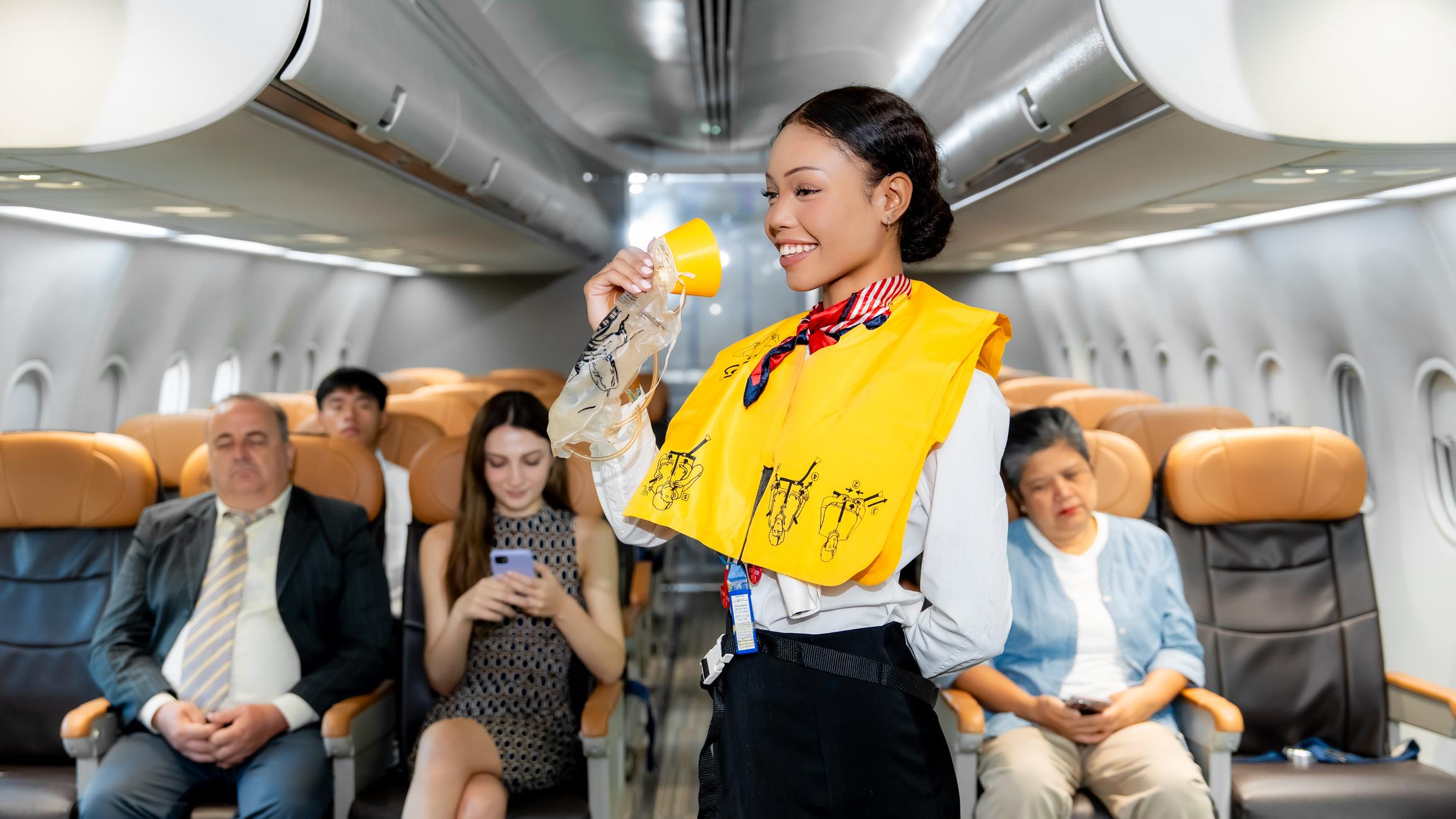
Before every commercial flight takes off, passengers receive a safety briefing. They are shown how to fasten their seat belts, locate emergency exits, use oxygen masks and put on life jackets.
The information is familiar. Some passengers have heard it hundreds of times.
But hearing emergency instructions is not the same as understanding them.
Inside today’s aircraft cabin may be passengers who speak different languages, people with hearing or visual impairments, nervous first-time travellers, older passengers, children and people with cognitive or learning difficulties. Others may be wearing headphones, looking at their phones or talking while the demonstration is taking place.
This raises an important safety question: if an emergency occurred, how many passengers would genuinely understand what they had been told and how many could act on it quickly?
Get the SkypropreAir Free Travel Pack
Plan smarter, choose a better seat and enjoy a more comfortable long-haul journey. Enter your details below to receive the Travel Pack.
Familiarity Can Create Complacency
Frequent travellers may believe they already know the safety procedures. As soon as the briefing begins, some continue reading, scrolling through their phones or arranging their belongings.
The problem is that not every aircraft is the same.
Exit locations differ between aircraft types and cabin layouts. The nearest usable exit may be behind the passenger rather than in front. Exit doors may operate differently, and life jackets may be stored in different locations.
A passenger who assumes that every safety briefing contains information they already know could overlook a detail that becomes vital during an evacuation.
The briefing should therefore be treated as information for that particular aircraft and journey—not as a routine performance that can safely be ignored.
Language Can Become a Safety Barrier
International flights routinely carry passengers from many countries. Although airlines may provide briefings in more than one language, not every passenger will understand those languages confidently.
Some travellers may recognise familiar words such as “seat belt,” “exit” or “oxygen mask” but still struggle to follow a complete spoken instruction.
The challenge becomes greater during an emergency. Cabin crew commands are deliberately short, loud and direct. Passengers may hear instructions such as:
- “Leave everything!”
- “Release your seat belt!”
- “Come this way!”
- “Jump and slide!”
- “Stay low!”
These commands may be perfectly clear to a fluent speaker but confusing to someone with limited knowledge of the language—particularly when alarms, smoke, fear and shouting are added to the situation.
Safety cards use pictures partly to overcome language barriers. However, an illustration must still be sufficiently clear for a passenger to interpret it correctly and quickly.
What About Deaf and Hard-of-Hearing Passengers?
A passenger who is Deaf or hard of hearing may not receive all the information contained in a spoken announcement, especially when the briefing is delivered without subtitles or a clear visual demonstration.
Even passengers who normally hear reasonably well may struggle because of engine noise, conversations, public-address distortion or the position of the loudspeakers.
Airlines should not assume that showing a video automatically makes the briefing accessible. Subtitles must be large enough to read, remain on screen long enough and accurately reflect the spoken message. Important instructions should also be communicated visually.
Where necessary, cabin crew should offer an individual briefing before departure. Passengers should feel comfortable requesting one without being made to feel inconvenient or singled out.
Passengers can learn more in our guide to [support for passengers with invisible disabilities].
Visually Impaired Passengers Face Different Challenges
Passengers who are blind or have limited vision may not be able to use the safety card or see the cabin crew’s demonstration.
A personal briefing can help such passengers understand:
- The number of seat rows between them and the nearest exits
- Whether the nearest exit is in front of or behind them
- Where their life jacket is located
- How the oxygen mask operates
- What physical features may help them find an exit
- How crew members can assist during an evacuation
Counting the rows to an exit can be especially useful if smoke or darkness reduces visibility. This is a sensible precaution for every passenger, not only those with visual impairments.
Age, Anxiety and Cognitive Ability Matter
Passenger comprehension is not determined by language alone.
An older person may hear the announcement but need more time to process or physically follow an instruction. A passenger with dementia, autism, an intellectual disability or another cognitive condition may find a noisy and rapidly changing emergency overwhelming.
Fearful flyers may also struggle to absorb safety information because they are already anxious. Children may not understand the seriousness of the briefing, while a parent travelling with several children may be concentrating on keeping them settled.
Airlines therefore serve a cabin full of people with very different communication and support needs. A single standard announcement may technically reach everyone, but it may not be understood equally by everyone.
Entertainment Must Not Hide the Message
Some airlines have turned safety demonstrations into highly produced films featuring celebrities, humour, music and tourist attractions.
These videos can attract attention, which is valuable. A memorable presentation may encourage passengers to watch a briefing they would otherwise ignore.
However, entertainment should support the safety message rather than compete with it.
If passengers remember the joke, dance or destination but cannot remember where to find their life jacket, the video has not achieved its most important purpose. Creativity is useful only when the required actions remain clear, prominent and easy to recall.
Understanding Changes Under Pressure
A calm passenger sitting at the gate may understand an instruction perfectly. The same passenger may respond very differently when surrounded by smoke, darkness, loud noises and frightened people.
During an emergency, some people freeze. Others follow the crowd without checking whether it is moving towards a safe exit. Some attempt to retrieve cabin baggage, even when crew members repeatedly tell them to leave everything behind.
This is why emergency information must be simple, consistent and reinforced.
Passengers should not be expected to study complex procedures. However, they should know the essential actions: fasten and release the seat belt, identify the nearest exits, follow illuminated floor markings, leave belongings behind and obey cabin crew commands.
Exit-Row Passengers Need More Than a Question
Passengers seated beside emergency exits may be expected to help open the exit if instructed. Cabin crew normally ask whether they are willing and able to assist.
But a passenger saying “yes” does not always prove that they have understood the responsibility.
Some may agree because they do not want to lose an extra-legroom seat. Others may misunderstand the question, overestimate their physical ability or feel embarrassed about admitting that they need clarification.
Exit-row assessment should be meaningful. Cabin crew should be satisfied that the passenger can understand instructions, operate the exit and assist without creating an additional obstruction.
If there is reasonable doubt, reseating the passenger is not discrimination or punishment. It is a safety decision.
What Airlines Can Do Better
Airlines could improve passenger understanding by:
- Using clear language and avoiding unnecessary technical terms
- Combining spoken instructions with demonstrations, pictures and subtitles
- Providing briefings in languages appropriate to the route and passengers
- Making safety cards easier to interpret
- Offering individual briefings discreetly
- Ensuring safety videos remain focused on the required actions
- Paying closer attention to passengers seated beside emergency exits
- Checking whether passengers with additional needs require assistance
- Using consistent emergency commands across their operations
The FAA’s guidance on passenger safety briefings recognises both oral briefings and safety information cards as essential parts of passenger preparation. EASA guidance also states that safety cards should be visible and readily accessible to seated passengers.
However, genuine accessibility requires more than placing information inside the seat pocket. The information must be understandable to the person expected to use it.
What Passengers Should Do
Passengers also have responsibilities.
Before take-off, every traveller should stop talking, remove headphones and pay attention to the briefing. They should locate at least two exits and count the number of seat rows to the nearest one.
Passengers should look at the safety card even if they fly regularly. Anyone who does not understand the briefing should ask a crew member for clarification before departure.
Most importantly, passengers must remember that personal belongings should be left behind during an evacuation. A laptop, handbag or cabin suitcase is never more valuable than the lives of the people trying to escape behind it.
Safety Information Must Be Understood, Not Merely Delivered
Airlines can demonstrate that a safety announcement was played and that a card was provided. But the more meaningful question is whether the people in the cabin understood what they might have to do.
Passengers are not a single, uniform group. They have different languages, abilities, ages, experiences and communication needs.
Aviation safety should therefore move beyond simply delivering instructions towards designing instructions that people can understand and act upon under pressure.
In an emergency, a few seconds of confusion can affect an entire evacuation. Clear, accessible and memorable communication is not an optional customer-service feature.
It is part of keeping everyone on board alive.