
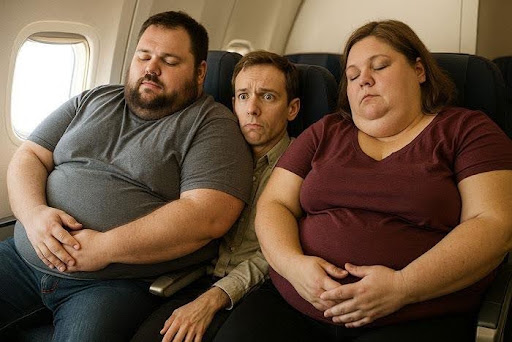
Most Uncomfortable Seats on a Plane: What to Avoid
The Most Uncomfortable Seats on a Plane and How to Avoid Them
You Can Book the Perfect Flight and Ruin It With One Click
You have found the right flight.
The departure time is perfect.
The fare looks reasonable.
The aircraft is a modern Boeing 787, Airbus A350 or another long-haul jet.
You click Continue, choose a seat almost at random and complete the booking.
Get the SkypropreAir Free Travel Pack
Plan smarter, choose a better seat and enjoy a more comfortable long-haul journey. Enter your details below to receive the Travel Pack.
Ten hours later, you may regret that decision.
Because two passengers travelling on the same aircraft, with the same airline and in the same Economy cabin, can have surprisingly different experiences.
One may sleep for several hours and arrive reasonably refreshed.
The other may spend the night surrounded by lavatory queues, galley noise, passing passengers and limited personal space.
The difference can come down to one small square on the seat map.
Your seat.
Not every Economy seat offers the same experience.
And on a long-haul journey, choosing the wrong one can turn an otherwise good flight into an endurance test.
Here are some of the most uncomfortable seats on a plane, why they can be problematic and what you should look for instead.
Knowing the most uncomfortable seats on a plane before you book can make a significant different on a long haul-journey.
Before choosing your seat, compare the aircraft first. The SkypropreAir Economy Seat Comparison Database lets you compare seat pitch, width and cabin layouts across major aircraft types before you book.
1. The Last Row: Convenient on the Seat Map, Frustrating in the Air
The last row may look perfectly ordinary when you are booking.
But examine the cabin configuration carefully.
Depending on the aircraft and airline, seats in the final row may have restricted recline because of a bulkhead, lavatory or galley structure behind them.
That is only the beginning.
The rear of many long-haul Economy cabins is also where you may find lavatories and galleys.
That can mean:
- Passengers gathering while waiting for toilets
- Lavatory doors opening and closing
- Flushing sounds
- Crew preparing meals and drinks nearby
- Galley lights during an overnight flight
- Increased foot traffic around your seat
There is another consideration.
Movement during turbulence can sometimes feel more pronounced toward the rear of an aircraft than closer to its centre of gravity.
The aircraft remains designed to operate safely in turbulence, but the physical sensation may be less comfortable for passengers who dislike bumps.
For light sleepers these final rows can therefore become some of the most uncomfortable seats on a plane, particularly on overnight flights.
SkypropreAir Tip
Before choosing one of the final rows, look carefully at what is directly behind the seat.
A blank area on an airline seat map does not necessarily mean peaceful empty space.
It could be a bulkhead, galley, lavatory or other cabin facility.
Not sure which seat you should choose instead? See our complete guide to the Best Seats on a Plane for legroom, sleep, turbulence and long-haul comfort.
Related Reading: The Long-Haul Comfort Master Guide
2. Seats Beside the Lavatories: The Problem Isn’t Just the Toilet
For long-haul travellers, this can be one of the biggest seat-selection mistakes.
The obvious concern is smell.
But that may not even be the biggest problem.
People are the problem.
On a ten-hour flight, hundreds of passengers may use the lavatories.
When several passengers arrive simultaneously, a queue can form—and suddenly the space beside your seat becomes a waiting area.
Passengers may lean against your seat.
People may talk while waiting.
Lavatory doors repeatedly open and close.
Lights may spill into the cabin during an overnight flight.
And just as you finally fall asleep, another passenger may brush against your shoulder while squeezing past.
One interruption may seem insignificant.
Repeated throughout an overnight flight, those interruptions can seriously affect rest.
Better Choice
When possible, leave several rows between your seat and the nearest lavatory especially when you hope to sleep.
This combination of noise, light and constant foot traffic is why lavatory-adjacent locations are often considered among the most uncomfortable seats on a plane.
3. The Middle Seat: Still One of Economy’s Toughest Assignments
There is nothing mechanically wrong with a middle seat.
But psychologically and physically, it can feel much more restrictive.
You have:
- No direct access to the aisle
- No window to lean against
- Passengers on both sides
- Less perceived personal space
- The familiar negotiation over armrests
On a 60-minute flight, that may be manageable.
On a 10-hour overnight journey, it can become exhausting.
Every time you want to stand, stretch or visit the lavatory, you may have to ask another passenger to move.
If both passengers beside you fall asleep, you may hesitate to get up at all.
Long periods of immobility are also one reason passengers are generally encouraged to move periodically during long journeys when it is safe and practical to do so.
SkypropreAir Tip
If you like moving around regularly, consider an aisle seat.
If uninterrupted sleep matters more, a window seat may be the better option.
Related Reading: Best Seats by Aircraft Type: 787 vs A350 vs 777
4. Seats Beside the Galley: Where Night Flights Never Completely Sleep
The cabin lights dim.
Window shades close.
Passengers settle beneath their blankets.
But one area of the aircraft remains active.
The galley.
Flight attendants need somewhere to prepare meals, organise drinks, store equipment and perform essential cabin duties.
That means galley activity can continue while much of the cabin is trying to sleep.
Depending on your exact seat location, you may notice:
- Trolleys being moved
- Trays and equipment being handled
- Crew conversations
- Passengers gathering nearby
- Light entering the cabin
- Meal preparation activity
None of this means the crew is being unnecessarily noisy.
They are working.
The problem is simply location.
If sleep is your priority on an overnight flight, putting some distance between yourself and a major galley can make a noticeable difference.
5. Tight-Pitch Economy Seats: When Every Inch Starts to Matter
Seat pitch is one of the most important measurements long-haul passengers should understand.
It is commonly used to describe the distance from a point on one seat to the same point on the seat in front.
It isn’t exactly the same thing as usable legroom, because seat design and thickness matter too.
But it remains a useful comparison.
Some high-density Economy cabins can have pitch around 28–30 inches, while other configurations provide more.
Those few inches can make a surprisingly large difference.
Less space may mean:
- Less room around your knees
- Greater difficulty changing position
- More inconvenience when the passenger ahead reclines
- A stronger feeling of confinement
This becomes increasingly noticeable as flight duration increases.
A seat that feels perfectly tolerable for two hours may feel very different after eight.
Don’t Judge the Aircraft by Its Name
This is important.
A Boeing 787 is not automatically spacious.
An Airbus A350 is not automatically spacious.
The airline chooses the cabin configuration.
Two airlines operating the same aircraft type can install different seats, different numbers of rows and different cabin layouts.
Always investigate the airline’s actual configuration rather than choosing a flight simply because it uses a particular aircraft.
6. Bulkhead Seats: Extra Space With Hidden Compromises
Bulkhead seats deserve special attention because they can be either excellent or disappointing.
There is no conventional seat immediately in front of you, which can create a more open feeling.
But there may be trade-offs.
Depending on the aircraft, these can include:
- Fixed armrests
- Tray tables stored inside the armrest
- Reduced seat width
- No under-seat storage during take-off and landing
- Proximity to bassinets
- Proximity to galleys or lavatories
Some passengers love bulkhead seats.
Others discover that the disadvantages outweigh the extra open space.
The lesson is simple:
Never pay extra for a bulkhead seat without checking the specific aircraft configuration first.
7. Seats With Missing or Misaligned Windows
You booked a window seat.
You board the aircraft, sit down and turn towards the wall.
There is no proper window beside you.
It happens.
Aircraft window spacing and airline seat-row spacing do not always align perfectly.
As airlines configure cabins, certain rows can end up positioned between windows or beside partially obstructed windows.
For someone who specifically paid to enjoy the view, that can be extremely disappointing.
This is one reason a detailed cabin map can be valuable before paying for seat selection.
The Bigger Truth: The Aircraft Type Doesn’t Tell the Whole Story
Passengers often ask:
Which aircraft is more comfortable? The Boeing 787 or Airbus A350?
It is an understandable question.
Both aircraft families incorporate modern cabin technologies and are designed for long-range travel.
But aircraft type alone cannot tell you whether your individual seat will be comfortable.
Cabin configuration matters enormously.
The airline decides how many seats to install, how they are arranged and which cabin products are offered.
Fortunately, many of the uncomfortable seats on a plane can be identified before you travel if you know what to look for on the seat map.
That means your real question should be:
How has this airline configured this particular aircraft?
That is a much better starting point for choosing your seat.
| Seat location | Main drawback | Better for | Avoid if |
|---|---|---|---|
| Last row | Noise/recline limitations may occur | Travellers who don’t mind rear cabin | Sleep matters |
| Near lavatory | Queues and foot traffic | Frequent toilet access | Light sleeper |
| Middle seat | Restricted movement | Travelling with companions | You like personal space |
| Near galley | Noise and light | Quick cabin-service access | Overnight sleep |
| Bulkhead | Variable storage/seat width | Extra open space | You need under-seat storage |
| Misaligned window | Poor/no view | Aisle-focused travellers | You paid for the view |
How to Avoid the Worst Seats Before You Fly
Do not wait until boarding to discover what surrounds your seat.
Before paying for seat selection:
- Check the airline’s official seat map.
- Check the airline’s official seat map first, then compare it with a detailed cabin layout resource such as AeroLOPA where available.
- Identify lavatories, galleys, bulkheads and bassinets.
- Check whether the final rows have restricted recline.
- Compare seat pitch and width where reliable measurements are available.
- Look carefully at window alignment if you are choosing a window seat.
- Consider whether you value sleep, aisle access or a view most.
- Recheck the seat map before departure because airlines can change aircraft or configurations.
And remember:
There is no universally perfect seat.
The best seat depends on what matters most to you.
Smart Booking: Comfort Starts Before You Reach the Airport
Compare More Than the Ticket Price
When comparing flights through Aviasales, don’t look only at the cheapest fare.
Consider the aircraft, total journey time, connection, baggage allowance and available seat-selection options before deciding which flight offers the best overall value.
Sometimes paying slightly more for the right itinerary can make a long-haul journey considerably easier.
Protect the Journey, Not Just the Seat
Even the best seat cannot prevent a delayed flight, missed connection or unexpected disruption.
For travellers who want additional protection, consider whether suitable travel insurance makes sense for the journey.
Explore travel insurance options with SafetyWing.
SkypropreAir Final Thought
The cheapest seat and the best-value seat are not always the same thing.
When you are spending eight, ten or twelve hours inside an aircraft, your seat becomes your personal environment.
It determines who passes beside you.
How easily you can stand.
How much activity surrounds you.
Whether you can look outside.
And, potentially, how well you sleep.
So the next time an airline presents you with dozens of almost identical squares on a seat map, don’t choose blindly.
That tiny square could shape your entire flight.
Choose it like it matters.
Because after ten hours in the air, it certainly will.
Avoiding the most uncomfortable seats on a plane isn’t about finding a perfect seat, it is about choosing the seat that best matches the way you travel
Worried about bumps during your flight? Read our guide to why turbulence can strike without warning.
FAQs
What are the most uncomfortable seats on a plane?
Seats in the last row, middle seats and seats directly beside busy lavatories or galleys can be among the most uncomfortable, particularly on long-haul flights. However, the exact experience depends on the aircraft and airline configuration.
Is the last row of an airplane always bad?
No. Some modern aircraft have perfectly acceptable last-row seats. However, certain configurations may have restricted recline or place passengers close to lavatories and galleys, so checking the specific seat map before booking is important.
How can I find the best seat before booking a flight?
Start with the airline’s official seat map and compare it with a detailed aircraft-layout resource such as AeroLOPA. Check seat pitch, lavatory and galley locations, bulkheads, window alignment and whether your seat has restricted recline before paying for seat selection.
Join the Conversation
What is the worst seat you’ve ever had on a long-haul flight and what made it so uncomfortable?