
Flying With Pets: What Every Passenger Should Know
The Family Member Sitting Under the Seat
Flying with pets can be an exciting experience, but it requires careful preparation.
The aircraft door closes.
Passengers settle into their seats.
A flight attendant walks down the aisle carrying a small pet carrier.
Inside, a golden retriever puppy looks around nervously. Across the cabin, a cat quietly curls into a blanket beneath its owner’s feet.
For millions of people, pets are not simply animals they are family.
Get the SkypropreAir Free Travel Pack
Plan smarter, choose a better seat and enjoy a more comfortable long-haul journey. Enter your details below to receive the Travel Pack.
Whether relocating across the country, taking a holiday or moving overseas, more travellers than ever are choosing to fly with their dogs and cats.
But while taking a pet on an aircraft may appear straightforward, it is actually one of the most carefully managed parts of modern air travel.
Airlines must balance passenger comfort, aircraft safety, animal welfare, and international regulations, all while ensuring every flight departs safely and on time.
Recently, the International Air Transport Association (IATA) introduced updated operational guidance to help airlines create a more consistent experience for passengers travelling with pets.
Yet the principles behind these recommendations have existed for years and reveal something fascinating about how aviation protects both people and animals.
Here’s what every passenger should know before boarding with a pet.
Planning to travel with your pet? Compare airfares with Aviasales to find pet-friendly routes and airline options before you book.
Related Reading: The Dangerous Mistake Passengers Make During Aircraft Evacuations
Why Airlines Have Strict Rules for Flying With Pets
Many passengers assume pet policies exist simply to make travel more organised.
The reality is much more important.
Animals respond differently to unfamiliar environments.
Aircraft cabins introduce new sounds, vibrations, pressure changes, unfamiliar smells, and hundreds of strangers.
Even calm pets can become anxious.
Airlines therefore design their procedures to reduce stress while protecting everyone onboard.
Every rule from carrier size to seating location serves a safety purpose.
Not Every Pet Travels the Same Way
One of the biggest misconceptions is that every pet flies in the aircraft cabin.
In reality, there are several travel options depending on:
- The airline
- Destination country
- Pet size and weight
- Breed
- Local regulations
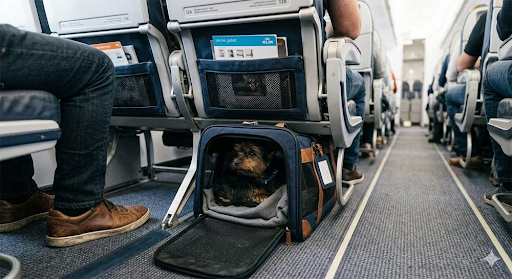
Small cats and dogs often travel inside approved carriers beneath the seat in front of their owner.
Larger animals may travel in climate-controlled cargo compartments specially designed for live animals.
Service animals may follow different rules depending on the airline and national regulations.
Understanding these differences before booking can prevent expensive surprises.
Related Reading: The Hidden Engineering Behind Aircraft Passenger Doors
Why Pet Carriers Must Meet Strict Standards
Passengers sometimes wonder why airlines are so particular about pet carriers.
The answer is safety.
A suitable carrier should:
- Keep the pet secure throughout the flight.
- Allow enough room to stand, turn, and lie comfortably.
- Provide adequate ventilation.
- Fit safely beneath the seat if travelling in the cabin.
An unsuitable carrier could endanger the pet or interfere with emergency procedures.
The Cabin Environment Can Be Stressful for Animals
Commercial aircraft cabins are comfortable for humans, but they are still unfamiliar environments for pets.
Animals experience:
- Engine noise.
- Cabin pressure changes.
- New smells.
- Unfamiliar people.
- Limited movement.
Most pets cope remarkably well when properly prepared.
However, veterinarians generally advise against unnecessary sedation, as sedatives can affect breathing and balance at altitude.
Instead, airlines recommend helping pets become familiar with their carrier well before the trip.
Related Reading: The Seat Beneath You Could Save Your Life
Why Some Breeds Face Travel Restrictions
You may notice that some airlines restrict certain breeds.
This is not discrimination.
Flat-faced (brachycephalic) breeds, such as Bulldogs, Pugs, Persian cats, and similar breeds, may have a higher risk of breathing difficulties during travel.
Many airlines therefore apply additional safety measures or seasonal restrictions to protect the animals.
Always check airline specific policies before booking.
Related Reading: What Are MANPADS—and How Do Airlines Protect Passengers From Them?
International Travel Is More Than Buying a Ticket
Flying internationally with a pet often involves additional requirements, including:
- Microchipping.
- Vaccinations.
- Health certificates.
- Import permits.
- Country-specific quarantine rules.
Some destinations have particularly strict biosecurity regulations.
Failing to prepare the correct paperwork could result in delays, denied boarding, or quarantine on arrival.
Preparing for Flying With Pets
Good preparation can make the journey much easier.
Experts recommend:
- Introducing the carrier several weeks before departure.
- Taking short practice trips.
- Keeping vaccination records up to date.
- Confirming airline requirements well in advance.
- Arriving early at the airport.
- Packing water and any approved essentials.
A calm, familiar routine can reduce anxiety for both owner and pet.
Good preparation makes flying with pets much less stressful.
Why Airlines Continue Improving Pet Travel
As more families travel with pets, airlines continue refining their procedures.
Industry guidance focuses on creating a journey that is predictable, consistent, and safe from booking and check-in to boarding, the flight itself, and arrival.
For passengers, that means clearer expectations.
For pets, it means a more comfortable and carefully managed experience.
International flying with pets often requires additional documentation.
Traveling internationally? Protect yourself against unexpected trip disruptions with SafetyWing travel insurance.
The Bottom Line
Before flying with pets, always check your airlines latest policy.
Flying with a pet is about far more than purchasing an extra ticket or carrying a travel crate.
Behind every journey lies a carefully designed system of safety standards, veterinary guidance, operational procedures, and international regulations intended to protect both animals and passengers.
The next time you see a dog or cat quietly travelling beneath a seat or hear a pet being checked in before departure, remember that aviation has invested decades of expertise into making that journey as safe as possible.
For millions of families around the world, those invisible systems help ensure that every member of the family arrives safely whether they walk on two legs or four.
Understanding the basics of flying with pets helps make the experience safer, less stressful, and more enjoyable for everyone involved.
FAQs
- Can I take my dog or cat into the aircraft cabin?
It depends on the airline, your destination, and your pet’s size. Many airlines allow small pets in approved carriers beneath the seat. - Is it safe for pets to fly?
For most healthy pets, flying is safe when airline requirements are followed and the animal is properly prepared. Understanding the rules for flying with pets helps keep both passengers and animals safe. - Why do airlines have different pet policies?
Airlines must comply with national regulations, aircraft limitations, and their own operational procedures, so policies can vary.
Have you ever flown with a pet, or would you consider taking one on a flight? Share your experience or your biggest concern in the comments below.