
Why Aircraft Seats are Critical to Flight Safety
The Seat Beneath You Could Save Your Life: Why Aircraft Seats Are Among Aviation’s Most Important Safety Systems
Most Passengers Never Think About Their Seat—Until It Has to Save Their Life
How Aircraft Seat Safety is Tested Before Every Flight
Aircraft seat safety is something most passengers never think about util an emergency happens. When you board an aircraft, your attention is probably on finding your row, stowing your bag, and settling in before take-off.
Your seat is just somewhere to sit. In reality, aircraft seat safety is one of the most overlooked parts of modern aviation.
Or so it seems.
In reality, the seat beneath you is one of the most important pieces of safety equipment on the entire aircraft.
It is designed to absorb tremendous forces, keep you restrained during turbulence and emergency landings, and remain firmly attached to the cabin floor even under extreme conditions.
Get the SkypropreAir Free Travel Pack
Plan smarter, choose a better seat and enjoy a more comfortable long-haul journey. Enter your details below to receive the Travel Pack.
That’s why aviation regulators pay close attention to something most passengers never notice: how aircraft seats are attached to the floor.
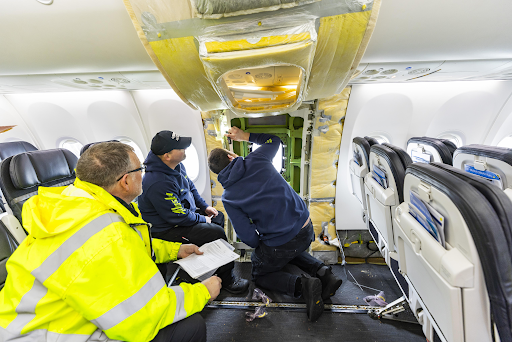
A recent proposal by the U.S. Federal Aviation Administration (FAA) to inspect hundreds of Boeing 737 MAX aircraft after identifying a potential issue with passenger seat-track fittings is a reminder that, in aviation, even the smallest component can make a significant difference.
Planning your next flight? Compare fares and routes with Aviasales to find the best value for your journey.
Your Seat Is Safety Equipment—Not Just Cabin Furniture
Most people think of aircraft safety in terms of engines, wings or pilots.
Yet passenger seats are certified to perform a critical safety function.
Aircraft seat safety depends on these engineering standards:
- Keep passengers securely restrained during severe turbulence.
- Absorb energy during emergency landings.
- Help reduce injuries during accidents.
- Stay firmly anchored to the aircraft floor.
- Allow passengers to evacuate quickly if an emergency occurs.
Without properly secured seats, even a survivable accident could become far more dangerous.
Related Reading: The Most Dangerous Phase of Every Flight
Why the FAA Is Inspecting Hundreds of Boeing 737 MAX Aircraft
The FAA recently proposed inspections covering 453 U.S.-registered Boeing 737 MAX aircraft, including certain:
- Boeing 737-8
- Boeing 737-9
- Boeing 737-8200
The reason isn’t because the aircraft have been declared unsafe.
Instead, inspectors identified the possibility that some passenger seat-track fittings may have been installed incorrectly.
These fittings connect each passenger seat to rails built into the aircraft floor.
If improperly installed, a seat could potentially shift or disengage during:
- Severe turbulence
- A hard landing
- An emergency landing
Although such situations are rare, regulators prefer correcting potential weaknesses long before they become real-world problems.
Travel with peace of mind. Protect your trip against unexpected emergencies with SafetyWing Travel Insurance before you fly.
Why Even a Loose Seat Can Become a Serious Hazard
Imagine an aircraft making an emergency landing.
Passengers remain restrained.
Cabin crew prepare for evacuation.
If one or more seats were no longer securely attached, they could:
- Cause injuries to passengers.
- Obstruct evacuation paths.
- Slow emergency exits.
- Create obstacles inside the cabin when every second matters.
Commercial aircraft are certified so that a full cabin can be evacuated within 90 seconds, even if half the emergency exits are unavailable.
Anything that blocks the aisle—even a single seat—can affect that process.
Read next: What Happens During an Aircraft Evacuation at Night?
How Aircraft Seats Are Tested Before They Ever Carry Passengers
Aircraft seat safety begins long before passengers ever board.
Before an aircraft seat is approved for commercial use, it undergoes rigorous certification tests.
Engineers simulate forces far greater than those experienced during normal flights.
Seats must prove they can:
- Stay attached during high-impact testing.
- Keep passengers restrained.
- Minimise head and spinal injuries.
- Protect occupants during sudden deceleration.
Even the tray tables, armrests, cushions and seatbelts must meet strict certification standards.
In aviation, a passenger seat is treated as life-saving equipment—not merely a place to sit.
Related Reading: The Hidden Science Behind Aircraft Oxygen Masks
The Small Components That Carry Enormous Responsibility
Passengers rarely notice the metal rails running beneath aircraft seats.
Known as seat tracks, they are built directly into the aircraft structure.
Special fittings lock every seat securely into these tracks.
Although these components are relatively small, they carry enormous loads throughout every flight.
This is why regulators investigate installation errors with exceptional care.
Sometimes, safety isn’t about replacing an engine.
Sometimes it’s about ensuring a few centimetres of metal have been fitted exactly as designed.
What This Says About Aviation Safety
News of an FAA inspection may sound alarming at first.
In reality, it demonstrates how commercial aviation maintains its remarkable safety record.
The aviation industry doesn’t wait for accidents to reveal problems.
Instead, manufacturers, airlines and regulators constantly analyse maintenance reports, engineering data and inspection findings to identify potential risks before passengers are ever affected.
This proactive approach has made commercial aviation one of the safest ways to travel.
Related Reading: Why Flight Attendants Sit on Their Hands During Take-off
Should Passengers Be Concerned?
For travellers, the answer is reassuring.
The FAA has not grounded the affected Boeing 737 MAX aircraft.
The proposal simply requires inspections and corrective action where necessary.
Not all 453 aircraft are expected to have incorrectly installed seat fittings.
Instead, the inspections are designed to identify any aircraft that may require repairs.
For passengers, flights continue to operate normally while airlines and maintenance teams complete the required checks.
Related: Why Turbulence Isn’t as Dangerous as It Feels
The Bigger Lesson Every Traveller Can Learn
The next time you buckle your seatbelt, remember this:
Your safety depends on far more than powerful engines or experienced pilots.
It depends on thousands of carefully engineered components working together—including the seat beneath you.
Most passengers will never notice the seat tracks hidden beneath the carpet or the fittings securing their seat to the floor.
That is exactly how aviation safety is meant to work.
The best safety systems are the ones you never have to think about.
And when regulators announce inspections like these, it isn’t a sign that aviation is becoming less safe.
It’s evidence that the industry is constantly looking for ways to make flying even safer than it already is.
The FAA inspections show why aircraft seat safety remains a top priority for regulators.
Final Thoughts
The FAA’s proposed Boeing 737 MAX seat inspections are more than just another regulatory announcement—they offer a fascinating glimpse into how aviation protects passengers long before a flight ever leaves the ground.
From the smallest seat fitting to the largest aircraft engine, every component is scrutinised because, in aviation, there is no such thing as an insignificant detail.
The next time you settle into your seat before take-off, remember that you’re not just sitting on a cushion.
You’re sitting on decades of engineering, testing and continuous safety oversight designed to protect you when it matters most.
Aircraft seat safety is one of the reasons commercial aviation remains so safe.
Frequently Asked Questions
- Are aircraft seats designed to survive a crash?
Yes. Aircraft seats undergo rigorous certification testing to ensure they can withstand high-impact forces, keep passengers restrained, and reduce the risk of serious injuries during emergency landing or survivable accident.
2. Why is the FAA inspecting Boeing 737 MAX aircraft seats?
The FAA proposed inspections after identifying the possibility that some passenger seat-track fittings may have been installed incorrectly on certain Boeing 737 MAX aircraft. The inspections are precautionary and are intended to verify that seats remain securely attached to the aircraft floor.
3. Why are aircraft seats bolted to the floor?
Aircraft seats are securely attached to seat tracks built into the cabin floor. These attachments prevent seats from shifting during severe turbulence, hard landings, or emergency situations, helping to protect passengers and keep evacuation routes clear.