
Why Power Banks Are Becoming One of Aviation’s Biggest Cabin Safety Risks
Your Flight Could Be Perfect… Until a Device in Someone’s Bag Starts Smoking.
The cabin is quiet.
Most passengers are watching movies.
Others are asleep.
A child is charging a tablet.
Someone plugs in a power bank beneath their seat.
Get the SkypropreAir Free Travel Pack
Plan smarter, choose a better seat and enjoy a more comfortable long-haul journey. Enter your details below to receive the Travel Pack.
Then
A faint popping sound.
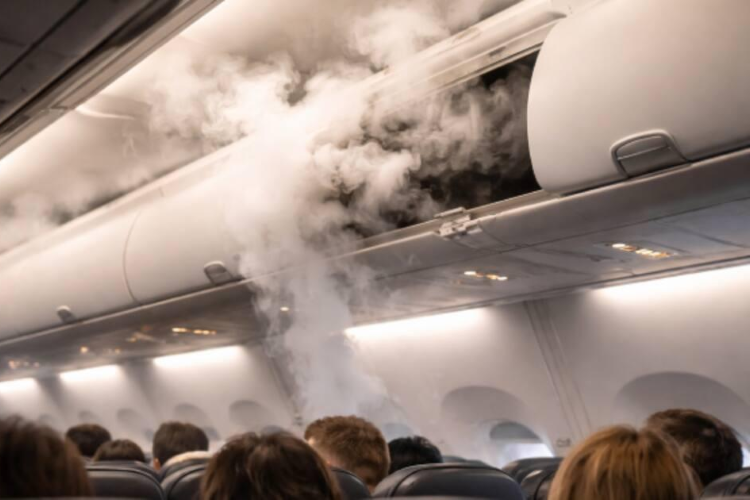
Seconds later, white smoke begins pouring from a backpack.
Passengers panic.
A flight attendant races down the aisle carrying protective gloves and a special fire-containment bag.
Within moments, what looked like an ordinary portable charger has become the most dangerous object on board.
It sounds dramatic.
But this exact scenario has happened on commercial flights around the world.
As millions of travelers carry power banks every day, aviation experts are warning that these small devices have quietly become one of the fastest-growing cabin safety challenges.
The danger isn’t the electricity they store.
It’s what happens when that energy escapes.
The Device Almost Every Traveler Carries
Power banks have become indispensable.
They keep phones alive during long-haul flights.
They power tablets, cameras, laptops, headphones, and gaming devices.
Modern travelers often carry two or three.
Worldwide, billions of lithium-ion batteries travel through airports every year.
The overwhelming majority are completely safe.
But when one fails, the consequences can escalate with alarming speed.
- Related Reading: The Hidden Science Behind Aircraft Oxygen Masks – Discover how aircraft are designed to protect passengers when emergencies happen.
Travel Smart
Planning your next trip?
Compare airline fares before you book and find the best deals through Aviasales. You could save hundreds of dollars while choosing flights that best suit your travel schedule.
The Hidden Threat Inside Every Lithium-Ion Battery
Every power bank contains tightly packed lithium-ion cells.
These batteries store enormous amounts of energy in an incredibly small space.
If damaged, poorly manufactured, overcharged, exposed to excessive heat, or affected by an internal defect, they can enter a dangerous process known as thermal runaway.
This is aviation’s greatest concern.
Instead of simply overheating, the battery begins generating more heat than it can safely release.
Temperatures can exceed 1,000°F (540°C).
The battery releases flammable gases.
Cells ignite one another in a chain reaction.
The fire effectively feeds itself.
Why Cabin Fires Terrify Flight Crews
Aircraft are designed with multiple fire-protection systems.
Cargo compartments contain built-in fire suppression systems.
The passenger cabin is different.
Hundreds of people sit only inches away from electronic devices.
A smoking battery can quickly fill the cabin with dense, toxic smoke.
Fortunately, flight attendants receive extensive training to manage lithium-battery emergencies.
Many airlines now carry fire-containment bags specifically designed to isolate overheating devices until the aircraft lands safely.
- Related Reading: What Happens During an Aircraft Evacuation at Night? Learn how cabin crews coordinate one of aviation’s most challenging emergency procedures.
Why Airlines Want Power Banks in the Cabin—Not Checked Luggage
Many travelers mistakenly believe checked baggage is the safest place for power banks.
In reality, it is exactly the opposite.
If a lithium battery ignites inside the cargo hold, no crew member can immediately reach it.
Inside the cabin, flight attendants can detect smoke within seconds and respond before the situation escalates.
That is why spare lithium batteries—including power banks—must generally travel in carry-on baggage.
Quick access saves valuable time.
And in aviation, time saves lives.
Don’t Forget Travel Insurance
Unexpected flight diversions, delays, cancellations, or medical emergencies can happen anywhere.
Protect yourself with comprehensive travel insurance from SafetyWing, trusted by thousands of international travelers and digital nomads.
The Growing Number of Cabin Battery Incidents
Airlines worldwide have reported a noticeable increase in overheating lithium-ion batteries.
Most incidents involve:
• Damaged power banks
• Cheap counterfeit products
• Batteries crushed inside luggage
• Overheating during charging
• Internal short circuits
Several flights have diverted because of smoking batteries.
Others have required emergency landings or aircraft evacuations after arrival.
Although these events remain uncommon compared with millions of annual flights, the trend has become significant enough to concern aviation regulators worldwide.
Why Airlines Are Tightening the Rules
Many airlines have strengthened their policies.
Some now:
• Prohibit power banks in checked baggage.
• Restrict battery capacity.
• Require terminals to be protected.
• Discourage charging power banks during flight.
• Ask passengers to keep power banks easily accessible rather than buried in overhead luggage.
These measures are not designed to inconvenience travelers.
They are designed to prevent a manageable incident from becoming an emergency.
Related Reading: The Most Dangerous Phase of Every Flight explains why aviation safety depends on anticipating small risks before they become major problems.
What Flight Attendants Actually Do When a Battery Starts Smoking
Cabin crew follow strict emergency procedures.
They immediately identify the affected device.
Move nearby passengers if necessary.
Use protective gloves.
Cool the battery to slow thermal runaway.
Place it inside a specialized fire-containment bag whenever available.
Continuously monitor the device.
Inform the pilots immediately.
If required, the captain may divert the aircraft.
Every member of the crew trains repeatedly for situations most passengers hope they never witness.
How You Can Reduce the Risk
Fortunately, staying safe is simple.
- Buy reputable brands.
- Avoid counterfeit chargers.
- Replace damaged or swollen batteries.
- Never carry loose batteries with exposed terminals.
- Protect your power bank from crushing or excessive heat.
- Stop using it immediately if it becomes unusually hot.
- Notify cabin crew immediately if you notice smoke or a burning smell.
- Small habits dramatically reduce risk.
The Future of Portable Battery Safety
As airlines welcome record numbers of passengers, the number of lithium-ion batteries in aircraft cabins will continue to grow.
Manufacturers are developing safer battery chemistry.
Airlines are improving crew training.
Aircraft operators are investing in better containment equipment.
Passengers are becoming more informed.
The goal is not to discourage travelers from carrying power banks.
It is to ensure that everyone understands how to carry them responsibly.
Final Thoughts
Power banks have transformed modern travel.
They keep us connected across continents.
They power our phones during delays.
They entertain us on long-haul flights.
Yet they also remind us of one important truth:
Even the smallest object in your backpack deserves respect when it contains enormous amounts of stored energy.
The safest flight is rarely the one with the newest aircraft.
It’s the one where every passenger understands that safety is a shared responsibility.
Continue Exploring SkypropreAir
If you enjoyed this article, you may also like:
• The Hidden Science Behind Aircraft Oxygen Masks
• Why Flight Attendants Sit on Their Hands During Takeoff
• What Happens During an Aircraft Evacuation at Night?
• The Most Dangerous Phase of Every Flight
These articles reveal the fascinating science and safety systems that protect passengers every day.
Frequently Asked Questions
Can I put a power bank in my checked baggage?
No. Most aviation authorities require spare lithium-ion batteries, including power banks, to be carried in your cabin baggage where crew members can quickly respond if something goes wrong.
Why do power banks sometimes catch fire?
Usually because of internal defects, physical damage, overheating, poor manufacturing quality, overcharging, or short circuits that trigger thermal runaway.
Should I use my power bank during a flight?
Yes, if your airline permits it and the power bank is in good condition. However, always follow your airline’s instructions and stop using it immediately if it becomes unusually hot.