
The Creeping Airport Technology Many Passengers Barely Notice — And Why Some Travelers Are Starting to Feel Uncomfortable
A woman walked through immigration without showing a passport.
No officer stopped her.
No boarding pass was scanned.
No questions were asked.
She simply looked into a camera for less than two seconds — and the airport already knew who she was.
Most passengers nearby barely noticed.
That’s the unsettling reality of modern air travel: airports are becoming smarter, quieter, and far more invasive than many travelers realize.
Get the SkypropreAir Free Travel Pack
Plan smarter, choose a better seat and enjoy a more comfortable long-haul journey. Enter your details below to receive the Travel Pack.
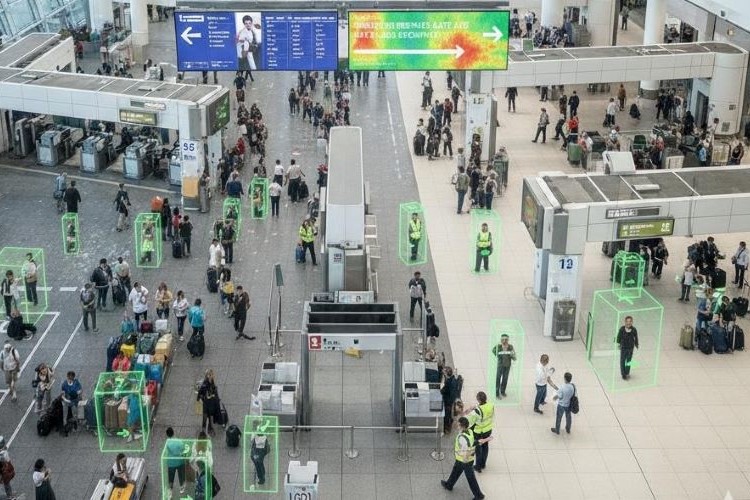
The transformation isn’t happening through giant robots or dramatic sci-fi machines. It’s happening subtly — through ceiling cameras, facial recognition gates, AI monitoring systems, smart sensors, biometric checkpoints, and invisible data collection that quietly follows passengers from check-in to boarding.
And for millions of travelers, the creepiest part is this:
Most people are willingly walking into it.
If you’ve ever wondered why modern airports suddenly feel different, colder, smoother, or strangely “watchful,” you’re not imagining it.
The Modern Airport Is Quietly Watching Everything
Today’s airports no longer simply move passengers.
They study them.
Modern terminals increasingly monitor:
-
Passenger movement patterns
-
Facial identity
-
Crowd behavior
-
Device signals
-
Walking speed
-
Queue behavior
-
Shopping patterns
-
Security risk indicators
Many travelers think airport surveillance only happens at security checkpoints.
In reality, modern airports have become enormous connected digital ecosystems.
And most of it happens invisibly.
One camera tracks crowd congestion.
Another estimates wait times.
A biometric scanner verifies identity.
AI systems flag “unusual behavior.”
Airport apps monitor passenger movement through Wi-Fi and Bluetooth signals.
The average traveler sees convenience.
The airport sees data.
This growing sense of invisible monitoring is one reason many passengers now say flying feels emotionally different than it did even a few years ago — something we explored deeper in SkypropreAir’s feature “The Strange Psychological Effect Long Flights Have on Passengers.”
Facial Recognition Is Becoming the New Boarding Pass
The biggest change passengers are starting to notice is facial recognition.
More airports now allow travelers to:
-
Board aircraft with their face
-
Pass immigration using biometric scans
-
Drop bags without showing documents
-
Clear checkpoints automatically
The process feels fast and strangely effortless.
That’s exactly why airports love it.
Long lines create stress.
Stress damages passenger satisfaction.
Biometric systems reduce friction.
But they also normalize constant identity scanning.
And many passengers still don’t fully understand:
-
Who stores their biometric data
-
How long it is retained
-
Whether it can be shared internationally
-
What happens if systems are breached
Unlike passwords, faces cannot be changed.
That concern is becoming increasingly important as airports push toward fully contactless travel. SkypropreAir previously examined this growing debate in “Facial Recognition at Airports: Convenience or Surveillance?” — a feature many readers described as “deeply unsettling after realizing how much airports already know.”
If you’re booking international flights through major biometric hubs, comparing airports, aircraft layouts, and connection times before travel can significantly reduce stress. Many frequent travelers now use Aviasales to compare flight routes and avoid unnecessarily stressful airport transfers.
Airports Are Now Predicting Passenger Behavior
This is where things become even more unsettling.
Some modern airport systems are moving beyond identification into prediction.
AI-assisted security technologies can analyze:
-
Body language
-
Movement patterns
-
Behavioral anomalies
-
Facial expressions
-
Crowd interactions
The goal is early threat detection.
But critics argue these systems may misinterpret normal human behavior.
A nervous flyer may simply fear turbulence.
A tired parent may appear agitated.
A stressed traveler rushing to a gate could trigger attention unintentionally.
Technology can measure movement.
Understanding human emotion is far more difficult.
And many passengers don’t realize how deeply behavioral monitoring is expanding inside global airports.
This psychological tension is becoming a major theme in modern aviation. It connects directly to why boarding itself now feels more emotionally draining for many travelers — something explored in SkypropreAir’s “The Real Reason Boarding Feels So Stressful.”
Why Travelers Keep Accepting It Anyway
Here’s the psychological reality airports understand very well:
Passengers are exhausted.
Flying already creates:
-
Stress
-
Fatigue
-
Anxiety
-
Long waits
-
Information overload
So when technology promises faster boarding or shorter immigration lines, travelers usually accept it immediately.
That’s how airport technology spreads so successfully.
Not through force.
Through relief.
A passenger who once worried about facial recognition often stops caring when the biometric queue moves twice as fast.
Convenience changes behavior quickly.
That’s one reason modern airports increasingly prioritize seamless automation over visible human interaction.
Ironically, the same travelers who fear surveillance often still choose smoother premium airport experiences whenever possible. That explains why articles like “Why Smart Travelers Check In Later — Not Earlier” continue performing strongly among frequent flyers searching for ways to reduce airport stress.
The Airport Experience Is Becoming Less Human
Older airports felt chaotic — but human.
You interacted constantly with:
-
Check-in staff
-
Immigration officers
-
Gate agents
-
Security personnel
Modern airports increasingly remove those interactions.
Now passengers often move through:
-
Self-service bag drops
-
Automated gates
-
Digital scanners
-
AI-powered systems
-
Silent biometric checkpoints
For some travelers, this feels efficient.
For others, it feels emotionally empty.
Many nervous flyers still find comfort in simple human reassurance:
A smile from a gate agent.
A helpful security officer.
A calm explanation during delays.
Technology improves efficiency.
But airports risk losing the emotional warmth that once made stressful journeys feel more manageable.
That emotional disconnect may also explain why travelers increasingly obsess over aircraft comfort, cabin mood, and smoother flying experiences. Related reading on SkypropreAir: “Best Aircraft for Nervous Flyers (2026): Turbulence, Noise & Smoothness Ranked.”
The Creeping Technology Most People Never See
The most powerful airport systems are often invisible.
Passengers usually focus on visible machines.
But modern airports increasingly operate through hidden infrastructure:
-
Smart sensors
-
Wi-Fi tracking
-
Bluetooth monitoring
-
Automated risk scoring
-
Crowd analytics
-
Thermal imaging
-
AI-assisted surveillance
-
Predictive passenger flow systems
Even airport advertising is becoming smarter.
Digital screens can adapt messaging based on passenger demographics, timing, movement patterns, and terminal congestion.
The airport is no longer just transporting people.
It is studying them continuously.
And the more connected airports become, the more travelers are beginning to question whether convenience is quietly replacing privacy.
The Future Airport May Feel Almost Invisible
The future of air travel probably won’t look dramatically futuristic.
Instead, it may become almost frictionless.
Experts predict future airports could eventually eliminate:
-
Physical boarding passes
-
Manual document checks
-
Traditional immigration desks
-
Visible identity verification
Passengers may move from curb to aircraft through continuous background authentication.
In simple terms:
The airport may recognize you constantly without needing to stop you.
For some travelers, that sounds convenient.
For others, deeply uncomfortable.
As airport systems become more automated, flexible travel protection matters more than ever — especially during delays, missed connections, cancellations, or sudden rerouting. Many long-haul travelers now use SafetyWing for flexible international coverage designed around modern travel unpredictability.
The Airport of the Future Has Already Arrived
Modern airports are no longer simply transportation hubs.
They are becoming intelligent environments where:
-
surveillance,
-
psychology,
-
automation,
-
convenience,
-
and passenger behavior
all quietly merge together.
The technology works best when travelers stop noticing it.
And perhaps that is exactly what makes it feel so unsettling.
If this article made you look at airports differently, share it with fellow travelers — especially anyone who still believes modern flying is only about planes and passports. The airport itself may now be the most powerful piece of travel technology passengers barely notice.
FAQs
1. Do airports store facial recognition data permanently?
Policies vary by country, airport, and airline. Some systems delete data quickly after verification, while others may retain information longer for security or operational purposes.
2. Can passengers opt out of biometric airport systems?
In some airports, yes. Travelers may still request manual identity verification, though alternatives are not always clearly communicated.
3. Are AI-powered airport security systems accurate?
They can improve efficiency and threat detection, but critics warn that behavioral prediction systems may still produce errors, biases, or false positives.