
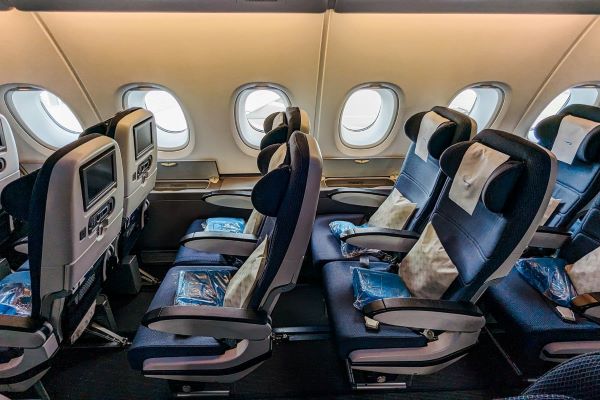
Why Some Long-Haul Flights Feel Shorter Than Others
Aircraft Design, Cabin Psychology & the Science of Time in the Air
Two long-haul flights can have the same scheduled duration yet one feels effortless while the other drags endlessly. This isn’t imagination. It’s the result of aircraft design, cabin psychology, and how the human brain perceives time under physical and mental stress.
In this SkypropreAir Review, we explain why some long-haul flights genuinely feel shorter than others, and how choosing the right aircraft, cabin, and seat can quietly transform your experience.
Aircraft Design: Why Newer Jets Feel “Faster”
Modern widebody aircraft are engineered to reduce physical strain and when your body is more comfortable, time passes faster.
New-generation aircraft such as the Airbus A350 and Boeing 787 Dreamliner feature:
- Lower cabin altitude (around 6,000 ft vs 8,000 ft on older aircraft)
- Higher humidity that reduces dehydration and headaches
- Smoother ride with less vibration
- Noticeably quieter cabins
If you’re choosing between these two aircraft, our detailed Airbus A350 vs Boeing 787: Which Is Better for Long Flights? comparison explains how cabin width, humidity, and ride quality differ in real-world flying.
Get the SkypropreAir Free Travel Pack
Plan smarter, choose a better seat and enjoy a more comfortable long-haul journey. Enter your details below to receive the Travel Pack.
Reduced noise and vibration matter more than most travellers realise. If cabin quietness is a priority, our Quietest Aircraft for Long-Haul Flights guide breaks down which jets consistently feel calmer and less fatiguing over 8+ hours.
Cabin Space & Crowd Psychology
Your brain reacts strongly to perceived space — even when seat pitch is identical.
Large aircraft like the Airbus A380 often feel more relaxed in economy because:
- Wider aisles reduce crowding stress
- Boarding feels less chaotic
- Meal service feels less intrusive
- Cabins feel visually open rather than compressed
Aircraft size and cabin psychology play a major role in time perception explored further in our Airbus A380 vs Boeing 777 Economy Experience comparison, where similar seat layouts can feel radically different in practice.
Crowding increases cortisol levels, and elevated stress makes minutes feel longer.
Lighting, Sleep & Circadian Time Compression
Lighting design plays a powerful role in how long a flight feels.
Modern aircraft use dynamic LED lighting to simulate:
- Sunset shortly after takeoff
- Darkness during cruise
- Sunrise before landing
This helps passengers fall asleep earlier and stay asleep longer. Sleep compresses time perception dramatically four hours of sleep can feel like 30 minutes.
For practical sleep strategies, seat tips, and timing hacks, see our Long-Haul Economy Survival Guide (Europe → USA) built specifically for overnight transatlantic flights.
Entertainment, Flow & Mental Distraction
Time slows down when your brain is bored.
Flights feel shorter when:
- Screens are large, bright, and responsive
- Power outlets work reliably
- Wi-Fi allows work or streaming
- Entertainment systems load quickly
Engaging content creates flow states, where the brain stops tracking time altogether. Older cabins with slow or dated systems force passengers to notice every minute passing.
Seat Ergonomics & Micro-Discomfort
Poor seat design constantly reminds your brain that time is passing.
Discomfort leads to:
- Constant fidgeting
- Muscle tension
- Repeated posture changes
This is why premium economy often feels dramatically shorter than standard economy, even though the flight time is identical. Our Is Premium Economy Worth It on Long-Haul Flights? guide explains when the upgrade genuinely improves comfort — and when it doesn’t.
Choosing the wrong seat can make even a modern aircraft feel endless. Our Worst Seats to Avoid on Long-Haul Flights guide highlights the layouts and rows most likely to ruin long-haul comfort.
Smart Booking Insight
When comparing similar fares, look beyond price:
- Aircraft type
- Cabin age
- Seat layout
A quick comparison on Aviasales often reveals which flights use newer aircraft — sometimes at the same price as older jets.
For long-haul journeys involving connections or overnight travel, flexible cover like SafetyWing quietly protects against delays, missed connections, and medical issues — especially useful on transatlantic itineraries.
The Psychology Verdict
Long-haul flights feel shorter when:
- Your body is physically comfortable
- The cabin feels calm and spacious
- Sleep comes early and naturally
- Your brain stays occupied
Aircraft don’t change the clock — they change time awareness.
That’s the real difference at 35,000 feet.
FAQs: Aircraft & Time Perception
Why do newer aircraft feel faster than older planes?
Lower cabin altitude, quieter cabins, better lighting, and improved seats reduce fatigue making time pass faster.
Does aircraft type matter more than airline service?
Often yes. A basic service on a modern jet can feel better than premium service on an older, noisier aircraft.
Why do overnight long-haul flights feel shorter?
Sleep compresses perceived time, especially when lighting and cabin conditions support circadian rhythms.