
What Happens If a Passenger Plane Lands Too Short on the Runway?
What Happens If a Passenger Plane Lands Too Short on the Runway?
351 Passengers. An Airbus A380. And a Runway That Hadn’t Quite Begun
After almost eleven hours in the air, Lufthansa Flight LH459 was approaching Munich.
Behind it lay San Francisco and thousands of kilometres of flying.
Ahead was Runway 26L.
For the 351 passengers aboard the enormous Airbus A380, this should have been the most routine part of the journey.
The aircraft descended toward the runway.
Get the SkypropreAir Free Travel Pack
Plan smarter, choose a better seat and enjoy a more comfortable long-haul journey. Enter your details below to receive the Travel Pack.
But something unusual happened.
The A380 made ground contact before the marked runway threshold, striking runway lighting as it landed.
The aircraft remained under control, continued its landing and taxied to its parking position. Passengers disembarked normally, with no reported injuries.
But the incident raises a fascinating question for ordinary passengers:
What actually happens when a passenger plane lands too short?
And perhaps more importantly:
How do pilots prevent an approach that isn’t going according to plan from becoming an accident?
The answer reveals just how much engineering, training and decision-making sits behind something passengers experience every day — landing an aeroplane.
What Does “Landing Too Short” Actually Mean?
First, landing short doesn’t necessarily mean an aircraft completely missed the physical runway.
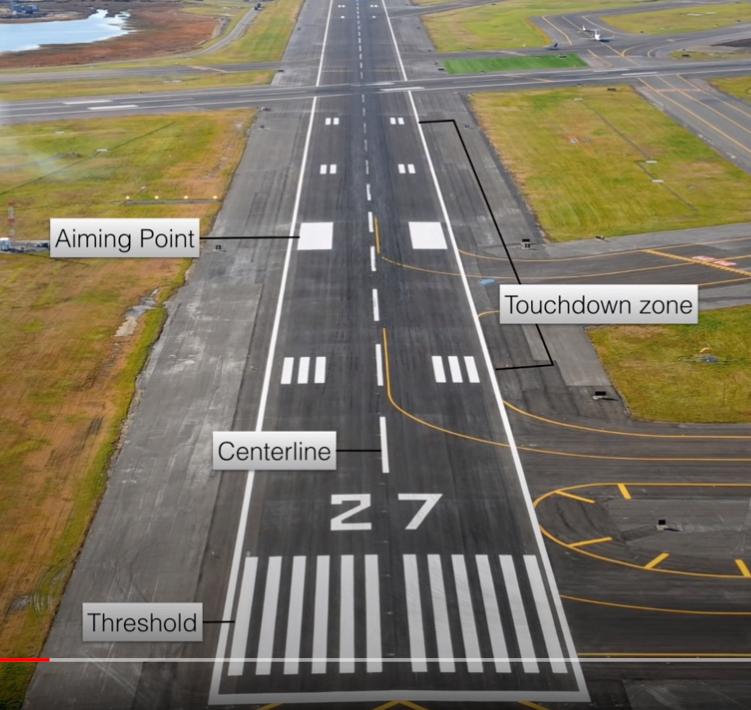
Runways contain several different markings and areas.
The runway threshold identifies the beginning of the portion of runway normally available for landing.
Beyond that is the touchdown zone where arriving aircraft are expected to make contact with the runway.
An aircraft touching down before the designated threshold may therefore contact pavement or infrastructure that isn’t intended to be the normal touchdown area.
That’s very different from simply touching down slightly earlier within the normal touchdown zone.
And it matters.
Approach lights, runway lights and other airport infrastructure can exist around these areas.
An aircraft’s landing gear striking them can damage both the equipment and the aircraft.
Why the Touchdown Zone Matters
When you look through an aircraft window during landing, the runway can appear enormous.
And many major international runways are several kilometres long.
That doesn’t mean pilots can simply land anywhere on them.
A safe landing requires enough runway remaining to slow the aircraft under the conditions that exist at that moment.
That calculation can depend on factors including:
- aircraft weight
- approach speed
- runway length
- runway surface condition
- wind
- rain, snow or contamination
- braking performance
- aircraft configuration
Touching down too far along the runway reduces the distance available for stopping.
Touching down before the intended landing area creates a different danger: the aircraft may encounter terrain, structures or lighting installations before reaching the proper runway surface.
The goal isn’t merely to reach the runway.
It is to arrive at the correct part of it under controlled conditions.
But How Do Pilots Know Whether the Approach Is Correct?
Commercial pilots don’t simply look out of the window and aim for the runway.
A modern approach uses multiple layers of guidance.
Depending on the airport, runway, aircraft and type of approach being flown, pilots may use navigation instruments and visual references to determine whether the aircraft is correctly positioned.
Airport lighting can also provide valuable information.
One system passengers sometimes notice beside a runway is PAPI — Precision Approach Path Indicator.
These lights provide pilots with visual information about whether the aircraft is approximately on the correct approach path.
Too high or too low changes the pattern of red and white lights visible from the cockpit.
Modern aircraft can also provide extensive instrument guidance and automated warnings.
But technology doesn’t eliminate the need for pilot judgement.
Which brings us to one of aviation’s most important safety principles.
Sometimes the Safest Landing Is No Landing at All
Imagine sitting beside the window.
The runway is getting closer.
Suddenly the engines become louder.
The aircraft’s nose rises.
Instead of landing, you’re climbing back into the sky.
Passengers sometimes interpret this as something having gone badly wrong.
In many cases, it demonstrates exactly the opposite.
The pilots have decided that continuing the approach isn’t the best option.
This is called a go-around, one of aviation’s most important safety manoeuvres.”
Why Would Pilots Abandon a Landing?
There are many reasons a crew might decide not to continue an approach.
For example:
- the aircraft isn’t properly stabilised
- another aircraft or vehicle is occupying the runway
- wind conditions change
- visibility deteriorates
- the approach isn’t correctly aligned
- the aircraft is too high or too low
- the landing clearance changes
- the crew isn’t satisfied that a safe landing can be completed
A go-around isn’t an admission of failure.
It is a planned aviation manoeuvre.
Pilots train for it.
Aircraft are designed to perform it.
Air traffic controllers expect it.
The aircraft climbs away, the crew reorganises the approach and another landing attempt can normally be made.
For passengers, the experience may feel dramatic.
Operationally, however, it is part of normal aviation safety.
What Happens Inside the Cockpit During a Go-Around?
The workload changes rapidly.
Power increases.
The aircraft transitions from descending toward the runway to climbing away from it.
Modern passenger aircraft are designed with multiple layers of redundancy for abnormal situations. We explain another example in what happens if both engines fail on a passenger aircraft.
The crew follows the appropriate go-around procedure while communicating with air traffic control.
Landing gear and flaps are subsequently repositioned according to the procedure as the aircraft establishes a safe climb.
Air traffic control may then guide the aircraft back around for another approach.
To someone sitting in Economy, it can feel as though the aircraft suddenly “changed its mind.”
But what passengers are witnessing is a deliberately designed escape route from an approach the pilots don’t want to continue.
What If the Aircraft Has Already Touched Down?
This becomes more complicated.
Once an aircraft is firmly on the ground and decelerating, stopping safely becomes the priority.
Large passenger aircraft have several systems available to help reduce speed.
These can include:
Wheel brakes
Powerful braking systems slow the landing gear wheels.
Spoilers
Panels on the wings rise after touchdown, reducing lift and transferring more aircraft weight onto the wheels, improving braking effectiveness.
Reverse thrust
Engine thrust can be redirected to assist deceleration.
Together, these systems allow enormous aircraft to slow remarkably quickly.
But their effectiveness depends on conditions.
A wet or contaminated runway, for example, can affect stopping performance.
That’s why landing-performance calculations matter before the aircraft ever touches the ground.
Why Runway Excursions Are Taken So Seriously
Two terms passengers occasionally encounter after aviation incidents are runway overrun and runway excursion.
A runway overrun occurs when an aircraft continues beyond the end of the runway.
A runway excursion is a broader term that can include an aircraft leaving the side or end of a runway.
These events can range enormously in severity.
Airports therefore use several layers of protection to reduce the risk, including runway design, markings, lighting, operational procedures, aircraft performance calculations and crew training.
Some airports also have specialised runway-end safety systems or areas intended to reduce the consequences if an aircraft cannot stop within the normal runway length.
The best protection, however, begins much earlier:
a properly planned and stabilised approach.
What the Lufthansa A380 Incident Can Teach Passengers
The Lufthansa event is still being investigated and it would be wrong to draw conclusions about why the aircraft touched down where it did before investigators establish the facts.
But the incident provides an excellent illustration of something passengers rarely think about.
Landing isn’t one single action.
It is a chain of decisions.
The aircraft must arrive at the correct altitude, speed, configuration and position.
Conditions must remain acceptable.
The crew must continually assess whether continuing the approach remains appropriate.
If those conditions aren’t met, there is another option.
Go around and try again.
Should You Be Worried If Your Aircraft Goes Around?
Usually, no.
A go-around can certainly feel alarming.
You may hear the engines suddenly become much louder.
You may feel yourself pushed slightly backwards into your seat as the aircraft accelerates.
The runway that appeared seconds away suddenly disappears beneath you.
But remember what has happened.
The pilots have recognised that continuing isn’t the preferred course of action and have chosen another one.
That is safety decision-making in action.
The passengers aboard may arrive a few minutes later than expected.
That’s a small price for another approach under better conditions.
Like turbulence, an unexpected manoeuvre can feel frightening even when the aircraft remains within normal operating procedures.
The Landing You Never Think About
Millions of passengers experience landings every day without giving the process much thought.
The wheels touch down.
Reverse thrust roars.
The aircraft slows.
Phones come out.
Passengers begin thinking about baggage reclaim, passport control and getting home.
But behind those few minutes is an extraordinary combination of aircraft engineering, airport infrastructure, weather information, air traffic control and human judgement.
The Lufthansa A380 incident at Munich is being investigated to establish exactly what happened.
Whatever investigators eventually determine, it offers passengers an important lesson.
A safe landing isn’t simply about getting an aircraft onto the ground.
It is about putting it in the right place, at the right speed, under the right conditions.
And when those conditions aren’t right?
Sometimes the safest decision pilots can make is remarkably simple:
Don’t land yet.
Flying long-haul soon? Our Long-Haul Comfort Master Guide explains how aircraft choice, seating, cabin conditions and flight timing can make a long journey more comfortable.
FAQs
What happens if a plane lands before the runway?
The consequences depend on exactly where the aircraft touches down and the airport layout. Areas before a designated runway threshold may contain pavement, lighting or other infrastructure and aren’t intended as the normal touchdown zone. Such an occurrence can therefore require inspection and investigation.
Is a go-around dangerous?
A go-around is a standard manoeuvre for which commercial pilots train. It allows the crew to discontinue an approach when they aren’t satisfied with the conditions for landing and make another attempt or divert if necessary.
Can a passenger aircraft stop if it lands too far down the runway?
It depends on the remaining runway, aircraft speed and weight, weather, runway condition and braking performance. Because landing too far along a runway reduces the available stopping distance, crews use landing-performance calculations and stabilised-approach criteria to manage the risk.
What would make you more nervous as a passenger — an unexpected go-around, or discovering afterwards that your aircraft continued an unstable approach?