
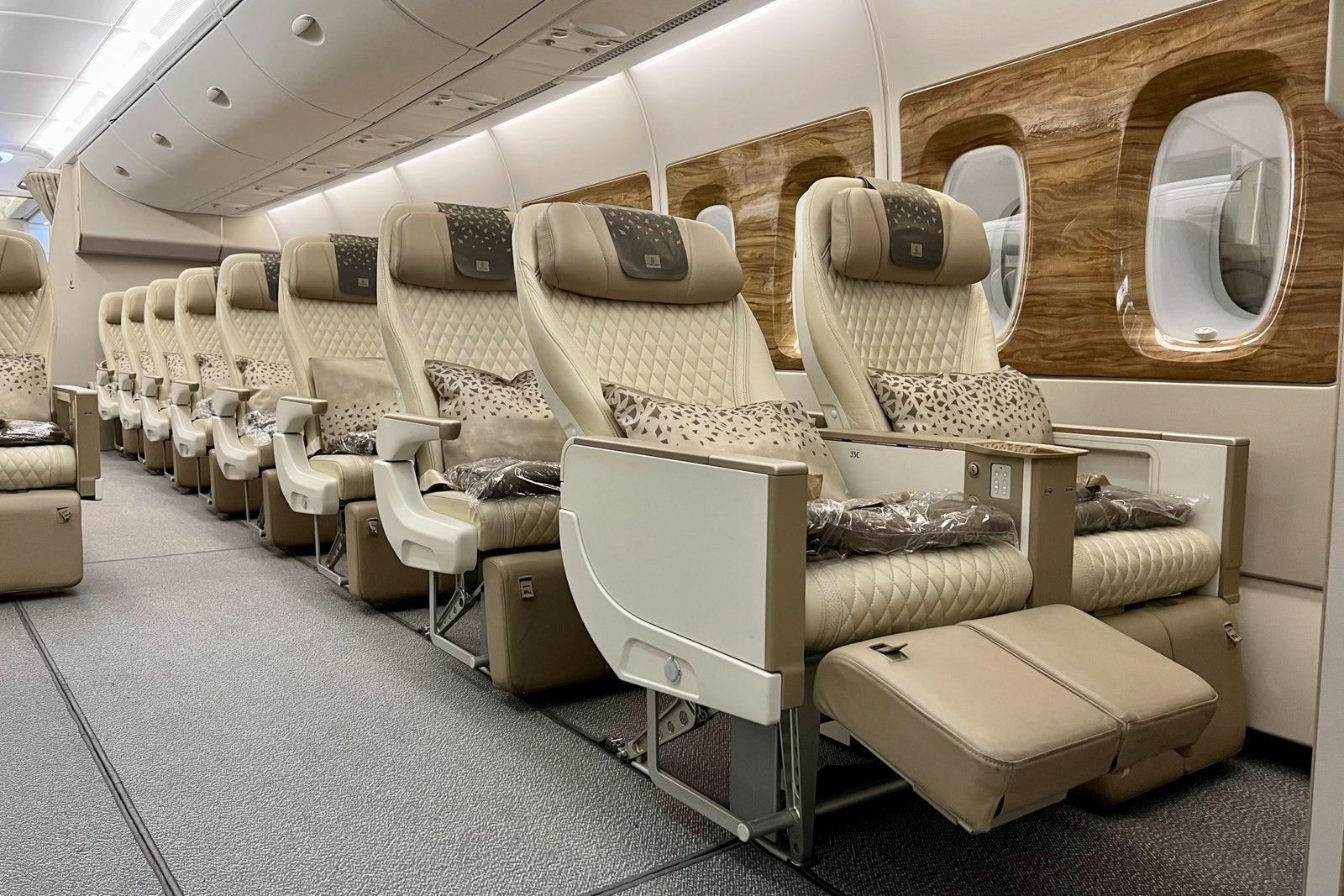
Premium Economy vs Business Class: Is the Upgrade Worth It?
For many long-haul passengers, the choice between Premium Economy and Business Class comes down to one important question: is Business Class worth the much higher price?
Both cabins offer a noticeable improvement over standard Economy, but the experience can be very different. Premium Economy generally provides a wider seat, additional legroom, upgraded meals and more attentive service. Business Class may include priority airport services, lounge access, fine dining and most importantly on overnight flights—a seat that converts into a fully flat bed.
However, Business Class tickets can cost two or three times more than Premium Economy, and sometimes considerably more. That makes the right choice dependent on your budget, flight duration, need for sleep and the quality of the cabins offered by the airline.
In this Premium Economy vs Business Class comparison, we examine the differences in seating, comfort, sleep, meals, airport benefits, baggage allowance, service and price. By the end, you should have a clearer idea of which cabin offers the best value for your particular journey.
Premium Economy vs Business Class at a Glance
Before examining each feature in detail, here is a quick comparison of what passengers can generally expect from the two cabins.
Get the SkypropreAir Free Travel Pack
Plan smarter, choose a better seat and enjoy a more comfortable long-haul journey. Enter your details below to receive the Travel Pack.
| Feature | Premium Economy | Business Class |
|---|---|---|
| Seat | Wider reclining seat with extra legroom | Spacious seat that often converts into a fully flat bed |
| Personal space | More space than Economy, but usually arranged in rows | Greater privacy and direct aisle access on many aircraft |
| Sleep quality | Improved comfort, but sleeping upright may remain difficult | Significantly better sleep on a lie-flat seat |
| Meals | Upgraded meals, drinks and presentation | Multi-course dining with premium food and beverages |
| Airport experience | Priority check-in or boarding may be included | Priority check-in, security, boarding and lounge access |
| Baggage allowance | Usually higher than Economy | Normally the most generous allowance after First Class |
| Service | More attentive than Economy | Highly personalised service with fewer passengers per crew member |
| Price | More affordable and often good value | Considerably more expensive |
| Best suited to | Travellers seeking extra comfort without an enormous fare | Travellers prioritising sleep, privacy and a premium journey |
The largest difference is not simply the meal or the amount of legroom. It is the ability to lie completely flat. On a long overnight flight, that single feature can transform how rested and productive a passenger feels after landing.
However, Premium Economy can provide the better balance between comfort and cost, particularly on daytime flights where sleeping is less important.
1. Seat Comfort and Personal Space
When comparing Premium Economy vs Business Class, the seat is where the difference becomes most noticeable.
A typical Premium Economy seat is wider than an Economy seat and provides additional legroom, a deeper recline, an adjustable headrest and, on some airlines, a leg rest or footrest. The cabin is also smaller and less crowded, which can make the journey feel calmer and more comfortable.
However, Premium Economy remains a seated experience. Even with greater recline, passengers must usually sleep at an angle. The person in front may recline into your space, and passengers seated beside the window may still need to step past their neighbours to reach the aisle.
Business Class provides considerably more personal space. On many long-haul aircraft, the seat converts into a fully flat bed, allowing passengers to sleep in a more natural position. Modern cabin layouts may also offer direct aisle access, personal storage, privacy screens and sliding doors.
Not every Business Class product is identical. Some older aircraft still have angled-flat seats or layouts in which passengers must climb over one another. It is therefore important to check the airline, aircraft type and seat configuration before paying for the upgrade.
For sitting, reading or watching films, Premium Economy may provide enough comfort for many travellers. For proper sleep, privacy and unrestricted movement, Business Class is the clear winner.
2. Sleeping on a Long-Haul Flight
Sleep is often the deciding factor when comparing Premium Economy with Business Class, especially on an overnight journey.
Premium Economy makes sleeping easier than standard Economy by providing more recline, additional legroom and, on some airlines, a supportive footrest or leg rest. Passengers may also receive a larger pillow, a better blanket and a more comfortable amenity kit.
Despite these improvements, you are still sleeping in a reclining chair. Your body remains partly upright, space around your shoulders and legs is limited, and movement from neighbouring passengers may interrupt your rest. Taller passengers may also find that the leg rest does not provide sufficient support.
In long-haul Business Class, a fully flat seat can create a sleeping surface similar to a narrow bed. Some airlines also provide a mattress topper, premium bedding, pyjamas and greater privacy from the aisle. Being able to change sleeping positions and stretch out fully can significantly improve the quality of rest.
The advantage becomes most valuable on overnight flights lasting eight hours or longer, particularly when passengers need to work, attend a meeting or begin an important event soon after arrival.
However, a lie-flat seat does not guarantee perfect sleep. Cabin noise, turbulence, meal service, temperature and an unfamiliar environment can still cause disruption. Nevertheless, Business Class offers the strongest opportunity to arrive feeling rested, while Premium Economy provides a more affordable but limited improvement.
3. Meals and Drinks
Food and drink are usually upgraded in both Premium Economy and Business Class, but the quality and presentation can differ considerably.
In Premium Economy, passengers may receive improved meal choices, metal cutlery, larger portions and complimentary alcoholic drinks. Some airlines serve meals on proper plates rather than in standard Economy packaging. However, the food may still be prepared from a similar menu to Economy, with only modest improvements.
Business Class dining is designed to feel closer to a restaurant experience. Passengers may be offered a welcome drink, printed menu, several courses and a wider selection of wines, spirits and non-alcoholic beverages. Some airlines also allow passengers to choose when they would like to eat rather than following a fixed cabin schedule.
The additional space in Business Class makes dining more comfortable. A larger table provides room for separate dishes, drinks and personal devices, while the smaller cabin allows the crew to offer more individual attention.
Nevertheless, airline meals remain affected by altitude, reheating methods and catering standards at the departure airport. An expensive ticket does not always guarantee exceptional food.
If dining is an important part of your journey, Business Class offers the more refined experience. If your priority is simply receiving a better meal than Economy without paying a premium-cabin fare, Premium Economy may be sufficient.
4. Airport Experience and Lounge Access
The difference between Premium Economy and Business Class often begins before passengers step onto the aircraft.
Premium Economy tickets may include dedicated check-in desks, priority boarding and faster baggage delivery, depending on the airline and airport. These benefits can reduce waiting times, but lounge access and priority security are not always included. Passengers should check the fare conditions carefully because benefits vary between airlines.
Business Class usually provides a more complete priority experience. This may include dedicated check-in, fast-track security, priority immigration, lounge access, early boarding and priority baggage handling. At selected airports, some airlines also provide chauffeur transfers or exclusive check-in areas.
Airport lounges can be particularly valuable during long connections. They may offer comfortable seating, meals, drinks, Wi-Fi, charging points, showers and quiet areas. However, lounge quality varies considerably, and overcrowding can reduce the sense of exclusivity.
Passengers should not assume that every Business Class fare includes lounge access. Some airlines sell discounted or unbundled Business Class tickets that exclude certain ground benefits. The operating airline may also use a third-party lounge with more limited facilities.
For passengers who value a smoother journey from check-in to boarding, Business Class provides the stronger overall experience. Premium Economy offers useful priority benefits on some airlines, but its airport experience is usually closer to Economy than Business Class.
5. Service, Privacy and Cabin Atmosphere
Premium Economy cabins are generally smaller and quieter than Economy cabins. With fewer passengers, boarding may feel more organised, meal service can be faster and the overall atmosphere may be calmer. Cabin crew may also provide more attentive service, although the experience is not always highly personalised.
Business Class normally has a lower passenger-to-crew ratio, allowing the crew to respond more quickly and tailor the service to individual preferences. Passengers may be addressed by name, offered flexible meal times and receive more frequent drink refills or assistance throughout the flight.
Privacy is another important difference. Premium Economy seats are usually arranged in conventional rows, so passengers remain visible to those around them. Window-seat passengers may also need to disturb their neighbours when leaving their seats.
Many modern Business Class cabins provide direct aisle access for every passenger, high privacy panels and, in some cases, sliding doors. This creates a more personal space for sleeping, working or relaxing. However, older Business Class cabins may offer less privacy and place seats close together.
Premium Economy provides a quieter and more comfortable atmosphere than Economy, but Business Class offers a much stronger sense of personal space, privacy and individual attention.
6. Baggage Allowance and Other Benefits
Both Premium Economy and Business Class usually provide more generous baggage allowances than standard Economy, although the exact benefits depend on the airline, route and fare type.
Premium Economy passengers may receive an additional checked bag or a higher weight allowance. Some airlines also provide increased hand-luggage limits, priority baggage delivery and more flexible ticket conditions. These benefits can be valuable for passengers travelling for longer periods or carrying work equipment.
Business Class generally includes a considerably larger checked-baggage allowance and greater flexibility for cabin baggage. Passengers may also receive priority baggage tags so their luggage is among the first delivered after arrival.
Other Business Class benefits can include free seat selection, improved amenity kits, noise-cancelling headphones, complimentary Wi-Fi or more favourable ticket-change conditions. However, these features are not universal, and lower-priced Business Class fares may exclude refunds, lounge access or other services.
When comparing prices, passengers should consider the complete package rather than the seat alone. A Premium Economy fare that includes baggage and seat selection may offer better value than a cheaper-looking Business Class fare with important restrictions. Always review the fare rules before booking.
7. Price: How Much More Does Business Class Cost?
The price difference between Premium Economy vs Business Class varies considerably by airline, route, season and demand.
Premium Economy commonly costs significantly more than Economy but remains far less expensive than Business Class. On some routes, it may cost around 50% to 100% more than an Economy ticket, although prices vary widely according to the airline, destination, season and demand.
Business Class may cost two or three times the price of Premium Economy and sometimes considerably more. The difference can be especially large on popular business routes and when booking close to departure.
However, ticket prices do not always follow a predictable pattern. Airline sales, corporate demand, reward-seat availability and route competition can occasionally make Business Class surprisingly close in price to Premium Economy. It is therefore worth comparing nearby dates, alternative airports and connecting itineraries.
Passengers should calculate the value of the upgrade according to the flight itself. Paying substantially more for a short daytime journey may provide limited benefit. On a 12-hour overnight flight, the lie-flat bed, lounge access and priority services may justify a higher fare.
A useful approach is to divide the additional cost by the number of flight hours. If upgrading from Premium Economy to Business Class costs an extra €1,200 on a 12-hour flight, the upgrade costs approximately €100 per hour. You can then decide whether the added sleep, privacy and convenience are worth that amount to you.
8. When Is Premium Economy the Better Choice?
Premium Economy is often the better choice when you want meaningful additional comfort without paying the much higher price of Business Class.
It may offer the best value when:
- You are taking a daytime flight and do not need a fully flat bed.
- The journey lasts between six and ten hours.
- You want extra legroom and a wider seat but have a limited travel budget.
- The difference between Economy and Premium Economy is reasonable.
- Your employer will pay for Premium Economy but not Business Class.
- You prefer to spend the savings on accommodation, activities or another trip.
Premium Economy can also suit travellers who find standard Economy physically uncomfortable but do not require the complete Business Class experience. The additional space, deeper recline and smaller cabin may make a considerable difference on a long flight.
However, the quality of Premium Economy varies between airlines. Before booking, check the seat width, pitch, recline, leg support and cabin layout. A strong Premium Economy product can provide excellent value, while a weak one may feel like Economy with only a little extra space.
9. When Is Business Class Worth the Extra Cost?
Business Class is most valuable when comfort, sleep and time matter more than achieving the lowest possible fare.
The upgrade may be worth considering when:
- You are taking a long overnight flight and need to sleep properly.
- You must work, attend a meeting or begin an important event soon after landing.
- You have mobility difficulties, back pain or another condition that makes prolonged upright sitting uncomfortable.
- The Business Class fare is unusually close to the Premium Economy price.
- You can book using airline miles, reward points or an affordable upgrade offer.
- Lounge access, priority services and additional baggage provide genuine value for your journey.
Business Class can also be worthwhile when the flight itself is an important part of a special occasion, such as a honeymoon, anniversary or once-in-a-lifetime holiday.
However, passengers should examine the actual product rather than purchasing based on the cabin name alone. A modern Business Class suite with a fully flat bed, direct aisle access and privacy door offers a very different experience from an older angled seat in a crowded configuration.
Before paying, check the aircraft, seat map, independent cabin reviews and whether lounge access is included. Business Class is worth the additional cost when its benefits meet your particular needs, not simply because it is marketed as a premium experience.
10. Which Cabin Should You Choose?
Your choice between Premium Economy vs Business Class should depend on the flight duration, departure time, budget and need for sleep.
Choose Premium Economy if you want a wider seat, additional legroom, improved meals and a quieter cabin without paying the high price of Business Class. It is particularly suitable for daytime flights and travellers who want a sensible balance between comfort and cost.
Choose Business Class if sleeping well, having privacy and arriving rested are your main priorities. Its greatest advantage is the fully flat bed available on many long-haul aircraft, supported by lounge access, priority airport services and more personalised onboard service.
The duration and timing of the flight should influence your decision. Premium Economy may be sufficient for a seven-hour daytime journey, while Business Class can provide much greater value on a 12-hour overnight flight.
You should also consider the price difference. When Business Class costs several thousand euros more, Premium Economy may offer the better overall value. If the gap is relatively small because of a sale, points redemption or last-minute upgrade offer, Business Class becomes much more attractive.
Ultimately, the better cabin is the one whose benefits you will genuinely use. Do not pay for luxury features that add little value to your particular journey.
Final Verdict: Premium Economy vs Business Class
Business Class is the clear winner for comfort, sleep, privacy and the overall travel experience. A fully flat bed, direct aisle access, lounge entry and priority airport services can make a long-haul journey considerably easier—especially on an overnight flight.
However, the best experience does not always represent the best value.
Premium Economy occupies a useful middle ground. It provides more personal space, better seating and an improved cabin experience without the enormous price increase that often comes with Business Class. For many leisure travellers, particularly on daytime flights, it is the more financially sensible choice.
If you need to arrive rested for an important commitment, have physical difficulty remaining seated for long periods or find a competitive upgrade offer, Business Class may justify the additional expense. If you mainly want greater comfort while protecting your travel budget, Premium Economy will usually be enough.
The final decision should be based on the airline’s actual seat, the length and timing of the flight, the price difference and how much you value sleep. Compare the specific products carefully because an excellent Premium Economy cabin may offer better value than an outdated Business Class seat.
Ultimately, the Premium Economy vs Business Class decision is about balancing value against comfort, privacy and rest.
Choose Premium Economy for value. Choose Business Class for sleep, privacy and maximum comfort.
Ready to Compare Your Flight Options?
Before booking, compare Economy, Premium Economy and Business Class fares across different airlines and travel dates. A small change in departure time, route or airport could reveal a much better cabin for your budget.
[Compare long-haul flight prices and cabin options here.]
Always check the aircraft type, seat configuration and fare conditions before completing your booking.
Frequently Asked Questions
Is Premium Economy closer to Economy or Business Class?
Premium Economy is generally closer to Economy because passengers still sit in reclining seats arranged in rows. However, it provides more legroom, a wider seat, improved meals and a smaller cabin. Business Class is a much larger step up because it often includes a fully flat bed, direct aisle access and lounge entry.
Can Premium Economy passengers use airport lounges?
Lounge access is not normally included with Premium Economy, although policies vary between airlines. Passengers may sometimes purchase access separately or enter through airline status, a lounge membership or an eligible credit card.
Does Business Class always have fully flat beds?
No. Most modern long-haul Business Class cabins offer lie-flat seats, but some older aircraft and shorter routes use angled-flat seats or large reclining chairs. Always check the aircraft and seat type before booking.
Is Premium Economy comfortable enough for a 12-hour flight?
Premium Economy can be comfortable enough for a 12-hour journey, especially during the day. However, sleeping may remain difficult because the seat does not convert into a bed. Business Class is usually better for a long overnight flight.
Is Business Class worth paying twice the Premium Economy fare?
It depends on the flight duration, timing and your need for sleep. Paying twice as much may be worthwhile on a long overnight journey when you need to arrive rested. For a daytime flight, Premium Economy may provide better value.
Is it cheaper to upgrade at the airport?
Occasionally, airlines offer reduced-price upgrades during online check-in or at the airport when Business Class seats remain available. However, availability is unpredictable, so passengers should not rely on receiving a last-minute offer.
Which cabin is better for older or less mobile passengers?
Business Class normally provides more space and the ability to lie flat, but some seats are low or enclosed and may be difficult to enter. Premium Economy may be easier for certain passengers. Individual mobility needs, seat design and access to assistance should all be considered before booking.