
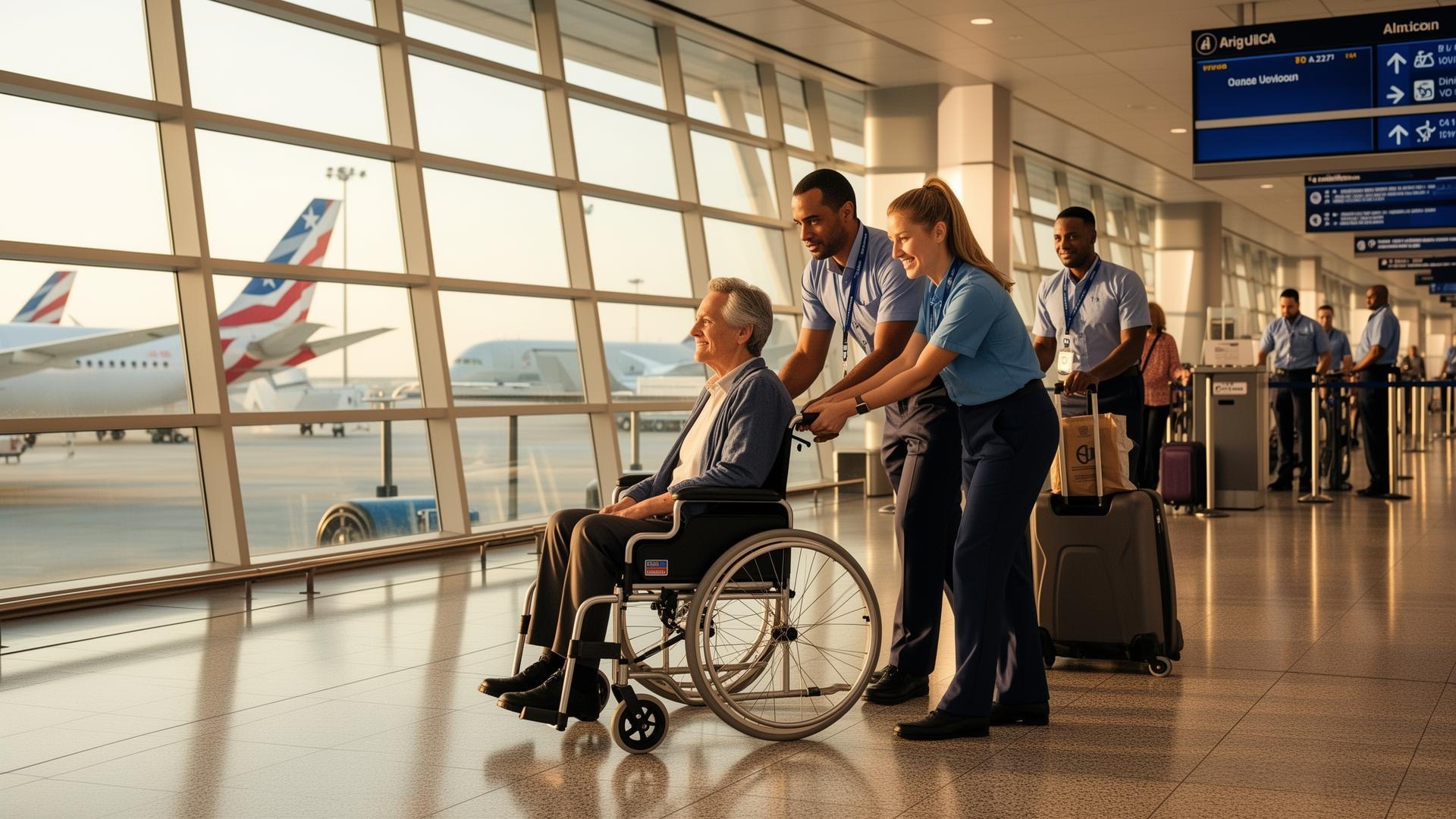
How Can a Frail Passenger Safely Manage a 10-Hour Flight?
For a frail passenger, a 10-hour flight is not simply a long period spent sitting in an aircraft. It can involve an exhausting journey through a large airport, long queues, unfamiliar procedures, reduced access to medication, difficulty using the toilet and many hours without the comfort or support normally available at home.
Frailty does not refer only to age, and it should never be used as a dismissive label. A passenger may be considered frail when illness, reduced strength, poor balance, limited mobility or low physical resilience makes ordinary travel demands harder to manage. Some passengers can walk short distances but cannot cross a large terminal. Others may appear independent while becoming tired very quickly.
Some passengers may also need support for conditions that are not immediately visible.
The good news is that a 10-hour journey can often be made safer and more manageable with realistic planning, appropriate medical advice and assistance from the airport and airline. The most important decisions are usually made before the passenger reaches the departure terminal.
This guide explains what a frail passenger and their family or travelling companion should consider before booking, at the airport, during the flight and after arrival. It is general travel information, not individual medical advice. Anyone with a recent illness, unstable medical condition or concerns about fitness to fly should speak with an appropriate healthcare professional and contact the airline before travelling.
Get the SkypropreAir Free Travel Pack
Plan smarter, choose a better seat and enjoy a more comfortable long-haul journey. Enter your details below to receive the Travel Pack.
Before Booking: Decide Whether the Journey Is Realistic
The first question should not be, “Can we buy the ticket?” It should be, “Can this passenger safely manage the complete door-to-door journey?”
A 10-hour flight may be only one part of the experience. Travelling to the airport, checking in, passing through security, reaching the gate, waiting to board, collecting baggage and continuing from the destination airport can add several demanding hours. Connections may make the journey considerably harder.
Begin by considering how far the passenger can comfortably walk, how long they can sit upright, whether they can use an aircraft toilet, whether they need help eating or taking medication and how they normally respond to fatigue. Also consider whether they can manage an unexpected delay, gate change or missed connection.
A healthcare professional should be consulted when the passenger has recently been admitted to hospital, undergone surgery, experienced a significant change in health or has an unstable heart, lung or neurological condition. The airline may also request medical clearance or a medical information form in certain circumstances. Requirements differ between airlines, so they should be checked before paying for a non-refundable ticket.
Whenever possible, choose a direct flight at a sensible departure time. A short connection may look convenient on the booking screen but can create pressure if assistance is delayed or the gates are far apart. A longer connection provides more time, but it can also extend an already tiring journey. The best option depends on the passenger’s stamina and support needs.
Request Airport and Airline Assistance in Advance
A frail passenger does not need to be a permanent wheelchair user to request assistance. Help may be appropriate for anyone who cannot safely manage long terminal distances, prolonged standing, stairs or the physical demands of boarding.
Contact the airline or travel agent as early as possible and explain what the passenger can and cannot do. For travel involving European Union airports, assistance should preferably be requested at least 48 hours before departure. Early notice gives the airport and airline more time to arrange suitable support, although staff should still make reasonable efforts to assist passengers who arrive without advance notice.
Do not simply request “a wheelchair” if the passenger needs more specific support. Explain whether the passenger:
- Can walk to the aircraft but cannot manage long distances
- Can climb aircraft steps or needs a lift or level boarding
- Can walk to their seat or requires an aisle chair
- Can transfer between a wheelchair and the aircraft seat
- Needs help during a connection or on arrival
- Will travel with a wheelchair, walking frame or other mobility aid
Airport assistance may help the passenger through check-in, security, the departure gate, boarding, connections and baggage reclaim. However, assistance staff do not normally provide personal care, administer medication, help a passenger eat or remain beside them throughout the flight.
If the passenger cannot manage essential personal needs independently, a suitable companion may be necessary. The airline should be told about these needs before booking because cabin crew cannot provide continuous one-to-one care.
Choose the Seat Around the Passenger’s Needs
The cheapest available seat may not be the most practical choice for a frail passenger. Seat position can affect access to the toilet, ease of movement, rest and the ability of a companion to provide support.
An aisle seat can make it easier to stand, stretch and reach the toilet, but the passenger may be disturbed by other travellers and passing trolleys. A window seat offers more privacy and something to lean against, although leaving the row may be difficult. When travelling with a companion, adjacent seats should be selected in advance rather than left to automatic allocation at the airport.
Seats close to a toilet may reduce the walking distance, but these areas can be busy, noisy and exposed to queues. A seat toward the front of the cabin may allow the passenger to leave sooner after landing, although airport assistance passengers are sometimes asked to remain seated until other travellers have disembarked.
Extra-legroom seating may help some passengers change position more easily. However, exit-row seats are generally unsuitable because occupants must be willing and physically able to assist during an emergency. Some bulkhead seats also have fixed armrests, which can make transferring into the seat more difficult.
Before paying for a particular seat, ask the airline whether the armrest can be raised, how close the seat is to an accessible toilet and whether any medical or mobility equipment can be safely accommodated. Aircraft can change, so the seating arrangement should be checked again before departure.
For more help comparing seat positions, read our guide to choosing the best seat on a plane before booking.
Prepare Medication and Essential Hand Luggage Carefully
Essential medication should remain in hand luggage, not checked baggage. Checked bags can be delayed, misdirected or inaccessible during the flight. Carry enough medication for the journey and a reasonable additional supply in case of disruption, following the prescribing professional’s instructions.
Keep medicines in their original labelled packaging whenever possible. A copy of the prescription, medication list or supporting letter may be useful, especially when carrying liquids, injections, controlled medicines, medical equipment or supplies requiring refrigeration. Rules can vary by country, security authority and airline, so they should be checked before travel.
The passenger or companion should understand when each medicine is due, particularly when crossing time zones. Changes to medication timing should be discussed with a pharmacist, doctor or other appropriate healthcare professional rather than improvised during the journey.
A small, accessible comfort bag may include:
- Medication and relevant medical information
- Emergency contact details
- Glasses, hearing aids and spare batteries
- Water, once permitted after security
- Suitable snacks if compatible with the passenger’s needs
- A warm layer and comfortable footwear
- Incontinence products or other personal-care supplies
- Hand sanitiser, tissues and necessary hygiene items
- A charged phone and charging cable
Do not place essential items deep inside an overhead bag that the passenger cannot reach. Keep them in a smaller bag beneath the seat where permitted, without obstructing the aisle or emergency evacuation route.
Reduce Exhaustion at the Airport
Arrive with enough time to avoid rushing, but not so early that the passenger must spend unnecessary hours waiting. Confirm where the airport’s assistance meeting point is located and bring the booking reference and assistance confirmation.
The passenger should use the wheelchair or mobility support that has been arranged, even if they can manage short distances. Accepting help is not a loss of independence; it preserves energy for the flight and arrival.
Use the toilet before boarding, refill water after security where permitted and keep medication and travel documents readily accessible. If the passenger needs food at particular times, do not rely entirely on the inflight meal schedule. Delays, turbulence or operational demands can postpone cabin service.
When boarding is announced, ask staff whether pre-boarding is available. Entering before the main queue may provide more time to reach the seat, store essential items and settle without pressure. However, pre-boarding can also mean sitting on the aircraft for longer, so the passenger’s comfort and the expected boarding time should be considered.
Confirm with the gate team that arrival assistance is recorded. If a wheelchair, aisle chair or special transfer method is required, remind the crew discreetly after boarding. Clear communication helps prevent uncertainty at the destination.
Managing the 10 Hours in the Air
Once onboard, the goal is to prevent avoidable discomfort and notice problems before they become serious. The passenger or companion should tell the cabin crew about any relevant support needs, while remembering that crew members are responsible for the entire cabin and cannot provide continuous personal care.
Encourage the passenger to drink regularly unless a healthcare professional has advised fluid restriction. Cabin air is dry, and frail passengers may not always recognise or communicate thirst promptly. Alcohol can increase dehydration and impair balance, while excessive caffeine may interfere with rest or increase the need to use the toilet.
Remaining in one position for many hours can cause stiffness, discomfort and pressure on the skin. If it is safe and medically appropriate, the passenger should change position regularly and perform gentle ankle and foot movements while seated. Walking should only be attempted when the seat-belt sign is off and the passenger can do so safely with appropriate support.
Keep the seat belt fastened whenever seated, positioned low across the hips and adjusted comfortably. Unexpected turbulence can occur even when the cabin appears calm.
Plan toilet visits rather than waiting until the need becomes urgent. Aircraft toilets are small and may be difficult for someone with poor balance or limited mobility. Cabin crew may explain available facilities, but they generally cannot lift the passenger or provide intimate personal care. A travelling companion should know in advance what assistance the passenger may require.
Watch for changes such as unusual breathlessness, chest pain, sudden confusion, fainting, severe weakness or one-sided swelling and pain. These symptoms should be reported to the cabin crew immediately. Do not wait until landing in the hope that a serious problem will resolve on its own.
Plan the Arrival Before Departure
The journey does not end when the aircraft lands. A large arrival airport, immigration queues, baggage reclaim and onward transport may be especially demanding after 10 hours in the air.
If arrival assistance has been arranged, the passenger may need to remain seated until the assistance team reaches the aircraft. This can take time, particularly at a busy airport. Keep essential medication, water and documents accessible rather than packing them away during descent.
Arrange reliable transport from the airport and avoid an unnecessarily complicated onward journey. The passenger may need time to eat, drink, use the toilet and recover before travelling farther. When possible, keep the first day at the destination free from demanding appointments or activities.
Family members or carers meeting the passenger should know the flight number, arrival terminal and assistance arrangements. They should also understand that assisted passengers may emerge later than other travellers.
Continue to watch for unusual symptoms after the journey. Seek appropriate medical advice if the passenger becomes significantly unwell, develops new breathing difficulty, chest pain, fainting, marked confusion or pain and swelling in a limb.
Final Thoughts: Frailty Should Change the Plan, Not Remove Dignity
A frail passenger can often manage a 10-hour flight, but success depends on recognising the complete demands of the journey. The right question is not simply whether the passenger can remain seated for 10 hours. It is whether they can manage the airport, boarding, personal needs, unexpected delays, arrival procedures and recovery safely.
Good planning may involve medical advice, a direct route, carefully selected seating, pre-booked airport assistance and a capable travelling companion. None of these arrangements should diminish the passenger’s dignity or right to participate in decisions about their own journey.
Airports and airlines provide important assistance, but families should understand the limits of that support. Wheelchair services are not the same as personal care, and cabin crew cannot replace a dedicated companion or healthcare professional.
Passengers and companions can also use our Long-Haul Flight Survival Guide for additional preparation and inflight comfort advice.
Frailty should never make someone feel like an inconvenience. With honest preparation, clear communication and appropriate support, a long journey can become less exhausting, less uncertain and considerably more manageable.