
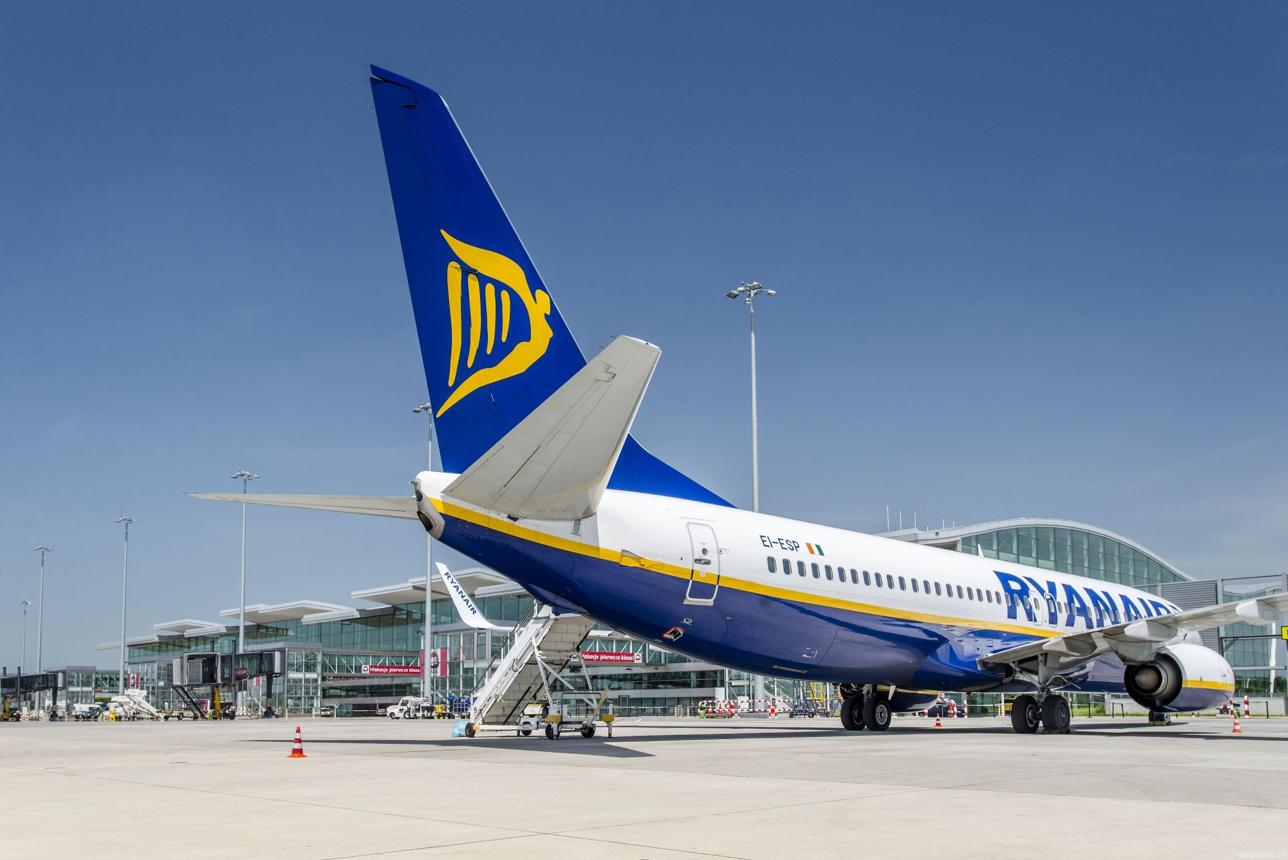
Ryanair Window Incident: How a Passenger Was Partially Pulled Out
Ryanair Passenger Partially Pulled Through a Plane Window: What Really Happened?
A Loud Bang. A Missing Window. Then Passengers Started Calling for Help.
The flight had begun like thousands of others.
On July 10, 2026, a Boeing 737-800 operating Ryanair Flight FR1879 departed Thessaloniki, Greece, bound for Memmingen, Germany.
There were 149 passengers onboard.
Minutes after departure, the pilots received indications of unusually high vibration from the aircraft’s right engine.
Then came a loud bang.
Get the SkypropreAir Free Travel Pack
Plan smarter, choose a better seat and enjoy a more comfortable long-haul journey. Enter your details below to receive the Travel Pack.
Inside the cabin, oxygen masks dropped.
The aircraft began losing cabin pressure.
And in row 11, something terrifying had happened.
The window beside seat 11F was gone and the passenger sitting there was partially lodged in the opening.
Other passengers rushed to help and managed to pull the injured passenger back into the cabin. The aircraft ultimately returned safely to Thessaloniki.
Now, more than a month later, a preliminary report from the U.S. National Transportation Safety Board has provided a clearer picture of what happened.
And it raises an unsettling question:
Can a passenger really be pulled out of an aircraft if a window suddenly breaks at altitude?
The answer is yes, but the physics, the aircraft’s safety systems and what happened aboard this flight are more complicated than the phrase “sucked out of a plane” suggests.
What Happened on Ryanair Flight FR1879?
The aircraft was a Boeing 737-800 operated by Malta Air for Ryanair.
During the climb out of Thessaloniki, the flight crew received a high-vibration indication from the No. 2 — right — engine.
The pilots reduced power and conducted checks.
The vibration initially decreased.
Then it increased dramatically.
The crew heard a loud bang.
A fan blade in the right engine had fractured. Debris from the engine struck several areas of the aircraft, including the fuselage and horizontal stabiliser.
Critically, debris also struck a passenger window.
The window failed completely.
The sudden opening caused the cabin to depressurise and the passenger seated beside it became partially lodged in the opening. Nearby passengers helped pull the injured passenger back inside.
The pilots donned oxygen masks, declared an emergency and descended.
The Boeing eventually returned safely to Thessaloniki.
Why Would a Broken Window Pull Someone Towards It?
This is where the incident becomes an important aviation lesson.
Passenger aircraft cabins are pressurised at cruising altitude because the outside air pressure becomes too low for normal human comfort and function.
That means there can be a significant pressure difference between:
the pressurised cabin
and
the atmosphere outside.
If a sufficiently large opening suddenly appears in the fuselage, cabin air rapidly escapes through that opening as the pressures begin to equalise.
Anything close to the opening can be subjected to powerful airflow.
That’s why the popular phrase “sucked out” isn’t technically the best description.
The passenger isn’t being pulled outward by some mysterious vacuum.
Higher-pressure air inside the aircraft is rushing towards the lower-pressure environment outside.
If someone is immediately beside a large opening, that airflow can create an extremely dangerous situation.
The Seat Belt Suddenly Became Extremely Important
One detail from this incident should matter to every passenger.
The injured passenger was sitting beside the failed window.
Reports indicate that his restraint helped prevent him from being completely ejected, while other passengers helped pull him back into the cabin.
That illustrates why keeping your seat belt fastened while seated is such a simple but valuable habit.
Passengers often associate seat belts primarily with take-off, landing and turbulence.
But aviation emergencies don’t always announce themselves in advance.
A sudden decompression.
Severe unexpected turbulence.
An abrupt manoeuvre.
An aborted take-off.
These events can occur with little warning.
The seat belt isn’t there merely because regulations require it.
Sometimes a few centimetres of webbing can become one of the most important safety systems around you.
Related: Why You Should Keep Your Seat Belt Fastened — Even When the Sign Is Off
Why Did the Oxygen Masks Drop?
The broken window caused the cabin to lose pressure.
When cabin altitude rises beyond prescribed thresholds, passenger oxygen masks deploy.
Those masks aren’t intended to keep passengers comfortable for hours.
They provide emergency oxygen while pilots descend the aircraft towards an altitude where people can breathe safely without supplemental oxygen.
And that’s exactly why pilots respond rapidly to serious depressurisation.
The priority becomes:
Oxygen masks → emergency descent → safe altitude → assess aircraft → land.
The pilots of FR1879 declared an emergency and descended before returning to Thessaloniki.
What Caused the Engine Failure?
This is where we need to distinguish what investigators know from what they are still investigating.
The preliminary NTSB report identified a fan-blade-out failure in the right engine.
Investigators also found bird remains and feathers in the engine.
Maintenance records showed that the same engine had experienced several previous suspected bird-strike events during the preceding year, with bird remains reportedly discovered following some of them.
However:
that does not yet prove that previous bird strikes caused the fan blade to fail.
The investigation is continuing.
The fan blades had undergone ultrasonic inspections before the incident without damage being identified. Investigators are expected to examine the failure itself, previous events, inspection history and other relevant factors before reaching a final probable-cause determination.
That’s why SkypropreAir should resist declaring:
“A bird strike caused the accident.”
At this stage, that’s not established conclusively.
Why Could Engine Debris Reach the Cabin?
Aircraft engines are designed with containment in mind.
But not every engine failure develops in exactly the same way.
In a fan-blade-out event, enormous forces are released as part of the rotating assembly fails.
The NTSB’s preliminary findings indicate that debris associated with this failure damaged several parts of the aircraft and shattered the cabin window.
The incident therefore goes beyond an ordinary engine shutdown.
And there is historical context.
Following previous Boeing 737 fan-blade failures, including the fatal 2018 Southwest Airlines Flight 1380 accident, the FAA issued requirements intended to strengthen parts of the engine inlet/cowling system and reduce the risk of debris damaging the fuselage after a blade failure.
The required modifications had not yet been completed on the aircraft involved in the Ryanair incident, but the compliance deadline had not yet expired.
Investigators will therefore have important questions to answer before the final report.
Could the Aircraft Still Fly With One Engine?
Yes.
A Boeing 737-800 is designed and certified to continue flying following the loss of thrust from one engine.
That’s an important distinction.
The frightening part of this incident wasn’t simply:
“an engine failed.”
Commercial twin-engine aircraft are designed around the possibility of an engine becoming unavailable.
What made this event much more serious was the secondary damage associated with the engine failure.
Debris struck the aircraft.
A window was lost.
The cabin depressurised.
A passenger was seriously injured.
So the crew wasn’t dealing merely with an engine problem.
They were managing multiple consequences simultaneously.
Related: If Both Engines Fail, Can a Passenger Aircraft Still Fly?
Are Aircraft Windows Normally Strong?
Extremely.
Passenger windows aren’t ordinary pieces of household glass.
They consist of multiple layers designed to withstand the pressure differential between the cabin and outside atmosphere.
That’s why spontaneous passenger-window failures are extremely unusual.
But this incident involved something different:
external impact damage associated with an engine failure.
The window wasn’t simply sitting there and suddenly breaking under normal cabin pressure.
Investigators say debris struck the aircraft and the window was lost.
That distinction matters.
Related: Why Turbulence Can Strike Without Warning,
Should Passengers Be Afraid of Window Seats?
No.
Millions of passengers sit beside aircraft windows every day without incident.
The lesson from FR1879 isn’t:
“Don’t sit beside a window.”
It’s that aviation accidents sometimes involve extremely unusual combinations of events.
A fan blade failed.
Debris escaped and struck the aircraft.
A passenger window was lost.
The cabin depressurised.
A passenger happened to be sitting immediately beside that window.
Several safety layers then came into play:
Seat restraint.
Other passengers.
Cabin crew.
Emergency oxygen.
Pilot training.
Aircraft single-engine capability.
And ultimately:
a safe landing.
The Most Important Passenger Lesson
There is one behaviour every passenger can take from this incident:
Keep your seat belt fastened whenever you’re seated.
You don’t need to tighten it uncomfortably.
Simply keeping it properly secured gives you protection against events you cannot predict.
Most flights will never experience anything remotely resembling what happened aboard FR1879.
But safety habits exist precisely because emergencies are unpredictable.
You don’t put your seat belt on because you expect something to happen.
You wear it because you don’t know when something might.
SkypropreAir Verdict
The Ryanair window incident is frightening precisely because several rare events happened almost simultaneously.
An engine fan blade failed.
Debris damaged the aircraft.
A passenger window disappeared.
The cabin rapidly depressurised.
And a passenger was partially lodged in the opening before being pulled back inside.
Yet the aircraft landed safely.
The incident demonstrates both sides of modern aviation:
Machines can fail in unexpected ways.
But commercial aviation is built around layers of protection designed to prevent one failure from becoming catastrophic.
The NTSB investigation is not finished, so important questions remain particularly around the fan-blade failure, bird-strike evidence, inspections and the effectiveness of existing engine modifications.
Until investigators publish their final conclusions, those questions should remain questions.
But passengers don’t need to wait for the final report to learn one lesson:
If you’re sitting down, keep your seat belt fastened.
On most flights, you’ll never need it.
On one extraordinary flight over Greece, it may have made all the difference.
FAQs
Can you really be pulled through a broken aircraft window?
A sudden large opening in a pressurised aircraft can produce powerful outward airflow as cabin pressure equalises with the lower-pressure atmosphere outside. Someone immediately beside the opening could therefore be forced towards or partially through it.
Did a bird strike cause the Ryanair incident?
Bird remains were found in the engine, and previous suspected bird strikes involving that engine were documented. However, the NTSB investigation is ongoing, so it would be premature to state definitively that bird strikes caused the fan-blade failure.
Did the Ryanair aircraft land safely?
Yes. The crew declared an emergency, descended and returned to Thessaloniki, where the aircraft landed safely. The passenger at the damaged window suffered serious injuries.