
The Passenger Habit Flight Attendants Find Most Frustrating
You Probably Don’t Realize You’re Doing It…
The cabin door has barely closed.
Passengers are still squeezing bags into overhead bins.
Flight attendants are moving quickly through the aisle, checking seat belts, securing the galley, and preparing the aircraft for departure.
Then it happens.
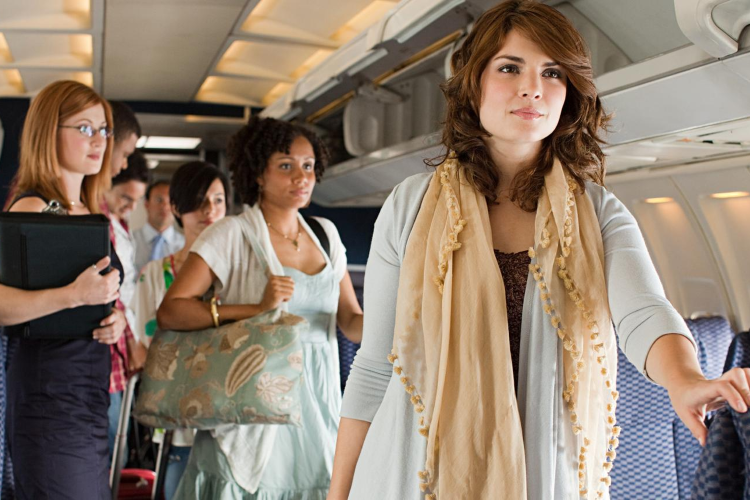
Someone stands up.
Get the SkypropreAir Free Travel Pack
Plan smarter, choose a better seat and enjoy a more comfortable long-haul journey. Enter your details below to receive the Travel Pack.
Maybe they want to rearrange their luggage.
Maybe they remembered something in their backpack.
Maybe they’re trying to switch seats or use the restroom “before takeoff.”
To many passengers, it seems harmless.
To flight attendants, it’s one of the most frustrating—and potentially dangerous—habits they encounter every day.
It’s not because they enjoy telling people to sit down.
It’s because every unnecessary delay affects safety, schedules, and sometimes hundreds of other travelers.
Before your next flight, choosing the right seat can make boarding and deplaning much easier. Read our guide on The Best Economy Seats on Every Aircraft Type to avoid common seating mistakes.
Why Flight Attendants Care So Much About Staying Seated
Many passengers think flight attendants spend most of their time serving drinks and snacks.
In reality, their primary responsibility is safety.
During taxi, takeoff, and landing, every passenger must be seated with a fastened seat belt unless specifically instructed otherwise.
These phases are statistically the most critical parts of a flight.
If the aircraft stops suddenly or encounters unexpected movement while taxiing, someone standing in the aisle can be thrown into seats, overhead bins, or other passengers.
A simple stumble can quickly become a serious injury.
Save Money on Your Next Flight
Planning another trip?
Compare hundreds of airlines in seconds and often find cheaper fares through Aviasales before booking directly with an airline.
- Check today’s flight prices with Aviasales before you book.
The Hidden Countdown Before Every Departure
Most travelers don’t realize how tightly coordinated an airline departure really is.
Before an aircraft can leave the gate, flight attendants must confirm:
-
Every passenger is seated.
-
Seat belts are fastened.
-
Carry-on bags are properly stored.
-
Tray tables are closed.
-
Window shades are in the required position where applicable.
-
Seat backs are upright.
-
Cabin equipment is secured.
One passenger repeatedly standing up interrupts this entire process.
The crew often has to stop what they’re doing, remind the passenger to sit, then restart their safety checks.
Multiply that by several passengers, and departure quickly becomes delayed.
Related reading: Why Airplane Windows Stay Open During Takeoff and Landing explains another safety rule many travelers misunderstand.
It Isn’t Just One Passenger
Flight attendants often describe a chain reaction.
One passenger stands.
Another thinks it’s acceptable.
Someone else decides to retrieve headphones.
Another walks to the restroom.
Within moments, a calm boarding process becomes unnecessary chaos.
Cabin crew members aren’t trying to enforce rules for the sake of authority.
They’re trying to prevent small disruptions from becoming larger safety problems.
The Most Common Reasons Passengers Stand Up
Interestingly, most people who leave their seats before departure don’t intend to cause problems.
Common reasons include:
-
Looking for misplaced items.
-
Rearranging carry-on luggage.
-
Switching seats with family members.
-
Using the lavatory at the last minute.
-
Retrieving medication.
-
Charging devices.
-
Taking photographs or videos.
While some reasons are genuinely important, many could have been handled before boarding or while waiting at the gate.
You’ll also enjoy: 20 Free Airport Services Most Passengers Never Use, where we reveal useful airport facilities that can reduce the urge to rush once onboard.
When Good Intentions Create Real Delays
Airlines operate on incredibly tight schedules.
A delay of just a few minutes at one airport can affect:
-
Connecting passengers.
-
Gate availability.
-
Crew duty time limits.
-
Aircraft rotations.
-
Baggage handling schedules.
Although one passenger standing up isn’t usually the sole cause of a delay, repeated interruptions across multiple flights can add up to significant operational disruptions.
For flight attendants, it’s another reminder that even small actions can have wider consequences.
Don’t Travel Without Insurance
Even careful travelers can experience flight delays, lost baggage, medical emergencies, or trip cancellations.
SafetyWing Travel Insurance offers flexible coverage for international travelers and digital nomads.
- Check SafetyWing‘s travel plans before your next journey.
It’s More Dangerous Than Most Travelers Think
Modern aircraft occasionally stop abruptly while taxiing.
This can happen because of:
-
Another aircraft crossing the taxiway.
-
Ground vehicle movements.
-
Air traffic control instructions.
-
Unexpected obstacles.
-
Weather-related conditions.
Passengers who are standing during these moments have little protection.
Seat belts only work when people are actually sitting in their seats.
That’s one reason cabin crew can sound firm when asking passengers to sit down—they’re trying to prevent injuries before they happen.
For more insight, read The Part of the Aircraft That Feels Turbulence the Most to understand how movement affects different parts of the cabin.
The Emotional Side Passengers Rarely See
Cabin crew members often work long shifts across multiple time zones.
They manage hundreds of passengers, medical situations, delays, anxious flyers, and occasional emergencies—all while remaining calm and professional.
When passengers repeatedly ignore simple instructions, it can be mentally exhausting.
What may feel like a harmless act to one traveler can become the tenth or twentieth reminder the crew has given that day.
Many flight attendants say they don’t mind answering questions or helping passengers.
What becomes frustrating is when safety instructions are repeatedly ignored.
Other Passenger Habits Flight Attendants Frequently Mention
Standing before takeoff isn’t the only behavior that tests cabin crew patience.
Other common frustrations include:
-
Ignoring the seat belt sign.
-
Blocking the aisle while unpacking bags.
-
Wearing headphones during safety demonstrations.
-
Pressing the call button for non-urgent requests immediately after takeoff.
-
Leaving rubbish in seat pockets.
-
Attempting to open overhead bins while the aircraft is moving.
-
Arguing about carry-on baggage limits.
Each may seem insignificant on its own, but together they increase the crew’s workload and reduce the time available to assist passengers who genuinely need help.
You may also like The Airline Secret Most Passengers Discover Too Late, another article that reveals how small mistakes can ruin an otherwise perfect journey.
What Experienced Travelers Do Instead
Frequent flyers know that preparation before boarding makes the journey much smoother.
They usually:
-
Keep passports, medications, and headphones easily accessible.
-
Visit the restroom before boarding whenever possible.
-
Place essential items in the seat pocket after reaching their seat.
-
Fasten their seat belt immediately.
-
Wait until the aircraft reaches cruising altitude before opening overhead bins.
These simple habits not only make life easier for the crew but also reduce stress for everyone onboard.
For long-haul travelers, don’t miss 12 Travel Essentials That Reduce Flight Fatigue before your next international flight.
Why Respecting the Crew Benefits Every Passenger
Flight attendants aren’t trying to control passengers.
They’re carrying out procedures developed through decades of aviation safety experience.
Most passengers will never experience an emergency on board—and that’s exactly the point.
Strict routines, even when they seem inconvenient, are designed to keep rare events from becoming tragic ones.
The smoother passengers cooperate during boarding and taxi, the more efficiently the crew can focus on their real mission: getting everyone safely to their destination.
The Bottom Line
The passenger habit flight attendants find most frustrating isn’t asking for a drink or requesting extra blankets.
It’s standing up after the cabin has been secured for departure.
It interrupts safety checks, slows the boarding process, increases the risk of injury, and forces cabin crew to repeat instructions that exist for everyone’s protection.
The next time you board a flight, take a moment to prepare before sitting down.
Store what you need within reach, buckle your seat belt, and stay seated until it’s safe to move.
It’s a small gesture that helps the crew do their job—and helps ensure your journey begins as smoothly and safely as possible.
If you want to become a smarter traveler, browse more expert tips in SkypropreAir’s guides on airline comfort, airport secrets, and long-haul travel strategies.
Frequently Asked Questions
Why do flight attendants insist passengers stay seated during taxi?
Because sudden stops or unexpected aircraft movements can cause serious injuries to anyone standing. Remaining seated with your seat belt fastened is one of the simplest and most effective safety measures.
Can I use the restroom while the plane is taxiing?
Generally, no. Once the aircraft begins taxiing, passengers are expected to remain seated with their seat belts fastened unless specifically instructed otherwise by the cabin crew.
What other passenger behaviors frustrate flight attendants the most?
Common complaints include ignoring the seat belt sign, blocking aisles, opening overhead bins while the aircraft is moving, leaving rubbish behind, and not paying attention during the safety briefing.
Join the Conversation
Have you ever seen a passenger repeatedly ignore a flight attendant’s instructions—or have you accidentally done one of these things yourself? What happened, and do you think airlines should enforce these rules more strictly? Share your experience in the comments below.