
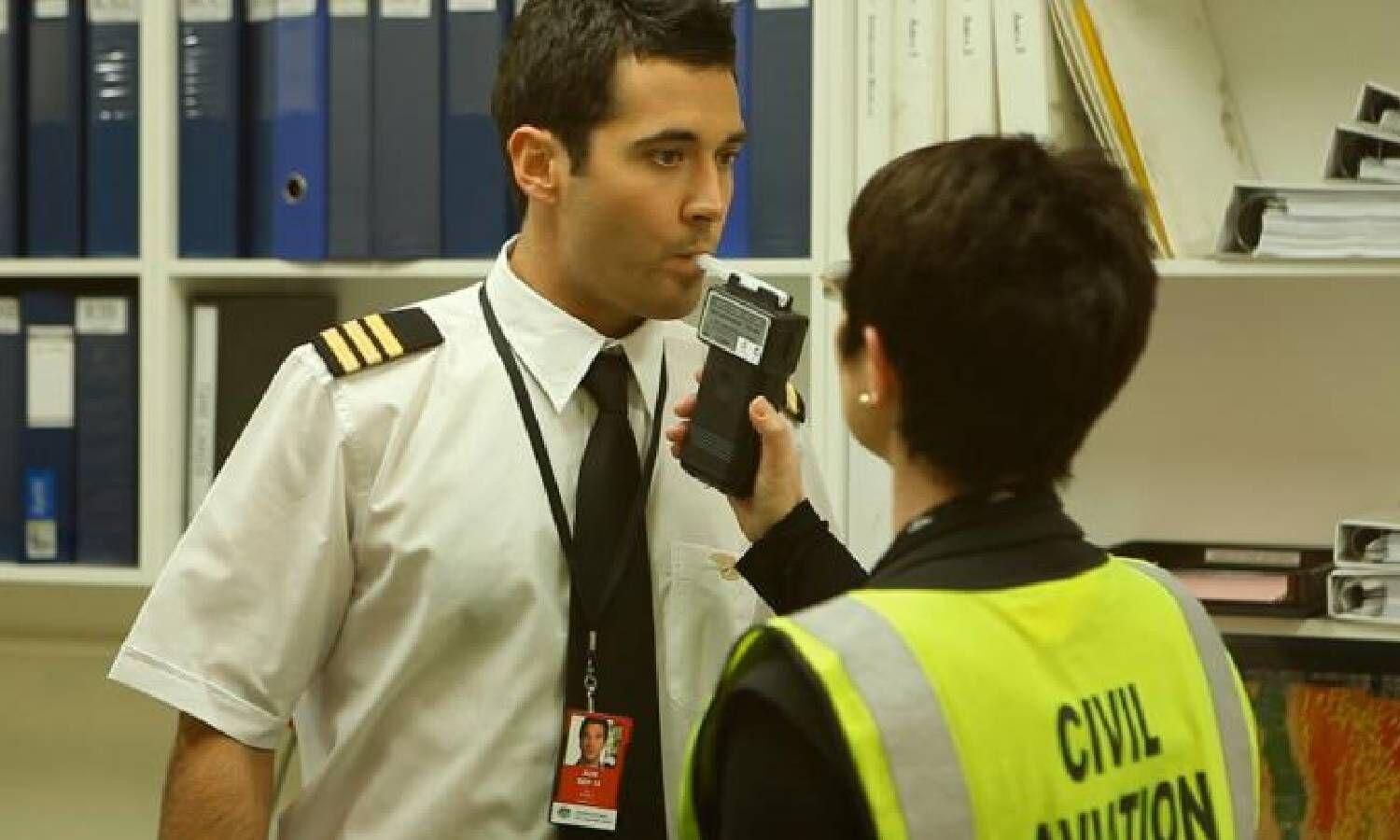
Can Pilots Drink Before Flying: Alcohol Rules Explained
Can Pilots Drink Before Flying? How Airlines Prevent Alcohol-Impaired Pilots From Entering the Cockpit
Imagine arriving at the airport, boarding pass in hand, only to discover that your flight has been cancelled because a member of the cockpit crew has failed an alcohol test.
For passengers, the immediate reaction might be anger.
Missed connections. Hotel bookings. Meetings disrupted. Holidays delayed.
But there is another way to look at such a cancellation:
The aircraft never left the ground.
Get the SkypropreAir Free Travel Pack
Plan smarter, choose a better seat and enjoy a more comfortable long-haul journey. Enter your details below to receive the Travel Pack.
And sometimes that is evidence that aviation’s safety system has done exactly what it was designed to do.
A recent incident involving a Turkish Airlines flight from Brussels to Istanbul brought this uncomfortable subject back into public discussion after a first officer reportedly tested positive for alcohol before departure.
The individual was prevented from operating the flight.
But the incident raises a much bigger question than what happened on one flight:
How does commercial aviation make sure that the people sitting behind the cockpit door are actually fit to fly?
Pilots and Alcohol: The Rules Are Extremely Strict
Commercial pilots operate in one of the world’s most safety-sensitive professions.
Alcohol can impair reaction time, coordination, judgement, concentration and decision-making — precisely the abilities pilots may need when something unexpected happens.
This is why aviation authorities impose strict restrictions on alcohol consumption before flying.
But there is an important distinction passengers should understand.
A prescribed period between drinking and flying does not automatically mean a pilot is fit to fly once that period has expired.
The more important principle is fitness for duty.
If alcohol is still affecting a pilot — whether because of remaining alcohol in the body or its after-effects, that pilot should not operate an aircraft.
The Famous “Bottle to Throttle” Rule
You may have heard pilots use the expression:
“Bottle to throttle.”
It refers to the minimum period between consuming alcohol and performing flight duties.
Different aviation jurisdictions and airlines can impose different requirements.
But even complying with the minimum time limit does not override the fundamental responsibility to report for duty unimpaired.
Think about it this way:
The clock does not make someone sober.
A person’s alcohol level depends on numerous factors, including how much they consumed, when they stopped drinking and how their body processes alcohol.
That is why professional aviation cannot rely on the clock alone.
So Are Pilots Breathalysed Before Every Flight?
This is where many passengers may be surprised.
Pilots are not universally breathalysed before every commercial flight.
Depending on the jurisdiction, airline and circumstances, alcohol testing can involve random testing, regulatory programmes, employer procedures or testing triggered by reasonable suspicion.
That means aviation safety also depends upon something much less technological:
people noticing when something isn’t right.
A colleague may notice unusual behaviour.
Cabin crew may raise concerns.
Ground personnel may observe something.
Another pilot may decide that a colleague does not appear fit for duty.
And that brings us to one of aviation’s most important safety principles.
Sometimes Safety Begins With Speaking Up
Modern aviation depends heavily upon checklists, procedures, automation and regulation.
But underneath all of those systems are human beings.
Someone still has to speak.
Imagine the difficulty involved.
You have worked alongside a colleague.
You suspect something is wrong.
If you raise the alarm and you are mistaken, you may create an extremely uncomfortable situation.
If you remain silent and you are correct, however, the consequences could potentially be far more serious.
A healthy aviation safety culture therefore requires employees to be able to challenge one another when necessary — regardless of seniority.
The safest cockpit isn’t necessarily one where nobody questions anybody.
It is one where people are prepared to say:
“I’m concerned.”
Why Alcohol and Flying Are Such a Dangerous Combination
Pilots don’t merely steer aircraft.
During a routine flight, much of the journey may appear remarkably calm.
But pilots must continuously monitor aircraft systems, weather, fuel, navigation, communications and the wider operational environment.
When an abnormal situation occurs, the workload can change rapidly.
A pilot may suddenly have to interpret warnings, communicate with air traffic control, coordinate with another pilot, manage the aircraft and make decisions under intense time pressure.
Even relatively small reductions in judgement or reaction speed therefore matter.
The relevant question isn’t:
“Could this pilot still physically fly the aircraft?”
It is:
“Could this pilot perform at the level required if something suddenly went wrong?”
Those are very different standards.
Aviation Safety Is Built in Layers
One of the reasons commercial aviation has become remarkably safe is that it generally does not depend upon a single defence.
There are layers.
Pilot training.
Medical requirements.
Operating procedures.
Crew Resource Management.
Company policies.
Regulatory oversight.
Reporting systems.
Alcohol and drug testing programmes.
Colleague intervention.
Airport and law-enforcement involvement where necessary.
If one layer fails, another may catch the problem.
The objective isn’t to create a system in which humans never make mistakes.
That is impossible.
The objective is to create a system in which one person’s mistake does not automatically become an aircraft full of people’s problem.
Related Reading: Why Aircraft Seats are Critical to Flight Safety
Should Every Pilot Be Breathalysed Before Every Flight?
This is where the discussion becomes interesting.
After an alcohol-related incident involving flight crew, an understandable passenger reaction is:
Why don’t airlines simply breathalyse every pilot before every flight?
There are arguments in favour.
Universal testing could provide another objective barrier before a pilot enters operational duty. It could also remove some of the difficulty colleagues face when deciding whether someone’s behaviour justifies raising suspicion.
But aviation regulation also has to consider practicality, proportionality, testing reliability, administration and whether additional controls meaningfully improve safety compared with existing risk-based systems.
It is therefore not as simple as putting a breathalyser beside every cockpit door.
Nevertheless, passengers are entitled to ask whether existing systems provide sufficient assurance.
And perhaps the aviation industry should welcome that question.
A Cancelled Flight Can Actually Be a Safety Success
Passengers understandably dislike cancellations.
We normally interpret them as failures.
But context matters.
If an aircraft develops a technical problem and engineers refuse to release it, cancellation may be the safest outcome.
If weather makes operating conditions unacceptable, cancellation may be the safest outcome.
And if there are credible concerns that a pilot is not fit to operate the aircraft, keeping that aircraft on the ground is unquestionably preferable to discovering the problem after departure.
This is one of the paradoxes of aviation:
Sometimes the safest flight is the one that never takes off.
Related Reading: The safety jacket under your seat
What Passengers Should Take From Incidents Like This
An alleged alcohol incident involving a pilot is serious.
But it shouldn’t automatically be interpreted as evidence that commercial aviation as a whole is unsafe.
There is another question worth asking:
Was the problem detected before it could endanger passengers?
If the answer is yes, then an important part of the safety system worked.
That does not remove the need for investigation, accountability or stronger safeguards where appropriate.
But aviation safety shouldn’t only be judged by whether people occasionally break the rules.
It should also be judged by what happens when somebody does.
The real test of a safety system is not whether human beings are perfect.
They never will be.
It is whether the system can stop an imperfect decision from becoming a catastrophe.
And sometimes that begins with one person having the courage to say:
“You’re not flying this aircraft today.”
Related Reading: How to choose the right airline