
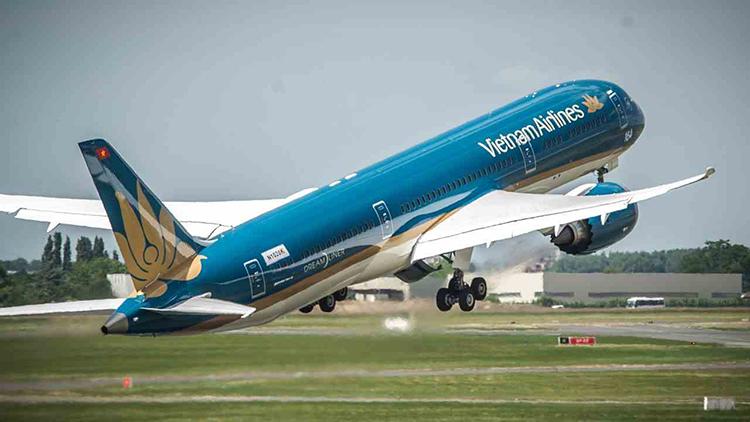
Boeing 787 Tail Strike at Munich: What Happened?
Vietnam Airlines Boeing 787 Tail Strike at Munich: What Happens When an Aircraft’s Tail Hits the Runway?
The Boeing 787 Accelerated Down the Runway — Then Something Went Wrong
Hundreds of passengers were expecting a routine long-haul journey from Germany to Vietnam.
Their aircraft was a modern Vietnam Airlines Boeing 787-9 Dreamliner, preparing to fly from Munich to Hanoi on August 15, 2026.
The aircraft accelerated along the runway.
But the takeoff reportedly developed abnormally.
The aircraft rotated unusually late, and reports indicate its tail contacted the ground as it departed the runway area.
Get the SkypropreAir Free Travel Pack
Plan smarter, choose a better seat and enjoy a more comfortable long-haul journey. Enter your details below to receive the Travel Pack.
Images and video circulating after the incident showed a dramatic cloud of dust behind the aircraft.
Yet the Boeing 787 continued climbing.
For passengers watching events unfold from inside the cabin, one question would have been understandable:
What happens when the tail of a passenger aircraft hits the runway during take-off?
And perhaps more importantly:
Why wouldn’t the pilots simply land immediately?
The answers reveal how aircraft crews manage an abnormal situation where rushing back to the runway isn’t necessarily the safest option.
What Happened to the Vietnam Airlines Boeing 787 at Munich?
Vietnam Airlines flight VN34 was operating from Munich to Hanoi on August 15.
The aircraft was a Boeing 787-9.
Vietnam Airlines confirmed that the aircraft returned to Munich after experiencing what it described as a technical issue shortly after take off.
The airline said the flight crew followed the required procedures and landed safely.
Passengers and crew were reported safe.
Specialist aviation reporting has described the event as involving an unusually late rotation, a tail strike and an excursion beyond the paved runway area during departure.
After becoming airborne, the aircraft remained near Munich for roughly two hours before returning.
The exact sequence and underlying cause require investigation.
That distinction is important.
Videos can show what happened.
Investigators must determine why it happened.
What Exactly Is a Tail Strike?
A tail strike occurs when the rear underside of an aircraft contacts the runway or ground.
It can happen during either:
take off or landing.
During take off, the nose of the aircraft must rise or rotate before the aircraft climbs away from the runway.
There is a limit to how far and how rapidly that nose can rise while the aircraft is still close to the ground.
If the aircraft’s pitch angle becomes too great before sufficient clearance exists, the rear fuselage can contact the runway.
That is a tail strike.
It can range from relatively minor contact to an event capable of causing significant structural damage.
And because some damage may not be obvious from the cockpit, crews have to treat a suspected tail strike seriously.
Why Can a Tail Strike Happen During Take off?
There isn’t one universal cause.
Investigators examining a tail-strike event may consider numerous factors, including:
- aircraft loading
- weight and balance
- take off-performance calculations
- rotation technique
- wind conditions
- runway conditions
- aircraft configuration
- technical problems
- human factors
Sometimes several factors interact.
That’s why it would be irresponsible to look at a dramatic video and immediately declare what caused this particular incident.
The investigation must establish that.
For passengers, however, there is a more useful question.
What happens next?
If the Tail Hits the Runway, Why Doesn’t the Aircraft Fall?
A tail strike can look frightening.
But touching the runway with the rear fuselage doesn’t automatically mean the aircraft has lost its ability to fly.
If the wings are producing sufficient lift and the aircraft becomes safely airborne, the pilots may continue the initial climb while assessing the situation.
The engines can still be producing normal thrust.
The flight controls may still be operating normally.
And the aircraft may remain controllable.
The crew then has to determine the safest course of action.
That may involve stopping the climb at a lower altitude, running checklists, communicating with air traffic control and preparing to return.
The objective isn’t to land as quickly as physically possible.
It is to land as safely as possible.
Why Would Pilots Stay Airborne for Two Hours After a Serious Incident?
This is one of the most interesting aspects for passengers.
If something has gone wrong, surely the safest response is:
Turn around immediately and land.
Not necessarily.
A long-haul aircraft departing for a distant destination can be extremely heavy.
It may be carrying enough fuel for many hours of flying.
That means the aircraft’s weight shortly after departure can be considerably higher than its normal landing weight.
Depending on the circumstances and aircraft procedures, crews may need to reduce weight before returning.
That can involve holding while fuel is consumed and, where appropriate and permitted, using the aircraft’s fuel-jettison system.
Meanwhile, the crew can:
- assess aircraft condition
- complete emergency or abnormal checklists
- coordinate with the airline
- communicate with air traffic control
- prepare the cabin
- brief emergency services
- plan the safest possible landing
So when passengers see an aircraft circling after an incident, it doesn’t necessarily mean the pilots don’t know what to do.
The circling may be part of what they’re doing.
What Would Passengers Experience Inside the Cabin?
This varies enormously.
Passengers may hear unusual noises.
They may notice that the aircraft stops climbing.
They may see the same landscape repeatedly as the aircraft enters a holding pattern.
Eventually, the captain may announce that the aircraft is returning to the departure airport because of a technical problem.
Cabin crew may begin preparing passengers for landing.
Depending on the circumstances, emergency vehicles may be waiting beside the runway.
Seeing fire engines doesn’t automatically mean the aircraft is on fire.
Emergency services are often positioned as a precaution when an aircraft returns with a known or suspected technical problem.
The safest thing passengers can do is remarkably simple:
listen carefully and follow the cabin crew’s instructions.
Can a Tail Strike Damage the Aircraft?
Yes.
That’s why engineers need to inspect the aircraft carefully after such an event.
Potential damage can involve areas around the rear fuselage and associated structures.
The severity depends on the nature of the contact.
Aircraft are designed with known structural limits, and maintenance procedures exist to determine whether an aircraft is safe to return to service.
A dramatic-looking event doesn’t automatically mean the aircraft is beyond repair.
Likewise, relatively modest-looking external damage shouldn’t automatically be assumed harmless.
Structural assessment belongs to qualified engineers and investigators — not social-media photographs.
Is the Boeing 787 Particularly Vulnerable to Tail Strikes?
The Munich incident shouldn’t be interpreted as evidence that the Boeing 787 is inherently unsafe.
Tail strikes are not unique to the Dreamliner.
They can occur on different aircraft types when the circumstances produce insufficient tail clearance during take off or landing.
Aircraft geometry matters, but so do loading, performance calculations, rotation technique and numerous other operational factors.
The Boeing 787 remains one of the world’s major long-haul aircraft families.
For passengers deciding between modern aircraft, this incident alone shouldn’t determine whether you book a Dreamliner.
👉 Related: Airbus A350 vs Boeing 787 Economy — Which Is Better for Long-Haul Flights?
That comparison looks at the question passengers are more likely to encounter when booking: cabin comfort, seating, noise, windows and the overall Economy experience.
Why Investigators Won’t Rely on the Viral Video Alone
Video can be extraordinarily useful.
But it rarely tells the entire story.
Investigators can potentially examine information including:
- flight-data recordings
- cockpit recordings where applicable
- aircraft maintenance records
- take off calculations
- aircraft weight and balance
- weather information
- runway conditions
- crew actions
- technical systems
- physical damage
This allows investigators to reconstruct events far more accurately than someone watching a short clip online.
That’s why early claims about the precise cause should be treated cautiously.
At the time of writing, the specific cause of the Munich incident has not been established publicly.
What This Incident Tells Passengers About Aviation Safety
There is an interesting contradiction in aviation.
Incidents can look frightening precisely because we’re able to see them.
Phones record departures.
Airport cameras capture events.
Flight-tracking services show aircraft circling.
Social media distributes footage worldwide within minutes.
But what happens after something goes wrong can tell us just as much about aviation safety as the initial event.
A problem occurs.
The aircraft remains controllable.
The crew assesses it.
Checklists are followed.
Air traffic control provides assistance.
Emergency services prepare on the ground.
The aircraft returns.
Passengers leave safely.
Safety isn’t the claim that nothing will ever go wrong.
Aviation safety is also about having layers of procedures and trained people ready when something does.
Should You Be Worried About Flying on a Boeing 787 After This Incident?
For most passengers, this single event isn’t a reason to avoid the Boeing 787.
The cause of this incident is still being investigated.
It would therefore be premature to draw conclusions about the aircraft type itself.
If you’re booking a long-haul flight, factors such as the airline’s cabin configuration, seat location, schedule, journey time and fare remain far more useful considerations.
And if you’re choosing between a 787 and its closest Airbus rival:
👉 Read our Airbus A350 vs Boeing 787 Economy comparison
It explains which aircraft we would choose when both appear at similar prices.
Final Thoughts: The Most Important Part Happened After the Strike
The most dramatic moment was the take off.
That’s the moment people will replay online.
But from a passenger-safety perspective, what happened afterward deserves just as much attention.
The aircraft became airborne.
The crew assessed the situation.
The flight remained near Munich rather than continuing to Hanoi.
Preparations were made for the return.
And the Boeing 787 landed safely.
Everyone aboard was reported safe.
Investigators now have the much more complicated job of determining exactly why the departure unfolded as it did.
Until they do, speculation should remain exactly that:
speculation.
For passengers, however, the incident demonstrates something important.
When an abnormal event occurs during flight, pilots don’t simply react to the most frightening-looking part of the situation.
They assess the aircraft, follow procedures and work toward the safest possible outcome.
And sometimes that means spending two hours in the air before returning to the runway just a few kilometres away.
Frequently Asked Questions
What is a tail strike on an aircraft?
A tail strike occurs when the rear underside of an aircraft contacts the runway or ground, usually during takeoff rotation or landing. The severity can range considerably, which is why the aircraft must be inspected afterward.
Can an aircraft still fly after a tail strike?
Potentially, yes. A tail strike doesn’t automatically prevent an aircraft from remaining airborne. The crew must assess the situation, follow the appropriate procedures and determine whether returning to the airport is necessary.
Why might an aircraft circle before making an emergency return?
A long-haul aircraft may be very heavy shortly after departure because of its fuel load. Depending on the situation, crews may hold while reducing weight, completing checklists and preparing the aircraft and cabin for a safe return.