
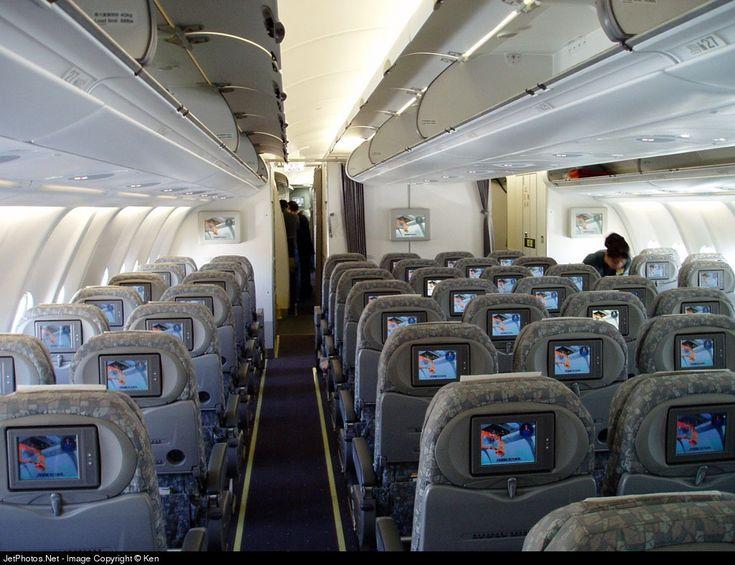
2-4-2 vs 3-3-3 Economy: Which Layout Is More Comfortable?
2-4-2 vs 3-3-3 Economy: Which Layout Is More Comfortable?
Nine Hours. One Seat. And One Number That Could Change Your Entire Flight
You are booking a long-haul flight.
The price looks good.
The departure time is convenient.
Even the aircraft looks promising.
Then you open the seat map.
Get the SkypropreAir Free Travel Pack
Plan smarter, choose a better seat and enjoy a more comfortable long-haul journey. Enter your details below to receive the Travel Pack.
One flight shows:
2-4-2.
Another shows:
3-3-3.
At first glance, the difference hardly seems important.
After all, they are both Economy Class.
But eight, ten or twelve hours later, that small difference in seat arrangement can completely change how comfortable your journey feels.
Imagine sitting beside the window in a 2-4-2 cabin.
There is only one passenger between you and the aisle.
Now imagine the same window position in a 3-3-3 cabin.
There are two passengers between you and freedom.
Suddenly, those numbers matter.
So when comparing 2-4-2 vs 3-3-3 Economy, which layout should you choose?
For many passengers, there is a surprisingly clear winner.
2-4-2 vs 3-3-3 Economy: Quick Verdict
| Comfort Factor | 2-4-2 | 3-3-3 |
|---|---|---|
| Best for couples | Excellent | Good |
| Window-seat aisle access | Better | Worse |
| Number of middle seats | Fewer | More |
| Travelling alone | Excellent | Good |
| Families of three | Good | Excellent |
| Feeling of personal space | Better | Depends on aircraft/airline |
| Best overall layout | Winner | — |
SkypropreAir Verdict
2-4-2 is generally the more passenger-friendly Economy layout.
It does not automatically mean that the seats are wider or have more legroom.
But the arrangement itself gives passengers one enormous advantage:
fewer people are trapped between other passengers.
And on a ten-hour flight, that matters.
Choosing the right layout is only part of the decision. See our complete guide to the Best Seats on a Plane to find which seat positions are best for legroom, sleeping, turbulence and long-haul comfort.
Want to compare more than the layout? Use the SkypropreAir Economy Seat Comparison Database to compare seat pitch, seat width and Economy configurations across major aircraft types before choosing your flight.
Related Reading: Airbus A330 vs Boeing 787: Which is Better for Economy?
What Does 2-4-2 Economy Actually Mean?
A 2-4-2 cabin has eight Economy seats across each typical full row:
Window — Seat | Aisle | Seat — Seat — Seat — Seat | Aisle | Seat — Window
In simple terms:
2 seats + 4 seats + 2 seats.
The Airbus A330 is one of the best-known examples of an aircraft commonly configured this way in Economy.
The beauty of 2-4-2 becomes obvious when you look at the two-seat pairs beside the windows.
If you are sitting at the window, only one passenger separates you from the aisle.
If you are travelling as a couple, you can effectively have your own little section of the aircraft.
No stranger sitting beside you.
No middle seat between you.
And no third passenger climbing across both of you.
That is one reason the A330 remains attractive to many Economy travellers despite newer aircraft being available.
What Does 3-3-3 Economy Mean?
A 3-3-3 cabin contains nine seats across:
Window — Middle — Aisle | Aisle — Middle — Aisle | Aisle — Middle — Window
Or more simply:
3 seats + 3 seats + 3 seats.
This arrangement is extremely common on modern long-haul aircraft.
The Boeing 787 Dreamliner is perhaps the most famous example.
The layout allows airlines to accommodate nine passengers across each full Economy row.
But there is a passenger-comfort consequence.
There are more middle seats.
And if you choose a window seat, two passengers can stand between you and the aisle.
Related Reading: Most Comfortable Economy Seats Ranked by Aircraft Type
Compare Your Long-Haul Options Before Booking
Found two similar fares? Compare the flight options before booking, then check which aircraft and Economy layout each airline uses.
👉 Compare flights with Aviasales
The Biggest Advantage of 2-4-2: The Window Pairs
This is where 2-4-2 becomes difficult to beat.
Imagine you are travelling from Dublin to Los Angeles with your partner.
You choose the two seats beside the window on an Airbus A330.
For the next ten hours, that section effectively belongs to the two of you.
One gets the window.
One gets the aisle.
Nobody gets the dreaded middle seat.
Nobody has to sit beside a stranger.
And if the window passenger wants to visit the lavatory, only one person needs to move.
Now compare that with a 3-3-3 cabin.
A couple choosing a window and middle seat will have a stranger sitting on the aisle.
Choose middle and aisle instead, and another passenger occupies the window.
Either way, the neat two-person arrangement disappears.
For couples, 2-4-2 wins comfortably.
The Hidden Enemy of Economy Comfort: The Middle Seat
Seat width and legroom receive enormous attention.
But there is another factor that can dramatically affect perceived comfort:
who is sitting beside you.
Middle seats remove two things passengers value.
Personal boundaries.
And easy access.
In a 3-3-3 configuration, each three-seat section contains a middle seat.
That passenger has someone on both sides.
The window passenger potentially has to disturb two people to reach the aisle.
The arrangement works efficiently.
But socially, it can feel crowded.
In a 2-4-2 cabin, the side pairs contain no middle seat at all.
That makes a substantial portion of the cabin psychologically more attractive before we have even considered seat pitch or width.
Related Reading: Most Uncomfortable Economy Seats
But 2-4-2 Doesn’t Automatically Mean a Bigger Seat
This distinction is important.
Layout and seat dimensions are not the same thing.
A 2-4-2 aircraft does not automatically have:
- more legroom
- greater recline
- wider seats
- better padding
- better entertainment
- more storage
Those characteristics depend on the aircraft and, crucially, how the airline configures it.
One airline might install relatively generous Economy seats.
Another might reduce pitch to fit additional rows.
Even two aircraft of the same type can offer noticeably different passenger experiences.
So don’t book an aircraft based on 2-4-2 alone.
Think of the layout as one part of the comfort equation.
Where 3-3-3 Can Actually Be Better
It would be unfair to declare 3-3-3 uncomfortable.
It has some advantages.
Families of Three
For two parents travelling with one child, 3-3-3 can be almost perfect.
The family can occupy an entire three-seat section.
No stranger needs to sit with them.
Three Friends Travelling Together
The same applies to groups of three.
A complete block makes conversation, sharing items and organising the journey easier.
Aircraft Technology Can Compensate
The Boeing 787 is an excellent example.
Although many 787 Economy cabins use 3-3-3 seating, the aircraft offers other passenger-comfort advantages, including its distinctive large electronically dimmable windows and modern cabin environment.
So the comparison isn’t simply:
A330 good. 787 bad.
It is more subtle.
The 787 may provide the more technologically advanced cabin.
But some passengers may still prefer the 2-4-2 seating geometry of an A330.
Window Passengers Should Pay Particular Attention
If you love looking outside, this comparison matters more to you than it does to many aisle-seat passengers.
Consider what happens during a night flight.
You are sitting at the window.
The cabin is dark.
The passengers beside you are asleep.
Then you need the toilet.
In 2-4-2:
You potentially disturb one person.
In 3-3-3:
You potentially disturb two people.
Now imagine doing that several times during an 11-hour flight.
The difference suddenly becomes much more significant.
For frequent window-seat travellers, 2-4-2 is one of the most convenient wide-body Economy configurations available.
What About the Four Seats in the Middle of 2-4-2?
This is where the comparison becomes interesting.
The centre block contains four passengers.
At first, that sounds worse.
But look more closely.
The two passengers on the outside have direct aisle access.
The two inner passengers are each only one seat away from an aisle.
Nobody is buried two passengers deep.
Compare that with the window passenger in a 3-3-3 block, who can have two people between themselves and the aisle.
That is one of the subtle reasons 2-4-2 works so effectively.
Seat Width Could Change the Result
There is another critical factor passengers should check before booking:
seat width.
Aircraft manufacturers provide the cabin.
Airlines decide how to use much of that space.
Higher-density configurations can reduce the personal space available to each passenger.
That means you should never assume:
newer aircraft = more comfortable Economy seat.
Nor should you assume:
same aircraft = same experience on every airline.
Always examine the actual airline configuration.
Don’t Forget Seat Pitch
Seat pitch is the distance from a point on your seat to the same point on the seat in front.
It is not exactly the same as usable legroom, but it provides a useful indication of how densely rows are installed.
You could therefore encounter:
2-4-2 with tight pitch
versus
3-3-3 with more generous pitch.
For a very tall passenger, the additional legroom might matter more than the seating arrangement.
That is why SkypropreAir recommends checking at least four things before choosing a long-haul Economy seat:
- Seat layout
- Seat pitch
- Seat width
- Your exact row position
The aircraft name alone doesn’t tell you everything.
How to Check the Exact Layout Before Booking
Don’t rely only on the airline’s photograph of the cabin.
Check the actual aircraft scheduled for your flight.
Then examine the seat map.
A useful resource is AeroLOPA which provides detailed aircraft seating plans and information such as seat positioning, galleys, lavatories and other cabin features.
Remember that aircraft substitutions can happen, so the scheduled aircraft is never an absolute guarantee.
But checking before booking gives you a much better chance of choosing wisely.
Which Layout Is Best for Different Travellers?
Couples
Winner: 2-4-2
The window-side pairs are extremely difficult to beat.
Solo Window-Seat Travellers
Winner: 2-4-2
Only one passenger separates you from the aisle.
Families of Three
Winner: 3-3-3
You can occupy an entire section together.
Families of Four
Winner: 2-4-2
The centre block can accommodate the entire family.
Tall Passengers
It depends.
Prioritise pitch, exit-row availability and seat design rather than layout alone.
Passengers Who Hate Middle Seats
Winner: 2-4-2
This is where the configuration has one of its greatest advantages.
2-4-2 vs 3-3-3: Which Would SkypropreAir Choose?
For an eight-to-twelve-hour Economy flight, assuming broadly comparable fares and seat dimensions:
SkypropreAir would choose 2-4-2.
Not because 3-3-3 is inherently bad.
And not because every aircraft with 2-4-2 is automatically comfortable.
The reason is much simpler.
2-4-2 gives passengers more opportunities to avoid the compromises created by three-seat blocks.
Couples can sit alone together.
Window passengers have easier aisle access.
There are fewer undesirable middle-seat positions.
And even passengers in the four-seat centre block are never more than one passenger away from an aisle.
Sometimes Economy comfort isn’t about having more luxury.
It is about having fewer inconveniences.
The Bigger Lesson: Check the Seat Map, Not Just the Aircraft
When passengers compare flights, they often look at:
- price
- departure time
- airline
- aircraft type
- baggage allowance
But the seat map deserves a place on that list.
A modern aircraft can still have a seating configuration you dislike.
An older aircraft can offer a layout that makes ten hours in Economy considerably easier.
So the next time two similar flights appear on your screen, don’t immediately choose the newest aircraft.
Open the seat maps.
Look at the numbers.
Because 2-4-2 vs 3-3-3 may look like a small difference on your laptop.
At 35,000 feet, nine hours into the journey, it can feel enormous.
FAQs
Is 2-4-2 better than 3-3-3 in Economy?
For many passengers, yes. A 2-4-2 layout provides two-seat pairs beside the windows and means passengers are generally no more than one seat away from an aisle. However, seat pitch, width and airline configuration also affect overall comfort.
Which aircraft have 2-4-2 Economy seating?
The Airbus A330 is one of the best-known aircraft commonly offering an eight-abreast 2-4-2 Economy layout. Configurations vary by airline, so always check the specific aircraft seat map before booking.
Is 3-3-3 Economy uncomfortable?
Not necessarily. Comfort depends on seat width, pitch, padding, aircraft technology and where you sit. A 3-3-3 configuration can also work particularly well for families or groups of three travelling together.
One final question:
Would you rather spend ten hours on a newer aircraft in 3-3-3 or an older aircraft where you and your travelling companion get a 2-seat pair to yourselves?