
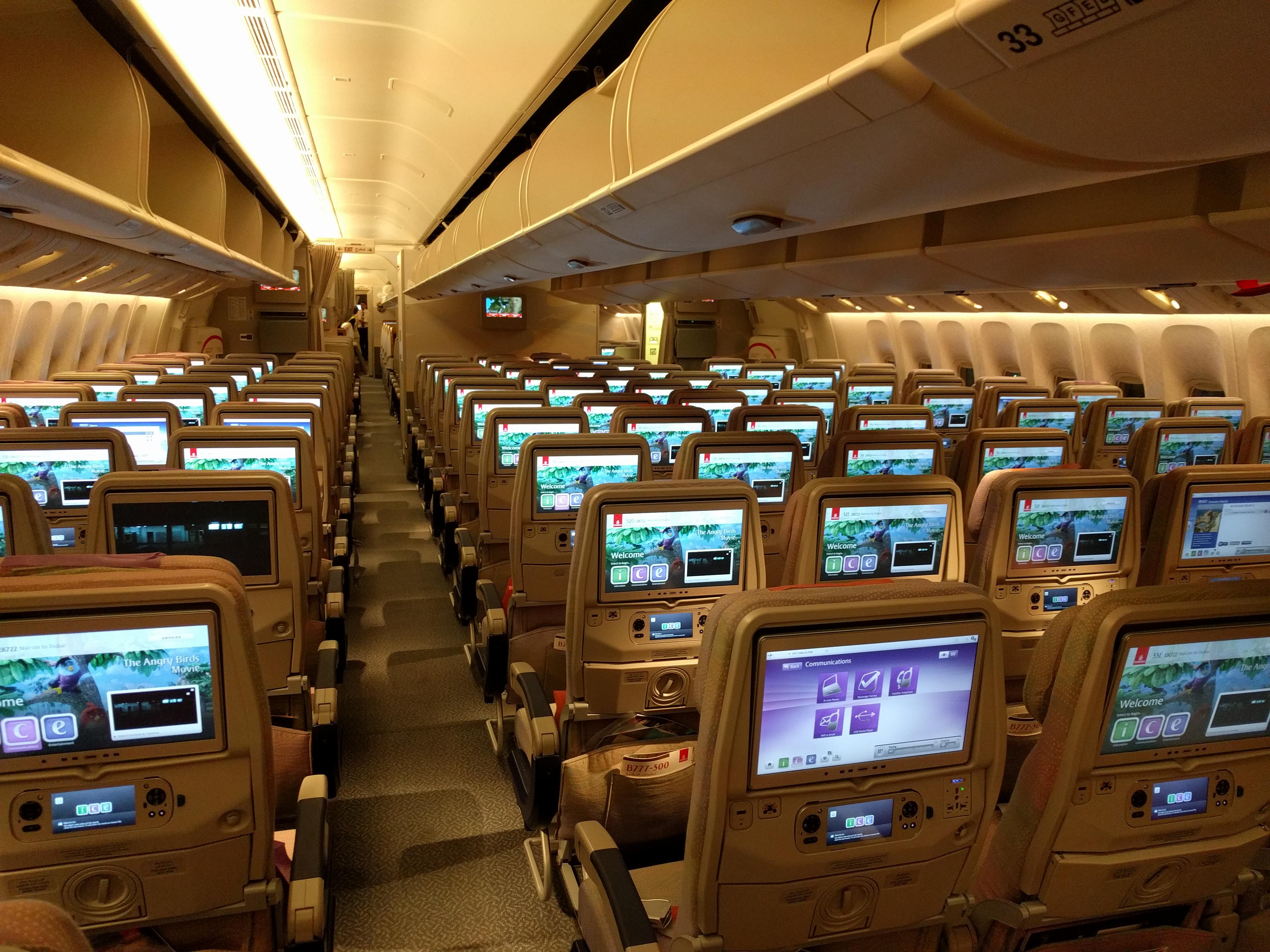
Airbus A350 vs Boeing 777 Economy: Which Is Better?
Airbus A350 vs Boeing 777: Which Is Better for Economy?
Same Destination. Same Fare. Two Very Different Flights.
You are booking a 12-hour long-haul flight.
Two options appear on your screen.
One is operated by an Airbus A350.
The other is a Boeing 777.
The departure times are similar. The fares are almost identical. Both airlines look perfectly acceptable.
Get the SkypropreAir Free Travel Pack
Plan smarter, choose a better seat and enjoy a more comfortable long-haul journey. Enter your details below to receive the Travel Pack.
Which one should you choose?
For an Economy passenger, that decision could matter far more than you think.
Because after several hours in the air, small differences in seat width, cabin layout, noise, air quality and personal space can become surprisingly noticeable.
The Boeing 777 is one of the most successful long-haul aircraft ever built. Its enormous cabin has carried millions of passengers across continents for decades.
The Airbus A350 represents a newer generation of long-haul aircraft, designed with modern materials and a cabin environment specifically intended to improve passenger well-being.
So when comparing the Airbus A350 vs Boeing 777 economy experience, which aircraft actually gives you the more comfortable journey?
There is a clear favourite — but there is an important catch.
The Airbus A350 vs Boeing 777 economy comparison becomes especially important on flights lasting 10 hours or more.
Related Reading: The Best Seats by Aircraft Type
The Quick Answer: Which Is Better?
For most Economy passengers, SkypropreAir gives the Airbus A350 the advantage — particularly when comparing a conventional 3-3-3 A350 with a 3-4-3 Boeing 777.
Why?
The A350 combines several passenger-friendly characteristics:
- commonly 3-3-3 Economy seating
- typically wider seats in that configuration
- a modern cabin environment
- low cabin altitude
- improved humidity
- low cabin noise
- modern lighting
- a maximum of one middle seat between the window and aisle
Airbus describes the standard nine-abreast A350 Economy cabin as offering seats around 18 inches wide, although the exact seat dimensions depend on the airline.
But there is an important warning.
Not every A350 has 3-3-3 seating.
Airbus has developed a 10-abreast A350 configuration, meaning some aircraft can use 3-4-3 Economy seating.
And that changes the comparison considerably.
The lesson is simple:
Never choose a flight purely because it says A350 or 777. Check the airline’s actual seat configuration before booking.
Once you know the aircraft and configuration, use our Best Seats on a Plane guide to decide which part of the cabin and which seat type will give you the best journey.
Related Reading: Airbus A350 vs A380: Which is more comfortable
A350 vs 777 Economy: The Differences That Matter
| Feature | Airbus A350 | Boeing 777 |
|---|---|---|
| Common Economy layout | 3-3-3 | 3-4-3 on many current operators |
| Typical seat-width potential | Strong at 9-abreast | More restricted at 10-abreast |
| Cabin generation | Newer | Older 777-200/300 generation |
| Cabin altitude | Lower/optimised | Conventional on current 777 generation |
| Cabin humidity | Improved | More conventional |
| Cabin noise | Exceptionally quiet | Varies by model/seat location |
| Middle-seat exposure | Lower in 3-3-3 | Greater in 3-4-3 |
| Overall Economy advantage | Winner | Airline-dependent |
SkypropreAir verdict: Airbus A350 — provided you are booking a 3-3-3 Economy configuration.
Before choosing between the A350, 777 or another long-haul aircraft, compare the actual Economy configurations. The SkypropreAir Economy Seat Comparison Database lets you compare seat pitch, seat width and cabin layouts across major aircraft types before you book.
1. The Biggest Difference May Be Sitting Right Beside You
For many passengers, the most obvious difference is the seat layout.
A conventional A350 Economy cabin is usually arranged:
3-3-3
That means nine passengers across each row.
Many Boeing 777 operators now use:
3-4-3
That means ten passengers across.
It sounds like a small difference.
On a 10-, 12- or 15-hour flight, it isn’t.
Imagine sitting beside the window.
On the 3-3-3 A350, there are two passengers between the window and aisle.
In the four-seat centre section of a 3-4-3 777, two passengers can occupy the middle positions.
More importantly, fitting ten passengers across the 777 cabin can affect the width available to each seat and the aisles.
The 777 itself is an extremely wide aircraft. Boeing highlights cabin width as one of the aircraft’s major advantages.
But the airline ultimately decides how to use that space.
And that is where aircraft engineering meets airline economics.
2. Seat Width: This Is Where the A350 Can Pull Ahead
An aircraft can have an enormous cabin and still have tight Economy seats.
Why?
Because airlines choose how many seats to place across it.
Airbus’s baseline A350 Economy configuration uses nine-abreast seating with approximately 18-inch seats.
Compare that with a real-world 777 example.
Qatar Airways lists its Boeing 777-300ER Economy cabin as 3-4-3, with seat widths varying from approximately 16.58 to 17.38 inches, depending on configuration.
That does not mean every A350 seat is 18 inches or every 777 seat is around 17 inches.
Airlines specify their own seats.
But it demonstrates something every Economy passenger should understand:
Aircraft width doesn’t determine your personal space. Seat density does.
An extra fraction of an inch may sound insignificant while you’re booking.
After ten hours with someone’s shoulder against yours, it may feel much more important.
Seat width is one of the biggest factors in the Airbus A350 vs Boeing 777 economy debate.
Winner for seat width: A350 — in 3-3-3 configuration
3. The A350 Has Another Advantage You Cannot See
Seat width is easy to understand.
Cabin pressure isn’t.
But it may influence how you feel after a long journey.
At cruising altitude, the air outside an aircraft is far too thin for passengers to breathe normally, so the cabin must be pressurised.
The cabin is therefore maintained at an equivalent altitude far below the aircraft’s actual cruising altitude.
Airbus says the A350 has an average cabin altitude of around 6,000 feet, alongside systems designed to improve temperature and passenger comfort.
The aircraft’s composite construction and modern environmental systems allow Airbus to optimise the cabin environment for long-duration flights.
You probably won’t board an A350 and immediately think:
“This cabin altitude feels lower.”
That’s not how passengers experience it.
Instead, the potential benefit is more subtle.
After many hours in the air, the overall cabin environment can contribute to how comfortable or fatigued a journey feels.
Winner for cabin environment: A350
Related Reading: Airbus A380 vs Boeing 777 Economy experience
4. What About Dry Cabin Air?
Anyone who regularly flies long-haul knows the feeling.
Dry eyes.
Dry throat.
Dry skin.
That unmistakable sensation of having spent half a day inside an aircraft.
The A350 was designed with passenger well-being as an important consideration.
Airbus says its environmental systems provide higher humidity levels and an optimised cabin altitude compared with older-generation aircraft.
Again, don’t expect an aircraft cabin to feel like a humid tropical afternoon.
Aircraft cabins remain relatively dry environments.
But over a long journey, even relatively modest improvements to the cabin environment may contribute to passenger comfort.
Winner: A350
Before You Choose the Cheapest Fare, Compare the Aircraft
Two flights can cost almost exactly the same while offering very different Economy experiences.
Before booking, compare the fares — then check the aircraft type and seat map.
👉 Compare long-haul flight options with Aviasales, then return to SkypropreAir to compare the aircraft before choosing your seat.
5. Noise: The Difference You May Notice at Hour Eight
There is another comfort factor passengers frequently underestimate:
noise.
Constant background noise can become tiring on a long flight.
The A350 was designed from the beginning as a new-generation long-haul aircraft, and Airbus describes it as having the quietest twin-aisle cabin in the skies.
The Boeing 777 remains an excellent long-haul aircraft, but the current 777-200 and 777-300 generation dates from an earlier era of wide-body design.
Your exact experience will also depend on where you sit.
Seats close to engines, galleys, lavatories and busy cabin areas can feel considerably different from quieter sections of the same aircraft.
But if everything else were equal?
Winner for quietness: A350
6. Don’t Underestimate the Middle-Seat Problem
Here’s something aircraft specifications don’t always communicate effectively.
3-3-3 is psychologically different from 3-4-3.
Consider the A350:
ABC — DEF — JKL
Every three-seat block contains one middle seat.
Now consider a typical ten-abreast 777:
ABC — DEFG — JKL
The centre block contains two middle seats.
If you’re travelling alone and are assigned one of those centre positions, you could spend the entire flight between two strangers.
That can make getting up, sleeping and simply finding somewhere for your elbows more difficult.
For couples, the difference matters too.
Neither layout offers the excellent 2-4-2 arrangement found on many Airbus A330s, but the A350’s 3-3-3 configuration remains an attractive compromise.
Winner for Economy layout: A350
7. But Don’t Write Off the Boeing 777
At this point, it may sound as though you should avoid the 777.
Absolutely not.
The Boeing 777 remains one of aviation’s great long-haul aircraft.
Its cabin is exceptionally wide, airlines operate it on some of the world’s most important routes, and the passenger experience can be excellent when the airline installs a good Economy product.
Boeing specifically designed the 777 cabin to give airlines considerable flexibility in how they configure it.
And that flexibility creates the crucial point of this comparison:
You don’t really fly an aircraft manufacturer’s Economy Class.
You fly an airline’s version of that aircraft.
A well-configured 777 with generous pitch, comfortable seats and good service can easily provide a better journey than a high-density A350.
That is why simply searching for “A350” when booking isn’t enough.
8. The New 10-Abreast A350 Changes the Argument
This is particularly important for keeping this article evergreen.
The A350’s reputation for Economy comfort was built partly around its spacious 3-3-3 configuration.
But Airbus now offers a higher-density 10-abreast A350 configuration.
Airbus says its latest cabin standard increases usable cabin width to 225 inches, allowing 10-abreast seating with 17-inch Economy seats, while airlines retaining nine-abreast seating can potentially offer even more width.
So the old rule:
A350 = 3-3-3
can no longer be assumed universally.
That means passengers need to look deeper.
Before paying for a long-haul ticket, check:
- the aircraft type
- airline
- Economy configuration
- seat width
- seat pitch
- exact seat location
This can tell you far more about your likely comfort than the aircraft name alone.
9. What About the Boeing 777X?
There is another distinction worth making.
This article primarily compares the current-generation Boeing 777-200/777-300 family passengers commonly encounter with the Airbus A350.
The upcoming 777X is a substantially updated aircraft.
Boeing says the 777X will incorporate a quieter cabin, lower cabin altitude, improved humidity, larger windows and other passenger-comfort improvements.
So once the 777X enters widespread passenger service, it deserves its own comparison with the A350.
For now, passengers should not assume that information about the 777X applies to the 777-300ER or 777-200ER they may be booking today.
A350 vs 777: Which Should You Choose for a Long-Haul Flight?
Suppose you find these two flights:
Flight A: Airbus A350, 3-3-3 Economy
Flight B: Boeing 777-300ER, 3-4-3 Economy
The fares are identical.
The schedules are equally convenient.
The airlines have comparable service.
SkypropreAir would choose the A350.
The combination of nine-abreast seating, approximately 18-inch-seat potential, modern cabin technology, lower cabin altitude and low noise gives it a compelling advantage for Economy passengers.
But change the airline configuration and the answer can change.
That leads to the most important lesson in this entire comparison.
Planning an International Trip? Don’t Forget Travel Cover
Choosing the right aircraft can make a long-haul journey more comfortable. Having suitable travel protection can also help you prepare for unexpected problems while you’re away.
👉 Check SafetyWing travel insurance options before your trip.
The Aircraft Matters. The Airline Configuration Matters More.
When choosing a long-haul flight, don’t stop after discovering the aircraft type.
Investigate the actual cabin.
A good booking decision should consider:
Aircraft → Airline → Configuration → Seat → Price
in that order.
An A350 tells you what aircraft you are flying.
It doesn’t tell you exactly how much legroom you’ll receive.
A Boeing 777 tells you the aircraft family.
It doesn’t tell you whether your seat will feel spacious or cramped.
The airline makes those decisions.
And that is why two passengers can fly thousands of miles on the same aircraft type and come away with completely different opinions.
Ultimately, the Airbus A350 vs Boeing 777 economy choice depends on both the aircraft and the airline’s configuration.”
SkypropreAir Verdict
🏆 Overall Economy Winner: Airbus A350
When comparing a standard 3-3-3 Airbus A350 with a typical 3-4-3 Boeing 777, the A350 is our preferred aircraft for long-haul Economy.
It wins because of the complete package rather than one dramatic advantage:
Seat layout: A350
Seat-width potential: A350
Cabin environment: A350
Humidity: A350
Noise: A350
Aircraft spaciousness: 777 remains excellent
Airline-specific experience: Depends entirely on configuration
The Boeing 777 is still a superb aircraft.
But if you offered us two otherwise identical 12-hour Economy flights tomorrow — one aboard a nine-abreast A350 and the other aboard a ten-abreast current-generation 777 we would book the A350.
Before You Book: Check the Aircraft, Not Just the Fare
A €30 saving can look attractive when you’re sitting at home comparing flights.
It may feel considerably less attractive during hour nine in a narrow middle seat.
Before booking, compare your flight options and then check which aircraft and seating configuration the airline plans to operate.
SkypropreAir tip: Once you’ve found a competitive fare, open the airline’s seat map before paying. Look for whether the A350 is 3-3-3 or 3-4-3 and whether the 777 is 3-4-3. Then compare seat pitch and width.
For most passengers comparing Airbus A350 vs Boeing 777 economy comfort, a 3-3-3 A350 remains our preferred choice.
👉 Compare long-haul flight options before booking, then use the aircraft type and seat map to choose the journey offering the best combination of price and comfort.
Continue Comparing Before You Fly
If aircraft comfort matters to you, don’t stop with the A350 vs 777 comparison.
Read SkypropreAir’s guides to:
👉 Best Aircraft for Long-Haul Economy Flights
👉 The Most Comfortable Seats in Economy Class — Ranked by Aircraft Type
👉 The Most Uncomfortable Seats on a Plane and How to Avoid Them
👉 Is Premium Economy Worth It?
These guides work together to answer a question that can make a significant difference to your next journey:
Not simply “What is the cheapest flight?” but “What am I actually going to be sitting in for the next 12 hours?”
Frequently Asked Questions
Is the Airbus A350 more comfortable than the Boeing 777 in Economy?
Generally, a nine-abreast 3-3-3 Airbus A350 has an Economy comfort advantage over a ten-abreast 3-4-3 current-generation Boeing 777. The A350 also benefits from a modern cabin environment, low cabin altitude and low noise. However, the airline’s individual seating configuration remains crucial.
Which has wider Economy seats: A350 or Boeing 777?
There is no universal answer because airlines choose their seats. Airbus’s baseline nine-abreast A350 configuration accommodates approximately 18-inch seats, while some ten-abreast 777 configurations can be narrower. Always check the specific airline and aircraft configuration before booking.
Is 3-3-3 better than 3-4-3 in Economy?
For many passengers, yes. A 3-3-3 configuration has nine seats across instead of ten and eliminates the second middle seat in the centre block. However, seat width and pitch still depend on the airline.
One Final Question
If two long-haul flights cost exactly the same, would you choose the Airbus A350 because of its 3-3-3 cabin and modern environment, or would you happily fly the Boeing 777 if the airline and schedule were better?
Tell us which aircraft you prefer in Economy and why.