
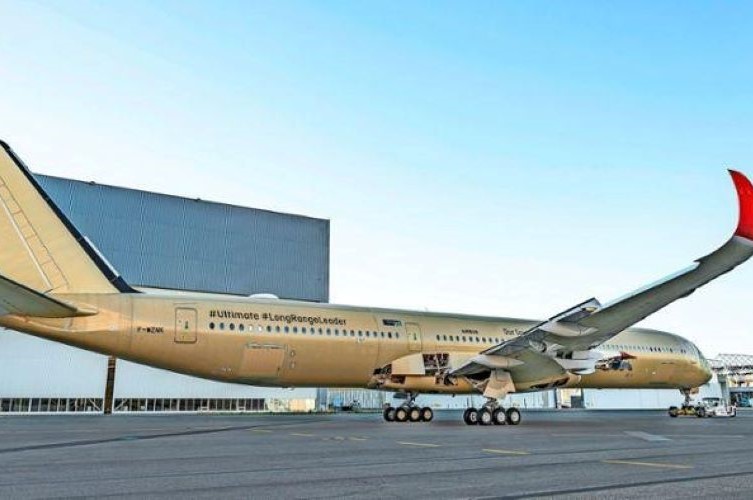
Airbus Just Completed a Historic 19-Hour Nonstop Flight. Here’s Why It Could Change Air Travel Forever
Imagine Boarding a Flight Today… and Landing Tomorrow
You fasten your seatbelt.
The aircraft accelerates down the runway.
Within minutes you’re climbing above the clouds.
Hours pass.
You enjoy dinner.
Get the SkypropreAir Free Travel Pack
Plan smarter, choose a better seat and enjoy a more comfortable long-haul journey. Enter your details below to receive the Travel Pack.
Watch two movies.
Sleep.
Wake up.
Have breakfast.
Read a book.
Sleep again.
Look out of the window…
You’re still flying.
That is no longer a futuristic dream.
It has just become one step closer to everyday reality.
Airbus has successfully completed a nonstop 19-hour, 13-minute test flight from Toulouse, France, to Melbourne, Australia using its new A350-1000ULR (Ultra Long Range) aircraft. Covering nearly 17,000 kilometres, the flight marks a major milestone in the certification programme for Qantas’ Project Sunrise, which aims to connect Australia directly with cities such as London and New York.
Why This Flight Matters
This wasn’t an attempt to set a world record.
It was designed to answer a much more important question:
Can passengers safely and comfortably fly for almost an entire day without stopping?
The answer appears increasingly to be yes.
The flight tested:
-
Aircraft performance
-
Extended fuel systems
-
Flight management systems
-
Crew operations
-
Long-duration reliability
Airbus engineers will now analyse thousands of data points collected during the journey before the aircraft enters commercial service.
Meet the Airbus A350-1000ULR
The A350-1000ULR is not simply a standard A350 carrying more fuel.
It has been specially adapted for ultra-long-haul operations with features including:
-
An additional 20,000-litre rear centre fuel tank
-
Enhanced flight management software
-
Optimised weight and balance
-
Highly efficient Rolls-Royce Trent XWB engines
-
Advanced composite construction
Together, these improvements give the aircraft the ability to fly up to about 22 hours under certain operating conditions.
The Dream Behind Project Sunrise
For decades, flights between Australia and Europe have required at least one stop.
Project Sunrise aims to eliminate that.
Instead of:
Sydney → Singapore → London
Passengers could simply board once…
…and land nearly 20 hours later.
Qantas has ordered 12 Airbus A350-1000ULR aircraft, with the first commercial nonstop Sydney–London flights currently planned for 2027, subject to certification and aircraft deliveries.
Flying for 20 Hours Is About More Than the Airplane
Modern aircraft are already capable of extraordinary endurance.
The bigger challenge is the people inside.
On ultra-long-haul flights, airlines must carefully manage:
-
Passenger hydration
-
Sleep cycles
-
Meal timing
-
Cabin lighting
-
Mobility
-
Jet lag
Qantas has even designed a dedicated Wellbeing Zone, allowing passengers to stretch during the flight—an innovation aimed at improving comfort and reducing fatigue on journeys approaching 20 hours.
How Do Pilots Fly for 19 Hours?
Many people imagine two pilots remaining at the controls throughout the journey.
In reality, several qualified pilots share the workload.
The Toulouse-to-Melbourne flight was operated by four Airbus test pilots and five flight-test engineers, all rotating duties while monitoring the aircraft’s performance. Strict fatigue-management procedures and dedicated crew-rest facilities help ensure safety throughout such long missions.
A Cabin Designed for Human Comfort
Spending almost an entire day inside an aircraft presents unique challenges.
Fortunately, the A350 already enjoys one of the best reputations in commercial aviation for passenger comfort.
Benefits include:
-
Higher cabin humidity
-
Lower cabin altitude
-
Larger windows
-
Quieter engines
-
Improved air quality
-
Advanced LED mood lighting
These features help reduce fatigue and make very long flights more comfortable than older aircraft.
Related reading: Why the Airbus A380 Remains a Passenger Favorite.
Could This Change the Way We Travel?
Very likely.
Business travellers will save valuable hours.
Families will avoid stressful airport connections.
Older travellers may appreciate boarding once instead of navigating multiple terminals.
Although many passengers still enjoy breaking long journeys with a stopover, ultra-long-haul flights will provide another option—one focused on convenience and time savings.
The Future Is Closer Than Ever
The successful Toulouse-to-Melbourne test shows that the future of ultra-long-haul aviation is no longer theoretical.
It is happening.
The aircraft has now reached Australia successfully.
Certification continues.
Deliveries are approaching.
Commercial passengers could soon experience nonstop journeys that once seemed impossible.
For aviation enthusiasts, this represents one of the biggest advances in long-haul travel since the arrival of the Boeing 747.
Final Thoughts
When Airbus engineers celebrated after the aircraft touched down in Melbourne, they weren’t simply marking the end of a 19-hour flight.
They were celebrating the beginning of a new era.
Within just a few years, travellers may board in Sydney and wake up in London without ever leaving their seats.
For millions of passengers, the world’s longest flights are about to become the world’s simplest.
Planning an Ultra-Long-Haul Trip?
Before booking, compare aircraft types—not all long-haul flights offer the same level of comfort. Modern aircraft such as the Airbus A350 are designed to make long journeys quieter, more comfortable, and more fuel-efficient.
Book smarter: Compare fares using your Aviasales affiliate link.
Travel protected: Add SafetyWing travel insurance before embarking on an ultra-long-haul journey.
Frequently Asked Questions
1. How long was the Airbus Toulouse-to-Melbourne test flight?
The aircraft flew nonstop for approximately 19 hours and 13 minutes, covering nearly 17,000 kilometres.
2. Why is it called the A350-1000ULR?
“ULR” stands for Ultra Long Range, reflecting its ability to operate flights lasting up to about 22 hours under certain conditions.
3. When will passengers fly on it?
Qantas expects to begin Project Sunrise services in 2027, following certification and aircraft deliveries.
Question for Readers
If you could avoid a stopover and fly nonstop for 20 hours, would you do it—or would you still prefer to break the journey with a layover? Tell us your choice and why in the comments below.