
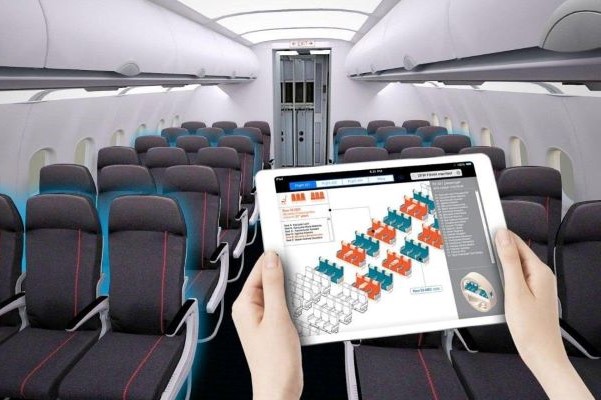
Airlines Are Quietly Testing Seats That Track You — Here’s What They’re Not Telling You
No announcement. No headlines. But your airplane seat is getting smarter… and more personal than you think.
Most passengers have no idea this is happening.
There’s no big launch event.
No flashy marketing campaign.
No airline proudly advertising it on your booking screen.
But behind the scenes, something is changing inside aircraft cabins.
Seats are starting to track passengers.
Get the SkypropreAir Free Travel Pack
Plan smarter, choose a better seat and enjoy a more comfortable long-haul journey. Enter your details below to receive the Travel Pack.
Not in the obvious way.
Not with cameras or microphones.
But through something far more subtle.
And far more powerful.
The Quiet Shift Happening Inside Aircraft Cabins
Airlines and seat manufacturers are currently testing biometric seating systems — especially in long-haul aircraft.
These aren’t experimental concepts anymore.
They’re being evaluated for real-world use on aircraft like:
- Airbus A350
- Boeing 787
Why these first?
Because they already prioritise:
- Passenger comfort
- Cabin air quality
- Lighting systems
Biometric seating is simply the next layer.
What Your Seat Could Be Tracking (Without You Realising)
Here’s what makes this different from anything before it.
These seats don’t just support your body.
They interpret it.
Potential data points include:
- Head position and tilt
- Movement patterns (restless vs asleep)
- Posture changes over time
- Micro-adjustments during rest
From this, the system can:
- Adjust headrests automatically
- Improve sleep positioning
- Sync with cabin lighting or temperature
On paper, it sounds like a comfort breakthrough.
And in many ways… it is.
So Why Aren’t Airlines Talking About It?
Because the moment you explain it clearly…
It stops sounding like comfort.
And starts sounding like surveillance.
Here’s what airlines understand:
- Passengers want better comfort
- But they don’t want to feel watched
- And they definitely don’t want unclear data usage
So instead of leading with “we’re tracking your body”…
They lead with:
“We’re improving your sleep experience.”
Same technology.
Different framing.
The Real Reason This Technology Matters to Airlines
Comfort is only part of the story.
The bigger opportunity?
Data.
Because once a system understands how you:
- Sit
- Sleep
- Move
- React over time
It opens the door to something much bigger:
Personalised Flying Experiences
In the future, airlines could:
- Recommend seats based on your sleep behaviour
- Adjust cabin conditions automatically for your profile
- Offer targeted upgrades (“you sleep better in premium economy”)
And potentially…
Monetise comfort in ways we haven’t seen before.
Chudi’s Perspective
This is where aviation is quietly evolving:
From selling seats
To selling personalised comfort experiences
And biometric data is the key that unlocks it.
But here’s the risk:
The more airlines know about passengers…
the more responsibility they carry.
If handled right:
This becomes the biggest comfort breakthrough in decades
If handled poorly:
It becomes a trust issue passengers won’t ignore
The Comfort Is Real — But So Is the Trade-Off
Let’s be clear:
This technology can genuinely improve long-haul travel.
It directly addresses problems we’ve already covered in:
- Long-Haul Comfort Master Guide
- Why Some 10-Hour Flights Feel Easy — And Others Don’t
- Best Seats by Aircraft Type (A350 vs 787)
Especially when it comes to sleep quality.
But it introduces a new question passengers haven’t had to ask before:
“What am I giving up in exchange for comfort?”
What You Should Do Before Your Next Flight
Right now, most flights don’t use this technology yet.
So your best strategy is still the same:
Focus on proven comfort factors:
- Aircraft type
- Seat positioning
- Flight timing
You can check all of this before booking:
Compare aircraft and routes on Aviasales
And if you’re flying long-haul or trying new routes:
Stay covered with SafetyWing
The Part Nobody Wants to Say Out Loud
Airlines won’t frame this as tracking.
They’ll frame it as:
- Comfort
- Innovation
- Passenger experience
And they’re not wrong.
But they’re not telling the full story either.
Because the future of flying isn’t just about where you go.
It’s about how much of yourself your seat understands along the way.
FAQs
- Are airlines already using tracking seats?
Not widely, but testing is already happening behind the scenes with seat manufacturers and select aircraft programs.
- Is biometric seat data stored?
That depends on implementation. The safest systems would process data in real time without storing it — but not all systems may follow that model.
- Will this affect ticket prices?
Potentially. Airlines could use this to introduce new pricing tiers based on personalised comfort experiences.
Final Thought
You probably won’t see “biometric seat tracking” listed when you book your next flight.
But that doesn’t mean it’s not coming.
And when it does…
The real decision won’t be about price.
It will be about trust.