
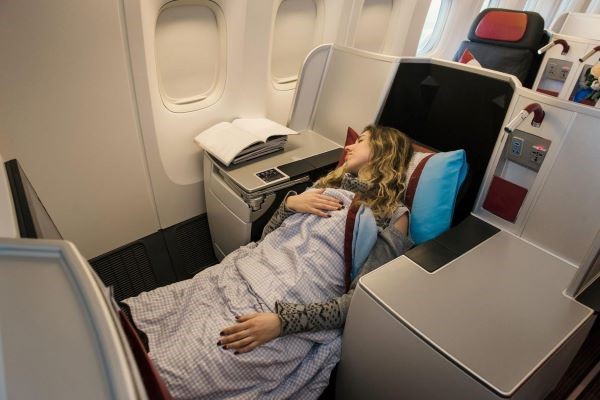
Would You Let Your Airplane Seat Monitor Your Body? Passengers Are Divided
Some travellers say it’s the future of comfort. Others say it crosses a line.
There’s a new question emerging in air travel and it’s not about price, food, or legroom.
It’s this:
Would you be comfortable letting your airplane seat monitor your body?
At first, most people say yes.
Get the SkypropreAir Free Travel Pack
Plan smarter, choose a better seat and enjoy a more comfortable long-haul journey. Enter your details below to receive the Travel Pack.
Until they understand what that actually means.
The Idea Sounds Great… At First
Imagine this:
You sit down.
You relax.
You fall asleep.
And instead of waking up every 30 minutes with neck pain…
The seat adjusts itself.
Your head stays supported.
Your body stays aligned.
No effort required.
For many travellers, the reaction is immediate:
“Finally. This is what flying should feel like.”
The “Yes” Side — Why Some Passengers Want This
For frequent flyers, especially long-haul travellers, this feels like overdue progress.
The appeal is simple:
- Better sleep
- Less fatigue on arrival
- Reduced neck and back pain
And after years of uncomfortable economy seats…
Many passengers are ready for change.
Some even say:
“If it helps me sleep on a 10-hour flight, I don’t care how it works.”
From a pure comfort perspective — it’s hard to argue with that.
Then Reality Kicks In
Because this isn’t just a better cushion or smarter design.
These seats don’t just support you.
They observe you.
They track:
- Movement patterns
- Head position
- Restlessness vs sleep
- Subtle behavioural signals
And suddenly, the question changes.
From:
“Will this make me more comfortable?”
To:
“What exactly is it doing with my data?”
The “No” Side — Why Others Are Pushing Back
For another group of passengers, this feels like a step too far.
Their concerns are clear:
Lack of Control
You can’t fully “turn off” your seat
Unclear Data Usage
Is it stored? Shared? Linked to your profile?
The Feeling of Being Monitored
Even if it’s subtle… it changes the experience
Some reactions are blunt:
“I don’t want to be analysed while I’m sleeping on a plane.”
Others frame it differently:
“Comfort shouldn’t come at the cost of privacy.”
And that’s where the divide becomes real.
Chudi’s Perspective
Both sides are right.
And that’s what makes this one of the most important shifts in aviation.
The “Yes” side understands the pain of long-haul travel
The “No” side understands the value of personal boundaries
The real issue isn’t the technology.
It’s how it’s implemented.
Two Possible Futures
Future 1 — Passenger-Controlled Comfort
- Opt-in only
- Transparent data usage
- No storage or tracking beyond the flight
This becomes a breakthrough.
Future 2 — Default Monitoring
- Always active
- Limited transparency
- Data tied to profiles
This becomes a problem.
Fast.
What Most Passengers Don’t Realise Yet
This isn’t just about seats.
It’s about the direction of flying itself.
From:
Standardised experience
To:
Personalised, data-driven travel
And seats are just the beginning.
What You Should Focus on Right Now
While this debate plays out, the fundamentals still matter more than anything.
If you want better comfort today:
- Choose the right aircraft (A350 & 787 lead globally)
- Pick smarter seat positions
- Understand flight timing
You can check all of this before booking using Aviasales
And for long-haul travel, especially with evolving tech:
Stay protected with SafetyWing
So… Which Side Are You On?
That’s the real question.
Because this isn’t a technical decision.
It’s a personal one.
Would you trade a bit of privacy for:
- Better sleep
- Less fatigue
- A smoother flight experience
Or would you rather:
- Keep full control
- Even if it means staying uncomfortable
FAQs
- Will these seats be optional?
Ideally yes — but it depends on how airlines implement the technology.
- Are passengers already reacting to this?
Yes. Early discussions show a clear divide between comfort-focused and privacy-focused travellers.
- Is this the future of flying?
Very likely — but the form it takes will depend on how passengers respond now.
Final Thought
For years, airlines ignored comfort.
Now they’re trying to fix it.
But in doing so…
They may be asking passengers to give up something in return.
And not everyone is willing to.