
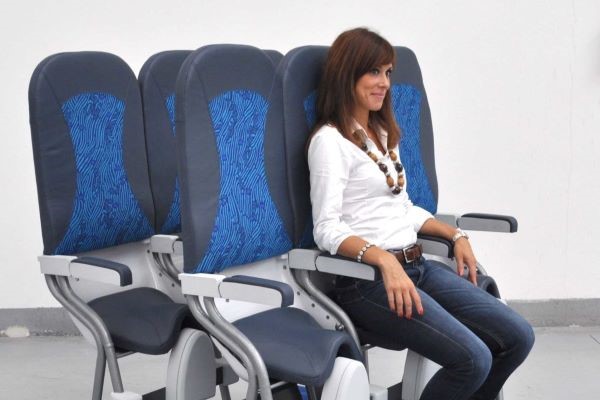
Would You Pay Less to Stand on a Flight? The Reality of Standing Seats Airline
The €10 Flight Idea That Sounds Too Good to Be True
Imagine boarding a flight where instead of standing seats, you’re given a padded support to lean on, almost like a bicycle saddle.
No legroom battles.
No reclining drama.
Just… standing.
The idea of “standing seats” has been circulating for years, promising ultra-cheap fares and more passengers per aircraft.
But here’s the real question:
Would you actually trade comfort for price?
Get the SkypropreAir Free Travel Pack
Plan smarter, choose a better seat and enjoy a more comfortable long-haul journey. Enter your details below to receive the Travel Pack.
What “Standing Seats” Really Look Like
Despite the name, you’re not fully standing.
Instead, designs like the “Skyrider” concept place you in a semi-upright position, where:
- Your weight is partially supported
- You’re strapped in with a harness
- Your knees remain slightly bent
Think of it as leaning, not sitting
Airlines could theoretically fit 20–30% more passengers on the same aircraft.
Why Airlines Love the Idea
From a business perspective, this is extremely attractive:
- Higher capacity = more revenue per flight
- Lower ticket prices = more demand
- Faster turnaround = more flights per day
This fits perfectly into the low-cost model you already see with:
- paid seat selection
- paid luggage
- paid everything
Standing seats are simply the next extreme step of unbundling comfort
Why It Hasn’t Happened (And Might Never Happen)
Here’s where reality kicks in.
1. Safety Regulations Block It
Aviation authorities require:
- A certified seat for each passenger
- Proper seatbelt systems for takeoff, landing, and turbulence
Standing or semi-standing designs don’t fully meet current certification standards.
2. Emergency Evacuation Risks
In an emergency:
- Passengers must exit quickly
- Cabin layouts must allow smooth movement
A high-density standing layout could:
- Slow evacuation
- Increase injury risk
This alone is a major red flag for regulators
3. Passenger Comfort (or Lack of It)
Even for short flights, standing has real costs:
- Faster fatigue
- Poor circulation
- No rest or recovery
If you’ve ever read our guide on
Overnight vs Daytime Flights (Ultimate Comfort Strategy)
…you already know that posture and rest directly affect how you feel after landing.
Standing removes that completely.
Would People Actually Do It?
Surprisingly, yes—some would.
Studies and public reactions suggest:
- Budget travellers are open to it
- Interest increases for flights under 1 hour
- Price is the main driver
But there’s a catch:
Most people say they’d try it…
Until they imagine actually doing it.
Chudi’s Standing Seats Strategy: Is It Ever Worth It?
Let’s be practical.
If you’re flying:
- 30–45 minutes
- Saving a significant amount (€50–€100)
It might be worth considering
But beyond that?
- You arrive more tired
- You lose any chance to relax
- Your overall travel experience drops significantly
Smart travellers don’t just optimise price—they optimise how they feel after the flight
The Bigger Trend: The Future of Air Travel Is Splitting
This idea tells us something bigger:
Air travel is dividing into two extremes:
1. Ultra-Budget Travel
- Minimal comfort
- Lowest possible price
- “Pay for everything” model
2. Comfort-Optimised Travel
- Better seats
- Better sleep
- Better arrival experience
If you’ve seen our breakdown of
Best Aircraft for Long Flights Ranked by Comfort
You’ll notice the opposite trend:
Airlines investing heavily in comfort, not removing it
So… Would You Pay Less to Stand?
Here’s the honest answer:
YES — If:
- The flight is very short
- The price difference is huge
- You don’t care about comfort
NO — If:
- You value energy, rest, and experience
- You’re flying longer than 1 hour
- You want to arrive feeling normal
Smart Booking Tip (Before You Choose Price Over Comfort)
Sometimes, the difference between a bad flight and a good one isn’t the airline—it’s the price you pay and when you book.
You can quickly compare real fares and routes using
Aviasales
to find better options that don’t require sacrificing comfort entirely.
And if you’re experimenting with ultra-budget travel, it’s worth having backup protection—delays and disruptions hit these flights hardest.
That’s where
SafetyWing
quietly makes a difference without adding much cost.
Final Verdict
Standing seats are
- Interesting in theory
- Unlikely in the near future
- A poor trade-off for most travellers
The real takeaway isn’t about standing.
It’s about this:
How much is your comfort actually worth?
FAQs
Are standing seats on planes legal?
No. Current aviation regulations require certified seats and seatbelts for all passengers.
Which airlines plan to introduce standing seats?
No airline has officially approved or scheduled them, despite past discussions.
Would standing tickets really be cheaper?
Yes—potentially significantly cheaper—but only if safety regulations ever allow it.