
United Is Blocking the Middle Seat—but Is This What Economy Passengers Really Want?
For generations of economy passengers, the empty middle seat has felt like a small lottery win. It offers more elbow room, additional personal space and freedom from the awkward negotiations that begin when three strangers share two armrests.
United Airlines is now turning that accidental luxury into a product passengers can deliberately purchase.
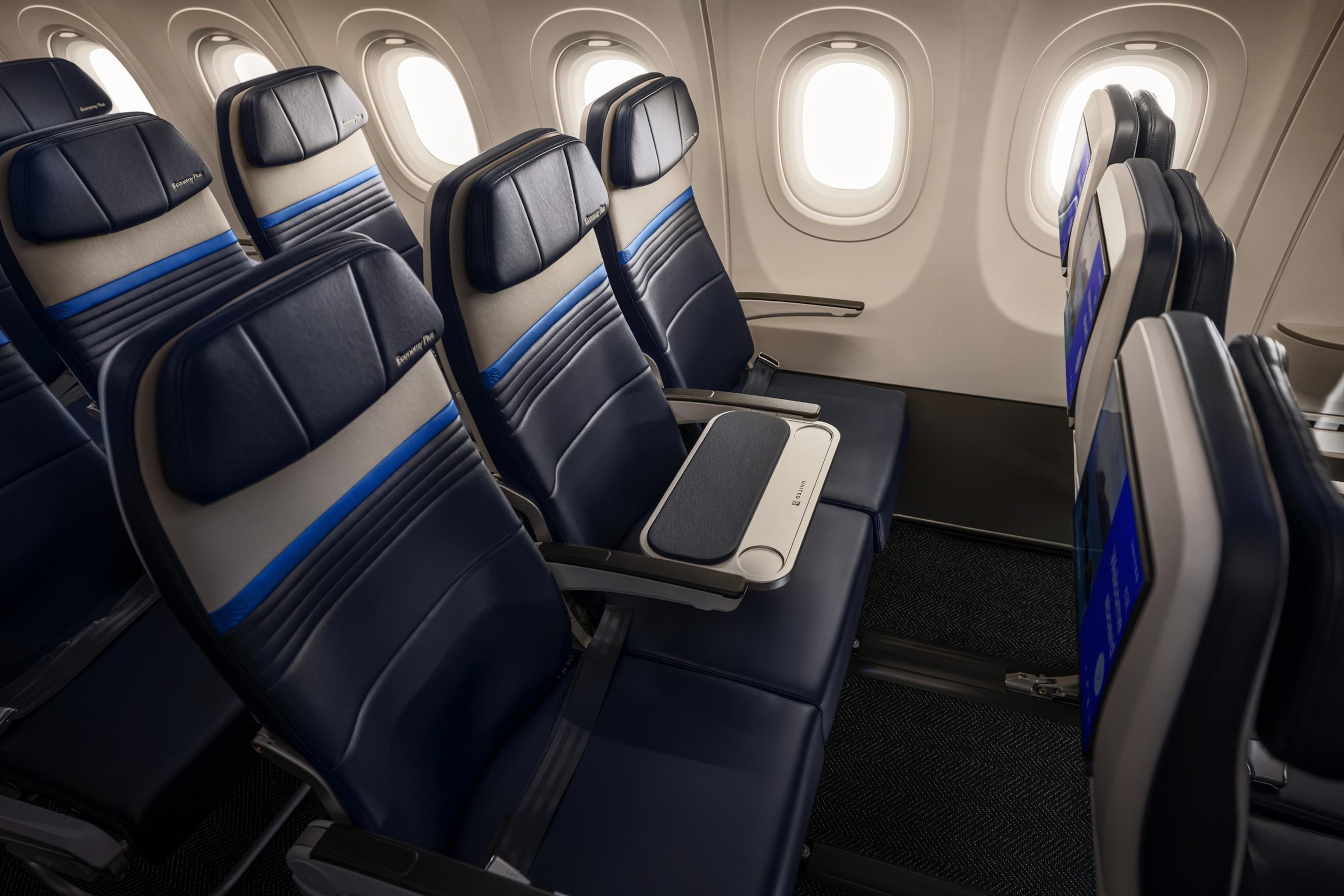
On selected Airbus A321XLR aircraft, one Economy Plus row will feature a permanently blocked middle seat fitted with a custom-designed table. The passengers in the window and aisle seats will therefore gain additional space without paying for business class or conventional premium economy.
The United blocked middle seat option could create a valuable new level of comfort between standard economy and premium economy.
The idea sounds simple and attractive but it raises an important question. Are passengers receiving meaningful extra comfort, or are airlines discovering another way to charge for leaving a seat empty?
Get the SkypropreAir Free Travel Pack
Plan smarter, choose a better seat and enjoy a more comfortable long-haul journey. Enter your details below to receive the Travel Pack.
As long-haul airlines search for profitable alternatives between standard economy and premium cabins, United’s experiment may reveal how much passengers are prepared to pay for one increasingly scarce privilege: personal space.
How the United Blocked Middle Seat Option Works
United Airlines plans to introduce a new extra-space seating option on its Airbus A321XLR aircraft. In one Economy Plus row, the middle seat will remain permanently unavailable and will instead contain a fixed table extending between the window and aisle passengers.
The table will have a soft, leather-like covering and two cup indentations. Its main purpose is not to transform the seat itself, but to create more usable space between the two passengers.
Unlike an empty middle seat that remains available until departure, this arrangement is built into the cabin. Passengers booking the window and aisle positions will know in advance that nobody can be assigned between them.
United expects its A321XLR to operate domestic services before expanding to international routes. The aircraft is designed for longer, thinner routes that may not attract enough demand for a larger wide-body aircraft.
This means some passengers could spend many hours crossing the Atlantic or travelling on another long international route in a single-aisle cabin. United is therefore attempting to offer an intermediate comfort option for travellers who want more space but do not wish to pay for a premium cabin.
Why an Empty Middle Seat Feels So Valuable
The physical width of an economy seat is only part of the comfort equation. Passengers also experience the invisible pressure created by the people sitting beside them.
When every seat is occupied, shoulders may touch, elbows compete for the armrests and passengers become more conscious of every movement. Eating, using a laptop or reaching into a bag can feel awkward because personal space is so limited.
An empty middle seat changes this experience immediately. It creates separation between strangers, gives both passengers more elbow room and provides somewhere to place small permitted items during appropriate stages of the flight.
The psychological benefit may be just as important as the physical space. Passengers can relax without constantly worrying about entering another person’s space. Couples travelling together may also appreciate having a shared surface between them while retaining window and aisle access.
However, the window and aisle seats themselves do not necessarily become wider. Legroom, recline, cushioning and seat design may remain unchanged. The passenger is therefore paying primarily for separation and usable space not an entirely different seat.
Is It Really Better Than Standard Economy Plus?
Traditional Economy Plus usually provides additional legroom while retaining the same basic seat width and three-seat arrangement as standard economy. When the cabin is full, passengers may gain space in front of their knees but still sit shoulder-to-shoulder with strangers.
United’s blocked-middle-seat row addresses a different discomfort. It creates more lateral space by separating the window and aisle passengers, while Economy Plus provides the extra legroom associated with that section of the cabin.
For many travellers, combining greater legroom with an empty middle position could feel substantially better than ordinary economy. It may be particularly attractive to couples, solo travellers who value personal space and passengers who want to work during the flight.
Nevertheless, it is important to understand what the product does not provide. Passengers should not expect the wider seat, greater recline, enhanced meal service, larger entertainment screen or additional baggage benefits commonly associated with premium economy.
Its value will therefore depend heavily on the price. A modest supplement could make it one of the most attractive seats in the economy cabin. If the fare approaches premium-economy pricing, passengers may receive better overall value by choosing the genuine premium cabin.
The Question United Must Answer: How Much Will It Cost?
United has described the blocked-middle-seat row as an option for customers willing to pay more for additional space without moving into a premium cabin. However, the final value of the product cannot be judged without comparing its price with other available seats.
If the supplement is relatively small, the arrangement could be an appealing upgrade for a long international flight. Passengers would receive Economy Plus legroom, guaranteed separation from their neighbour and a useful shared surface.
The calculation becomes less convincing if the price approaches that of premium economy. A conventional premium-economy ticket may include a wider seat, deeper recline, improved meals, additional baggage and priority services, benefits that an empty middle seat alone cannot match.
Travellers should therefore compare the complete journey rather than the label attached to the seat. Consider the cost of the base fare, seat-selection fee, baggage and any other extras before deciding.
Airlines have become highly skilled at dividing economy cabins into increasingly specific products. The blocked middle seat may represent genuine passenger choice, but only transparent pricing will show whether it is a sensible comfort upgrade or simply another form of cabin segmentation.
Can a Single-Aisle Aircraft Really Be Comfortable on Long-Haul Routes?
The Airbus A321XLR allows airlines to operate long routes that may not support a larger wide-body aircraft. This can create new nonstop connections between cities that previously required a transfer.
For passengers, avoiding a connection can save several hours and reduce the risk of missed flights or delayed baggage. A direct journey on a smaller aircraft may therefore be more convenient than changing planes during a wide-body itinerary.
The concern is cabin experience. A single-aisle aircraft has fewer places for passengers to move, and trolley service can restrict access to the aisle for extended periods. Queues near the toilets may feel more intrusive, while the narrower cabin can appear more confined during a long flight.
Overhead storage, toilet availability and boarding speed also become important when the aircraft is used on an international journey with substantial cabin baggage. The experience will depend not only on the A321XLR itself, but also on the airline’s chosen seating configuration and service procedures.
A blocked middle seat may make one row considerably more pleasant, but it cannot reproduce the broader sense of space found on many twin-aisle aircraft. Passengers must decide whether the convenience of a nonstop route outweighs the limitations of spending many hours in a narrow-body cabin.
Who Would Benefit Most From This Seat?
United’s blocked-middle-seat row will not appeal equally to every passenger. Its strongest value may be for travellers who prioritise personal space more than the additional services associated with a premium cabin.
Couples could find the arrangement particularly attractive. One person can take the window while the other chooses the aisle, with the fixed table creating a shared space between them and no possibility of a stranger being assigned to the middle.
Solo travellers who want to work may also benefit. The extra separation should provide more elbow room for using a laptop, although passengers should still confirm the seat’s power supply, tray-table design and usable working space.
Broader passengers may appreciate reduced shoulder contact, but the standard seat dimensions and fixed armrests could still limit comfort. Anyone with specific accessibility or mobility requirements should examine the seat details carefully and contact the airline before booking.
The arrangement may be less valuable for passengers whose main concern is sleep. An empty middle seat provides separation, but it does not necessarily offer greater recline, improved head support or the ability to elevate the legs.
Ultimately, the product is best suited to travellers who want a quieter sense of personal territory without paying for a completely different cabin.
Could Blocked Middle Seats Become an Industry Trend?
United is not the first airline to recognise the commercial value of an empty middle seat. Some European carriers block middle seats in short-haul business class, while other airlines have sold similar extra-space arrangements in selected economy rows.
The concept is attractive to airlines because it creates a differentiated product without requiring an entirely new seat. Instead of installing a wider premium cabin, the airline can sell additional personal space by reducing the number of passengers in a row.
Whether the idea spreads will depend on revenue. The airline sacrifices the potential income from the middle seat, so the two remaining passengers must collectively pay enough to make the arrangement worthwhile.
For passengers, broader adoption could create a useful middle option between crowded economy and significantly more expensive premium cabins. It might also encourage airlines to think about comfort in terms of personal space rather than legroom alone.
There is a less positive possibility. Airlines could maintain increasingly dense standard cabins while charging more to escape the discomfort those cabins create. In that case, the blocked middle seat would not represent an improvement to economy class as a whole, it would become another paid solution to a problem created by tight seating.
The real test is therefore not whether airlines can sell empty space, but whether the product expands meaningful choice without allowing basic economy comfort to deteriorate further.
What Passengers Should Check Before Booking
Before paying for United’s blocked-middle-seat option or any similar airline product—check exactly what the fare includes.
Compare the Total Price
Add the base fare, seat-selection charge, baggage fee and any other extras. Compare the final amount with standard Economy Plus and premium economy rather than looking at the seat fee alone.
Confirm the Aircraft
Check that the flight is scheduled to use an Airbus A321XLR with the special row. Airlines can substitute aircraft for operational reasons, so review your booking again before departure.
Examine the Seat Map
Confirm the row’s position relative to toilets, galleys, exits and the wing. Extra personal space may not compensate for constant foot traffic, restricted recline or unwanted cabin noise.
Check the Seat Features
Look for the published seat pitch, recline, power supply, entertainment system and tray-table arrangement. The blocked middle position does not automatically improve every aspect of the seat.
Understand Aircraft-Change Protection
Read what happens if United changes the aircraft or cannot provide the selected seat. Check whether the seat fee is refunded automatically or whether you must submit a request.
Compare the Flight Itself
A nonstop A321XLR service may be more convenient than connecting between wide-body flights. Consider the total journey time, arrival schedule and connection risk—not simply the aircraft size.
Frequently Asked Questions
Is United removing the middle seat from every Economy Plus row?
No. United has announced that one Economy Plus row on each applicable Airbus A321XLR will feature the special arrangement. Other economy rows will retain their normal seating configurations.
Will the window and aisle seats be wider?
The main benefit is the permanently blocked middle position and the additional usable space between passengers. Travellers should not assume that the window and aisle seats themselves will be wider unless United’s published specifications confirm it.
Is this the same as premium economy?
No. The product remains within Economy Plus. Premium economy normally provides a physically wider seat, greater recline and additional service benefits. Passengers should compare the full product and total price before booking.
When will United use the A321XLR internationally?
United expects international A321XLR operations to begin in early 2027, although routes, aircraft assignments and schedules can change.
Is a blocked middle seat worth paying for?
It depends on the price, flight duration and passenger’s priorities. It may offer strong value to travellers who want more elbow room and personal space. If the total cost approaches premium-economy pricing, a genuine premium-economy seat may provide better overall value.
What happens if United changes the aircraft?
Aircraft substitutions can occur for operational reasons. Passengers should check United’s current terms to understand whether the seat-selection fee will be refunded or transferred if the special seating arrangement becomes unavailable.
Final Verdict: A Clever Idea—If the Price Is Right
United’s blocked-middle-seat concept addresses a genuine passenger frustration. On a long international flight, additional elbow room and guaranteed separation from a stranger can make economy travel feel noticeably less confined.
The product also fills a potentially useful gap. Not every passenger can justify premium economy or business class, but many would consider paying a reasonable amount for more personal space.
Its success will ultimately depend on pricing and execution. The special row must cost considerably less than premium economy, the benefits must be explained clearly and passengers should receive straightforward protection when an aircraft change removes the seat they purchased.
It will not transform the Airbus A321XLR into a wide-body aircraft, nor will it solve every economy-class comfort problem. But it recognises something airlines have too often overlooked: passengers value space beside them as much as space in front of them.
United may be selling an empty middle seat, but the more important product is freedom from feeling crowded. If the airline prices that freedom sensibly, passengers may decide it is worth paying for, and other carriers will almost certainly take notice.