
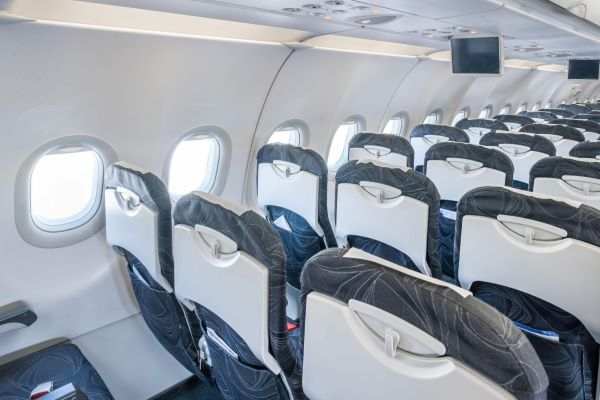
How Airlines Design Cabins to Control Passenger Behaviour
The hidden psychology behind calmer flights, smoother boarding, and higher upgrade sales (2026 Guide)
Airplane cabins aren’t neutral spaces. Every curve, light setting, aisle width, and seat divider is deliberately engineered to guide how passengers move, wait, sleep, queue, and even spend money. Airlines don’t rely on announcements alone; they use design psychology to quietly control behavior from boarding to landing.
This SkypropreAir deep dive explains how modern airline cabins shape passenger behaviour, why some flights feel calmer than others even with the same seat pitch, and how these design choices affect your comfort, stress levels, and wallet.
Cabin design is a behaviour-control system (not décor)
Airlines operate some of the most crowded public spaces on Earth sealed tubes at 35,000 feet with hundreds of strangers. Cabin interiors are therefore designed using human-factors engineering, crowd-flow modelling, and comfort psychology.
The goals are simple:
Get the SkypropreAir Free Travel Pack
Plan smarter, choose a better seat and enjoy a more comfortable long-haul journey. Enter your details below to receive the Travel Pack.
- Reduce stress and conflict
- Speed up boarding and deplaning
- Keep aisles clear for crew
- Encourage passengers to sit, settle, and comply
- Subtly highlight paid upgrades
This is why newer aircraft often feel calmer. As explored in Quietest Aircraft for Long-Haul Flights, noise reduction, airflow smoothing, and visual design play a bigger role in comfort than most passengers realise.
1) Boarding flow: how cabins control movement
Boarding is where cabin behaviour design is most visible.
Aisle width, seat spacing, galley placement, and overhead bins are all tuned to manage human traffic:
- Larger overhead bins reduce aisle blockages
- Clear bin zoning discourages passengers from roaming
- Galley positioning controls where congestion naturally forms
Aircraft with modern interiors often board faster and feel less chaotic even when full. This is especially noticeable when comparing widebodies in guides like Airbus A350 vs Boeing 787: Which Is Better for Long Flights?
Before booking, compare aircraft types and cabin layouts on Aviasales to avoid older designs with narrow aisles and undersized bins.
2) Lighting: silent mood control at 35,000 feet
Modern LED cabin lighting isn’t cosmetic it’s behavioural.
Airlines use lighting to:
- Calm passengers during boarding (warm tones)
- Signal sleep time after meals (dimmed, cooler hues)
- Gently wake cabins before landing
- Support circadian rhythm adjustment on long-haul flights
This lighting strategy is one reason aircraft discussed in A380 vs A350: Which Feels Quieter in Economy? often feel more relaxing even in standard economy.
Behaviour effect: when lighting tells your brain “it’s night,” passengers naturally talk less, move less, and rest more.
3) Visual space tricks: making tight cabins feel safer
Even when seat dimensions are identical, cabins can feel very different.
Curved ceilings, softer wall lines, and sculpted sidewalls reduce the sensation of confinement. This explains why some economy cabins feel calmer despite similar layouts — a concept also explored in Airbus A380 vs Boeing 777 Economy Experience.
Behaviour effect: when people feel less trapped, they’re less likely to fidget, argue, or compete for space.
4) Seat design: controlling personal territory
Seats do more than hold you in place they define invisible social boundaries.
Design elements include:
- Fixed armrests to prevent “armrest wars”
- Seat shells and dividers to reduce eye contact
- Narrower access to discourage constant aisle movement
These design choices quietly encourage passengers to settle and stay put, especially on long-haul flights — a key theme in the Long-Haul Economy Survival Guide.
If legroom matters to you, seat structure is just as important as pitch. Pair this insight with Best Economy Seats for Tall Passengers before selecting your flight.
5) Lavatory placement: queue control by architecture
Lavatory locations determine:
- Where queues form
- How much traffic passes through each cabin
- How often crew aisles get blocked during service
Passengers don’t queue randomly — they queue where the cabin allows them to. Poor placement increases congestion and irritation, particularly on overnight transatlantic routes.
6) Sensory comfort: patience is engineered
Noise levels, temperature, airflow, vibration, and even smell affect passenger tolerance.
When sensory comfort is poor, complaints rise from seat recline disputes to aisle arguments. This is why newer aircraft consistently rank higher in comfort guides like Most Comfortable Economy Seats on Long-Haul Aircraft.
If you’re worried about long-haul stress, delays, or missed connections, pairing a calmer aircraft choice with SafetyWing travel insurance adds peace of mind if things don’t go to plan.
7) Upgrade psychology: how cabins sell without selling
Cabins are visually designed to make upgrades feel obvious:
- Premium cabins use calmer lighting and spacing
- Physical dividers reinforce exclusivity
- Economy feels more functional by contrast
Passengers don’t need to be told the cabin shows them what comfort costs. This psychological contrast is why Premium Economy often feels irresistible once you see it in person, as discussed in Is Premium Economy Worth It on Long-Haul Flights?
How to spot behaviour design on your next flight
Watch for these signals:
- Lighting changes after boarding or meals
- Where congestion naturally forms
- How seat features enforce boundaries
- Whether the cabin encourages movement or stillness
Once you notice it, you’ll never see airplane cabins the same way again.
Booking smarter with cabin design in mind
Not all flights feel equal even on the same route.
Compare aircraft types and layouts on Aviasales
Choose newer, calmer designs for long-haul journeys
Protect yourself with SafetyWing travel insurance in case fatigue, congestion, or delays lead to missed connections
Cabin design doesn’t just shape comfort it shapes behaviour. And once you understand it, you can book smarter, fly calmer, and arrive less stressed.
FAQs
Do mood lights really reduce jet lag or are they just aesthetic?
They help signal sleep and wake cycles to your brain, supporting circadian adjustment especially on overnight long-haul flights.
Why do some planes feel calmer even with the same seat pitch?
Cabin shape, lighting, noise control, and airflow reduce perceived stress even when physical dimensions are identical.
What cabin features cause the worst boarding delays?
Small overhead bins, narrow aisles, poorly placed galleys, and unclear bin zoning are the biggest contributors.